

Le 6 octobre 2026, un événement spécial a célébré la restauration de la cour conçue par Bramante, au cœur des collections du Vatican. Un chantier qui aura duré près de dix ans, soutenu par la contribution des Patrons of the Arts in the Vatican Museums.
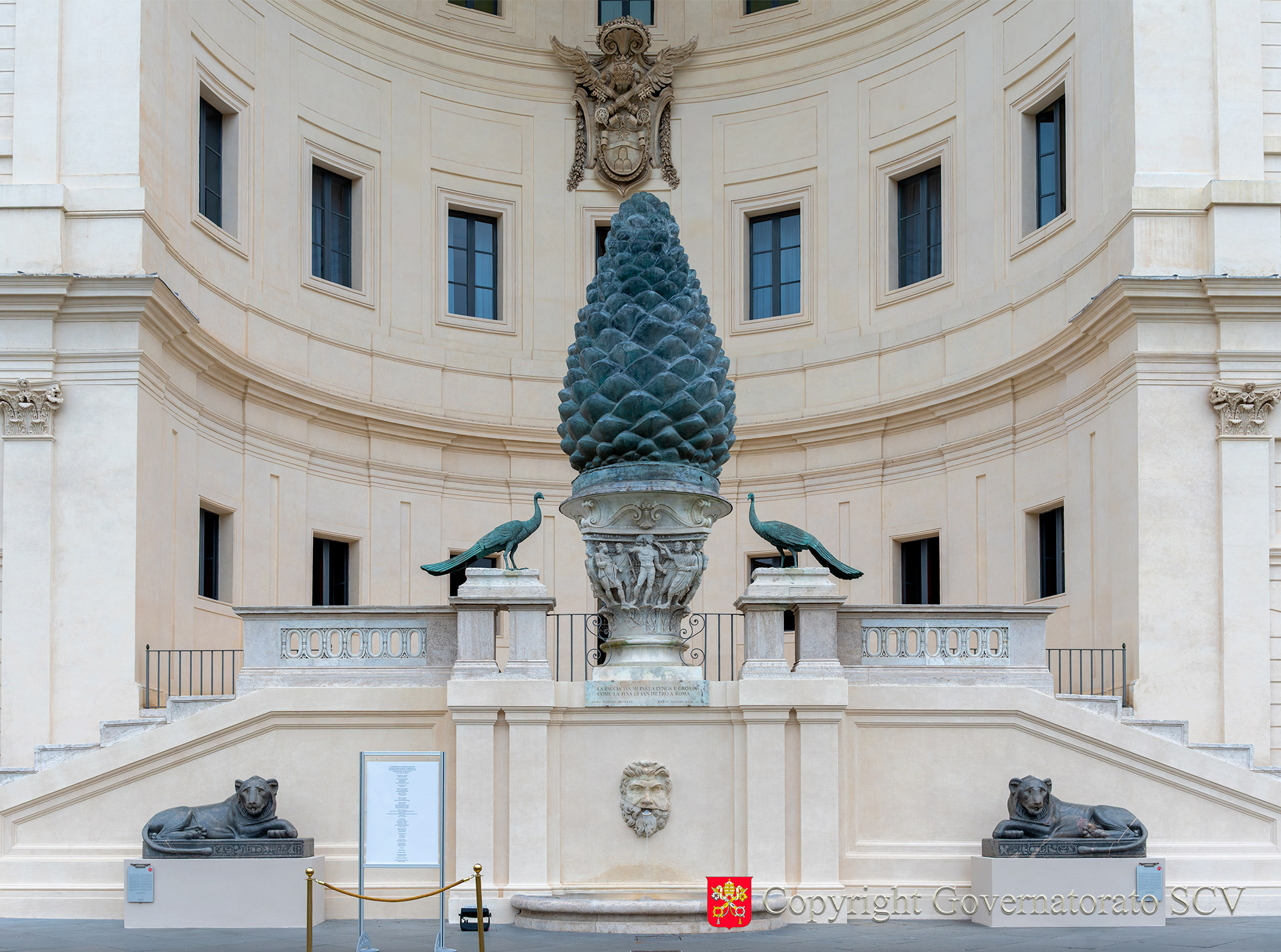
Créée au XVIe siècle à l’initiative du Pape Jules II et conçue par Donato Bramante, la Cour de la Pigna tire son nom de la grande pomme de pin en bronze de l’époque romaine qui se trouve au centre de la niche principale et qui était autrefois placée dans l’atrium de la Basilique Saint-Pierre. Lieu emblématique, qui a toujours été au cœur d’événements majeurs et a connu de nombreuses transformations, cet espace de passage et de rencontre pour des milliers de visiteurs est devenu l’un des lieux symboliques des Musées du Vatican, en mesure d’unir l’histoire et la culture.
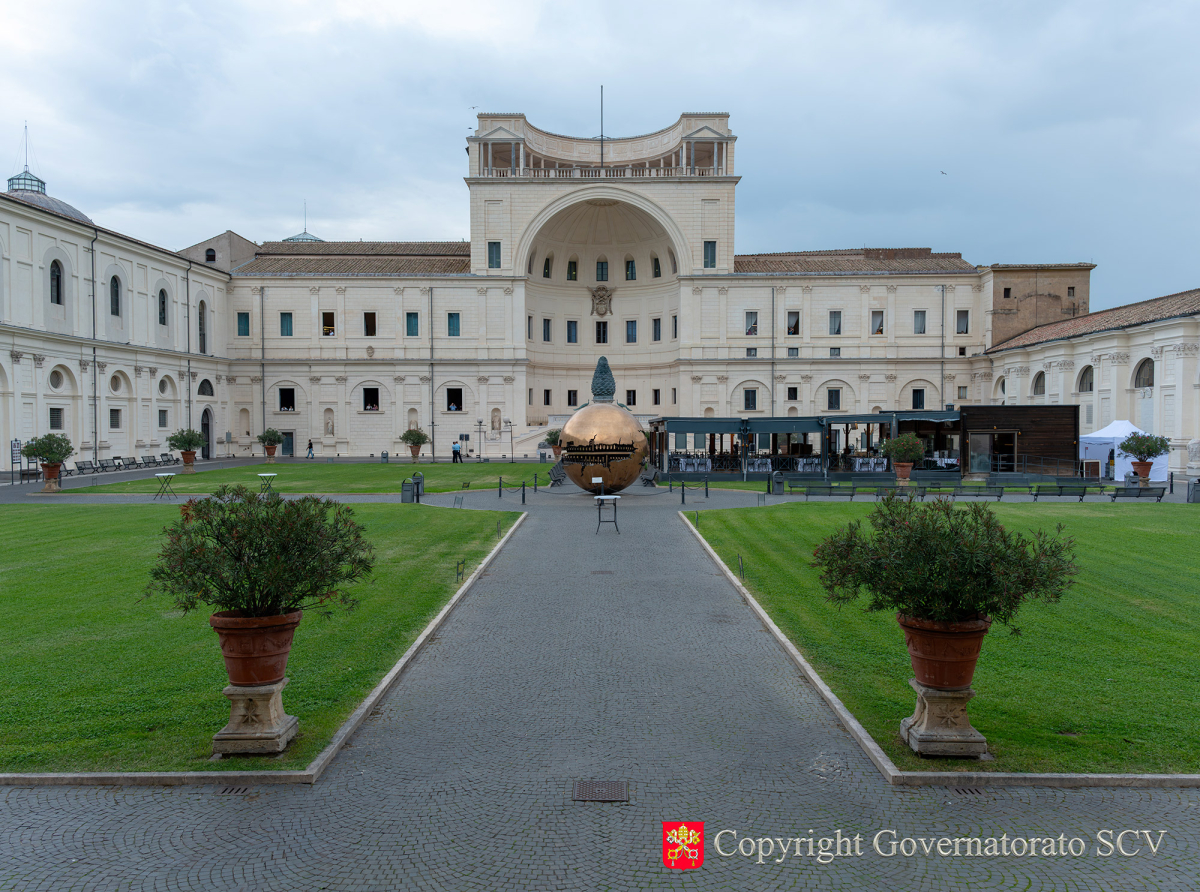
L’événement du 6 octobre marque l’aboutissement d’un long parcours de travail et d’études sur les surfaces des bâtiments qui donnent sur la cour. L’objectif était de redonner toute sa lisibilité à l’architecture de la Renaissance, en consolidant les maçonneries et en restituant aux façades leurs teintes naturelles.
La cérémonie s’est ouverte par une conférence dans le Braccio Nuovo, à laquelle sont intervenues Sœur Raffaella Petrini, Présidente du Gouvernorat de l’État de la Cité du Vatican, et Barbara Jatta, Directrice de la Direction des Musées et des Biens culturels. Était également présent Mgr Terence Hogan, Coordinateur du Bureau des relations avec les Patrons of the Arts in the Vatican Museums, une association de mécènes qui finance depuis des décennies la restauration des collections et des espaces des Musées.
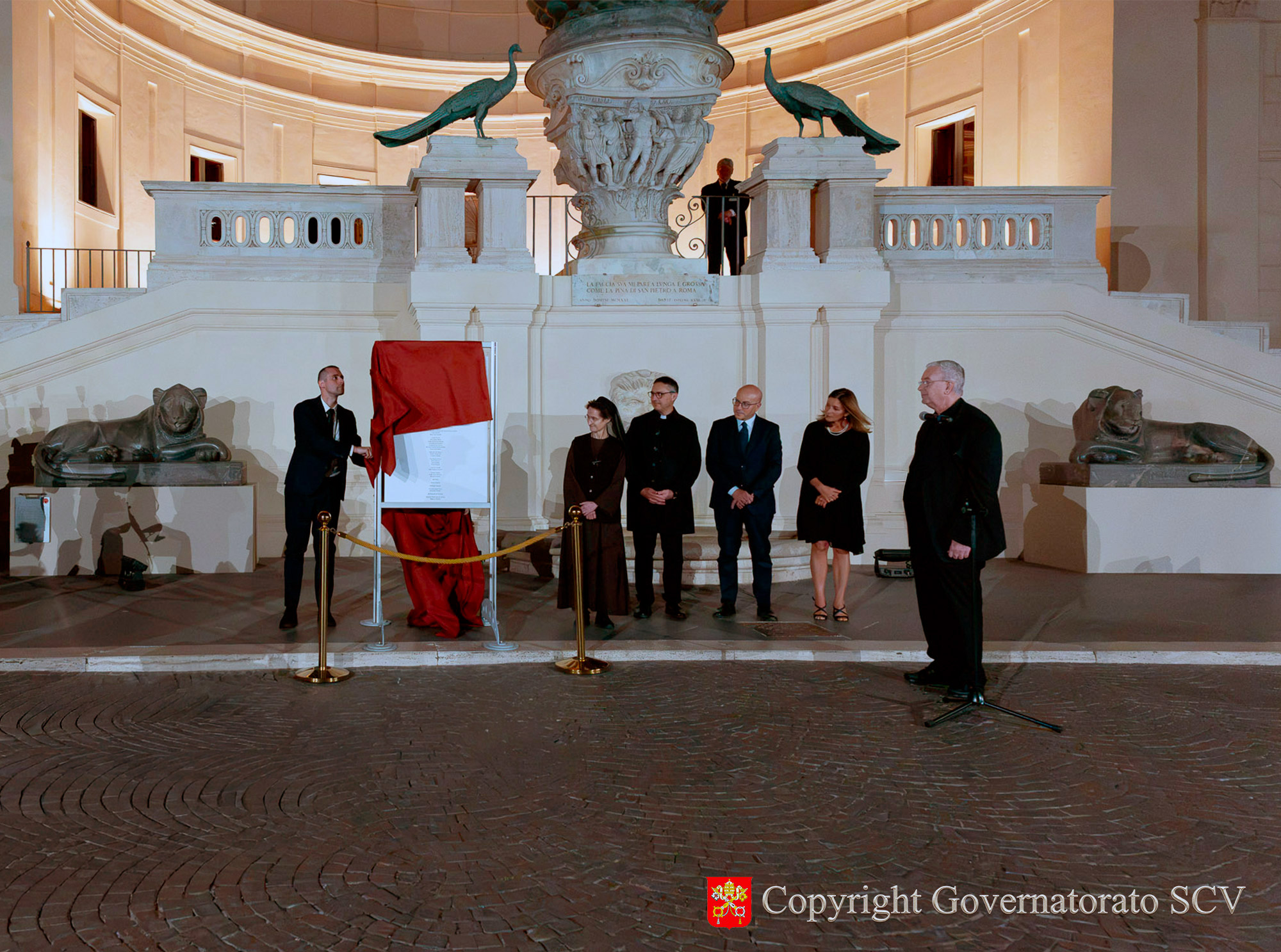
À l’issue de la conférence, les invités, parmi lesquels figuraient de nombreux « Patrons » ayant financé la restauration, ont été accompagnés dans la cour où la plaque commémorative des donateurs du projet a été dévoilée au son de la fanfare musicale de la Gendarmerie. En leur honneur, la cour a été illuminée par un éclairage exceptionnel qui a mis en valeur les façades tout juste restaurées.
La restauration qui vient d’être inaugurée constitue le dernier chapitre d’un projet lancé en 2016, avec la consolidation des maçonneries et la reprise des surfaces dans leurs teintes naturelles sur tous les côtés de la cour. Les travaux ont été réalisés par tranches et ont été l’occasion d’approfondir les connaissances sur un lieu central dans l’architecture des Musées, voulu par Jules II pour relier le Palais apostolique à la villa d’Innocent VIII et qui aujourd’hui a enfin retrouvé sa beauté originelle.
Nous publions ci-dessous le discours de la Présidente du Gouvernorat :
Distinguished guests, dear Patrons of the Arts of the Vatican Museums,
I wish to greet all of you who have gathered here this evening for this significant moment in the life of the Vatican Museums.
It is with great joy and a deep sense of gratitude that I stand before you tonight, as we celebrate the completion of the restoration of the Bramante Courtyard — a project that began in 2016 and has, over the course of these years, brought together the talents, dedication, and generosity of so many. This evening is not only a celebration of restored beauty, but a tribute to the extraordinary collaboration between the Patrons of the Arts in the Vatican Museums, the administration of the Vatican Museums, and the skilled curators and restorers who have devoted themselves to this historic undertaking.
I would like to extend my heartfelt thanks to each and every one of you who, in ways both great and small, have contributed to the protection, conservation, and restoration of this architectural masterpiece. Your generosity and commitment have made it possible to preserve not only a work of outstanding artistic and historical value, but a space that continues to inspire all who pass through it.
The preservation and conservation of artistic treasures has the ability to help us not only to understand the history of our past but allows us a glimpse of what is possible in the future.
Art has been an integral part of the Vatican for hundreds of years, whether conveyed on canvas, by sculpture, or even through the dynamic medium of architecture. The gift and joy of art has the ability to take us beyond words and allow us into the realm of beauty, which is a true and unique gift of God.
Recently, Pope Leo XIV reiterated the irreplaceable value of this gift, when addressing artists and curators during a meeting with the Dicastery for Culture and Education, here in Vatican City State (Oct. 2, 2026): «… the Church has never considered art to be merely decorative», he stated. «Instead, for the Church, art nurtures the fundamental posture of listening, through which we can learn about humanity’s aspirations and wounds, our thirst for beauty, justice and peace, and our search for meaning».
This is especially true in our age of digital transition and artificial intelligence, because, as Pope Leo point out in Magnifica Humanitas (cf. 122), algorithms lack the spark of the human, whereas art preserves this spark.
Once again, I wish to thank all who have contributed in their own way to making this evening possible as we celebrate the restoration of a most extraordinary masterpiece, especially the Director of the Vatican Museums and her staff. It is now my great pleasure to invite Monsignor Terence Hogan, Coordinator of the Patrons of the Arts in the Vatican Museums, to share with you more about this remarkable project and the journey that has brought us to this very evening.
Thank you.