


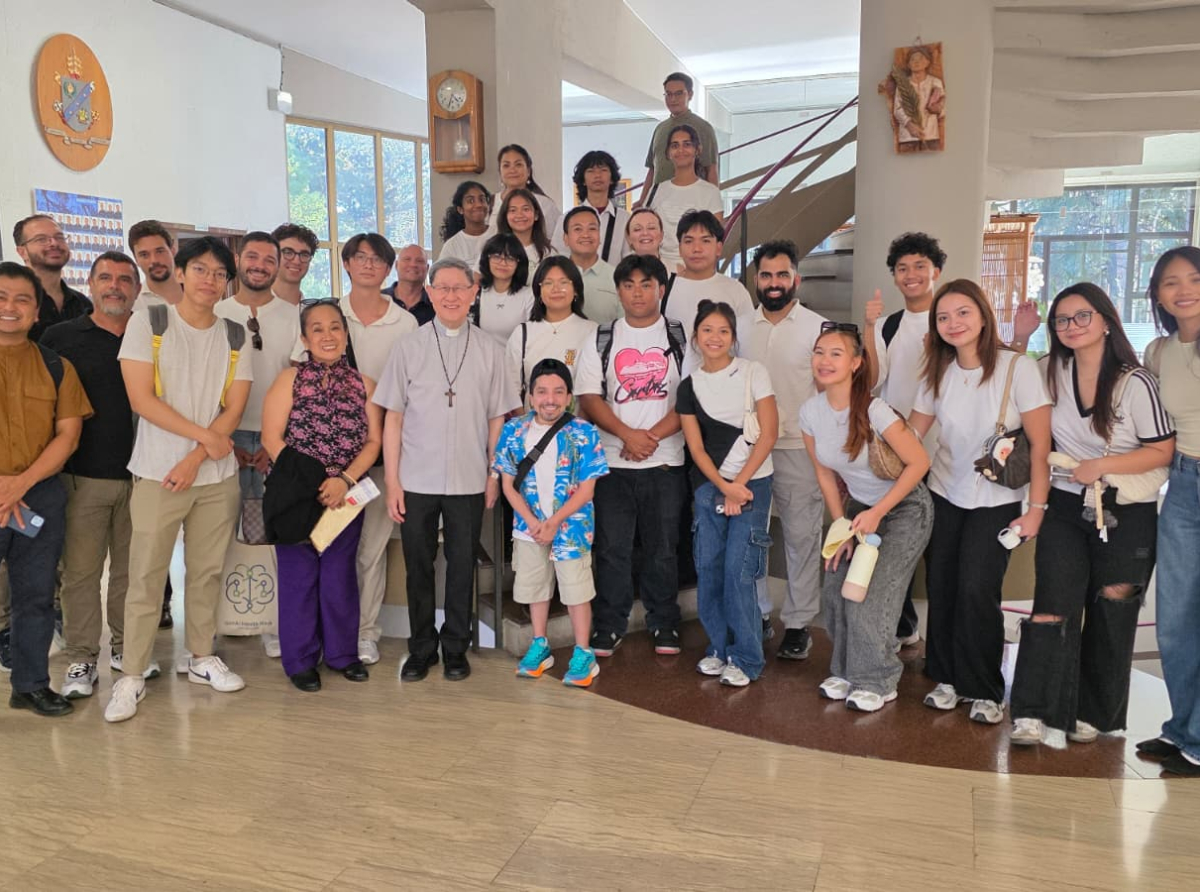
On September 4 and 5, “AI as a Catalyst – Roma,” an event organized by MIT Critical Data to place immigrant communities at the center of discussions on the transformation brought about by artificial intelligence, was held at the Pontifical Filipino College in Rome.
The two-day event brought together representatives of institutions and the Church, researchers, professionals, mentors, students, and members of the Filipino community in Italy for a series of discussions and hands-on workshops. The focus was not only on the opportunities offered by AI, but also on the responsibilities associated with its use and a fundamental question: How can we ensure that artificial intelligence truly serves people and communities?
MIT Critical Data served as the event's convener, with the Philippine Embassy in Italy as co-organizer and the International Migrants School as the educational partner.
Communities and Critical Thinking
One of the defining features of the initiative was the direct involvement of students and educators from the International Migrants School, bringing to the discussions the perspectives of young people for whom artificial intelligence is already part of their studies and everyday lives. Participants worked in small groups, each guided by a mentor, to discuss and complete practical exercises. Davide Giordano, a member of the AI Commission of the Directorate of Telecommunications and Information Systems and a staff member of its Internet Service Provider, participated as a mentor on behalf of the Governorate of Vatican City State.
During the first day, one exercise asked the groups to submit the same question to AI systems using different languages and approaches. The exercise highlighted an essential aspect of generative AI: the natural, conversational way in which a system responds should not be mistaken for the human ability to understand, evaluate, or exercise judgment.
What do the Data Really tell us?
The second day applied the same principle to data through an analysis of the report “Mortality Trends Among Overseas Filipinos in Italy (2014–2024),” based on deaths recorded by the Philippine Embassy in Rome and the Philippine Consulate General in Milan.
The dataset includes 2,175 recorded deaths and, among other indicators, shows a mean age at death of 58.2 years. Yet this very figure provided an opportunity to illustrate the difference between having data and understanding what they mean.
Indeed, the report makes clear that this figure does not represent the life expectancy of the Filipino population living in Italy. Rather, it describes the deaths recorded in a specific consular database, subject to the limitations of how the information is collected and classified.
The workshop therefore shifted the focus from answers to questions: What does the data point we are examining actually represent? Who is included in the dataset, and who might be missing?
This is a particularly important issue when data and artificial intelligence are applied to healthcare. Technical specialists, analysts, and AI experts are essential, but the process must also include members of the community being studied. Using artificial intelligence to improve healthcare must never mean losing sight of the most important person: the patient.
Developing a culture of artificial intelligence therefore also means fostering a culture of critical thinking: understanding the limitations of the technology, knowing where data and information come from, recognizing what is missing, and ensuring that responsibility for decisions remains in human hands.
At the conclusion of the two-day event, the participants received a visit from Cardinal Luis Antonio G. Tagle, Pro-Prefect of the Dicastery for Evangelization – Section for the First Evangelization and New Particular Churches, who came to the Pontifical Filipino College to greet them following the conclusion of the proceedings.
It was a fitting conclusion to an event in which discussing artificial intelligence meant, above all, discussing people, communities, and responsibility.