

Museums as Places of Memory, Beauty, and History
“Every museum is a place of memory, beauty, and history, fostering encounters between generations and promoting culture and human creativity.”
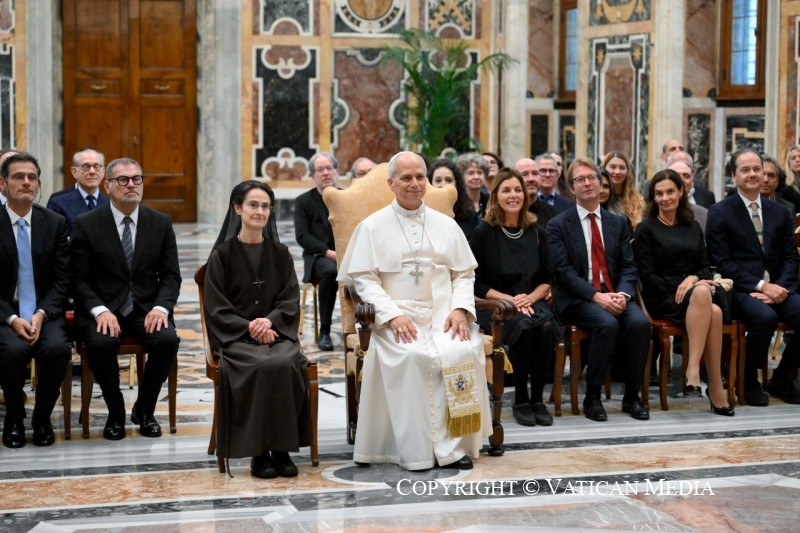
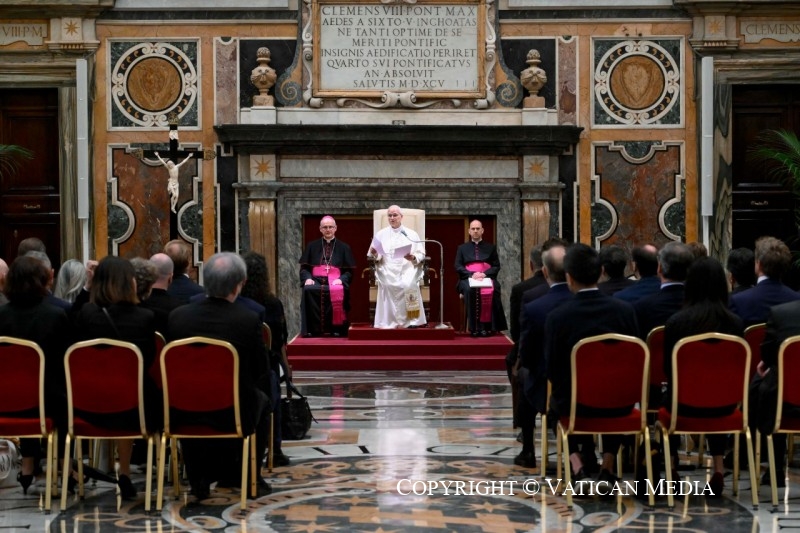
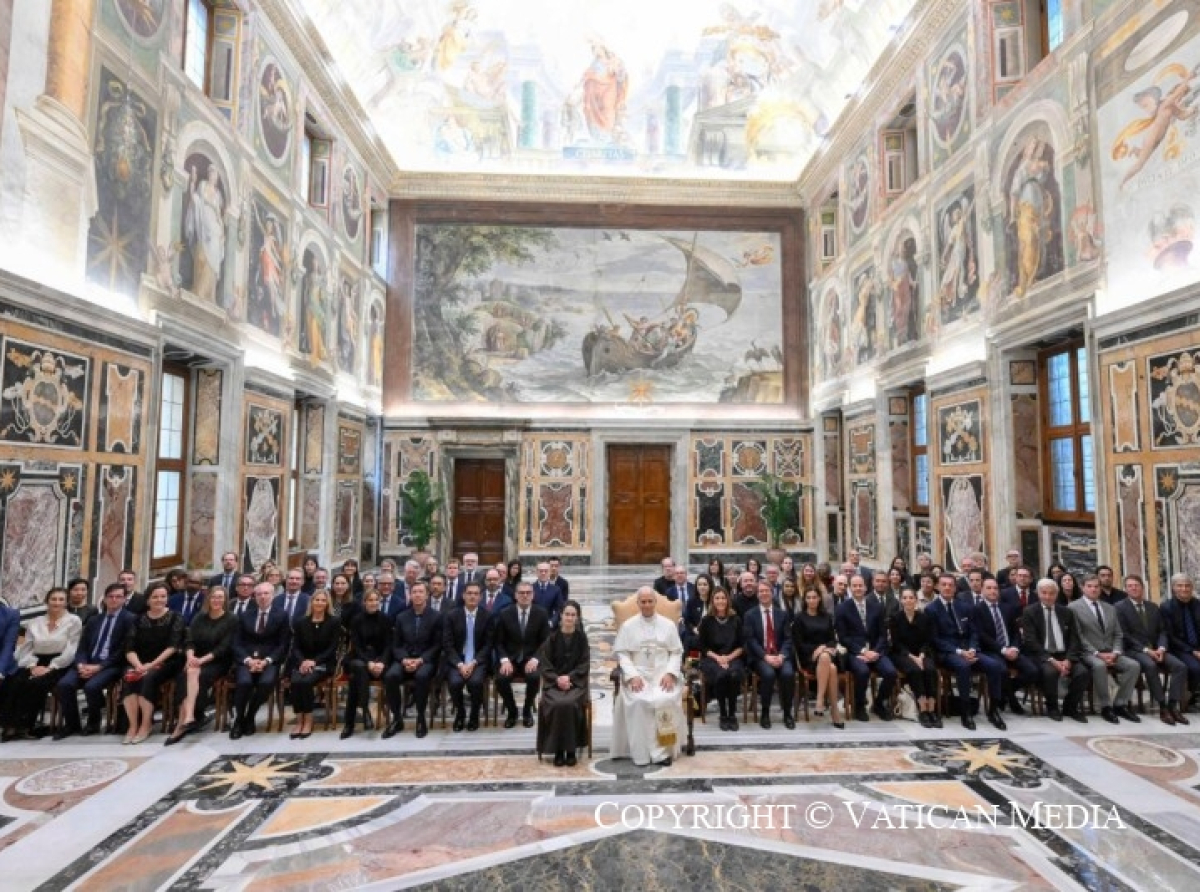
With these words, Pope Leo XIV addressed approximately 70 members of the Bizot Group on Saturday morning, October 10, in the Clementine Hall of the Apostolic Palace. Among those present were Sr. Raffaella Petrini, President of the Governorate of Vatican City State; Barbara Jatta, Director of Vatican Museums and Cultural Heritage of the Governorate; and Giandomenico Spinola, Deputy Director for Artistic and Scientific Affairs of the Vatican Museums.
Over the centuries, the Pope continued, the Church “has cultivated a special affinity with the arts, appreciating them in all their forms. Indeed, art is the means by which persons, through their ingenuity, enhance and transfigure matter — that is, the creation in which they dwell as made in the image and likeness of God.”
Referring to the theme of the Bizot Group meeting, “Materiality,” he emphasized that it is of particular interest not only “for exploring the relationship between an object and the interpretation of a work of art, but also for reflecting on the distinctive quality of matter as the place in which God chose to reveal himself.”
In this regard, he offered several brief reflections centered on matter as something that is “available,” “malleable,” and “memory.”
Matter is available because “it is a gift entrusted to our care.” Indeed, through their skill, artists “transform what is at hand and, in turn, makes of it a gift for others. In this way, cultural endeavor brings to light the beauty of creation.” He then recalled Pope Francis’ Encyclical Laudato Si’: Jesus worked with his hands, in daily contact with the matter created by God, to which he gave form by his craftsmanship.”
Matter is also malleable, and therefore “can be shaped according to the artist’s ideas in order to express an intuition, giving body or sound to emotions, dreams and words.” Art, the Pope observed, “ is a creative process through which human beings, in imitation of God’s work, shape matter and imbue it with a transcendent meaning. In this way, works of art become a sign of that beauty which reawakens the eyes of the heart and mind, directing the human person towards what is above..”
Matter is also memory. In this sense, “The works preserved in museums bear witness to a history that speaks to every person, from one generation to the next. Museum objects thus offer to the present the wisdom of the past.” Indeed, he emphasized, “The Church, as a pilgrim through time, has understood art precisely in this way: not as mere aestheticism, but as a means of proclaiming the Gospel through beauty.”
Finally, the Pope congratulated the participants in the meeting “for your efforts in directing and administering the museums to which you devote yourselves, safeguarding a heritage that belongs to all humanity.”
Led by its President, Taco Dibbits, representatives of the Bizot Group gathered in Rome, particularly at the Vatican Museums, from October 8 to 10, for a meeting devoted to the theme of “Materiality.”
The Bizot Group periodically brings together the directors of the world's leading museums, providing a forum for exchanging ideas and information and discussing issues of common interest. Founded in 1992, the group takes its name from Irène Bizot, former Director of the Réunion des Musées Nationaux, who was instrumental in its establishment.