

El 6 de octubre de 2026, un acto especial celebró la restauración del patio bramantesco, corazón de las colecciones vaticanas. Una intervención que se ha prolongado durante casi diez años y que ha contado con el apoyo de los Patrons of the Arts in the Vatican Museums.
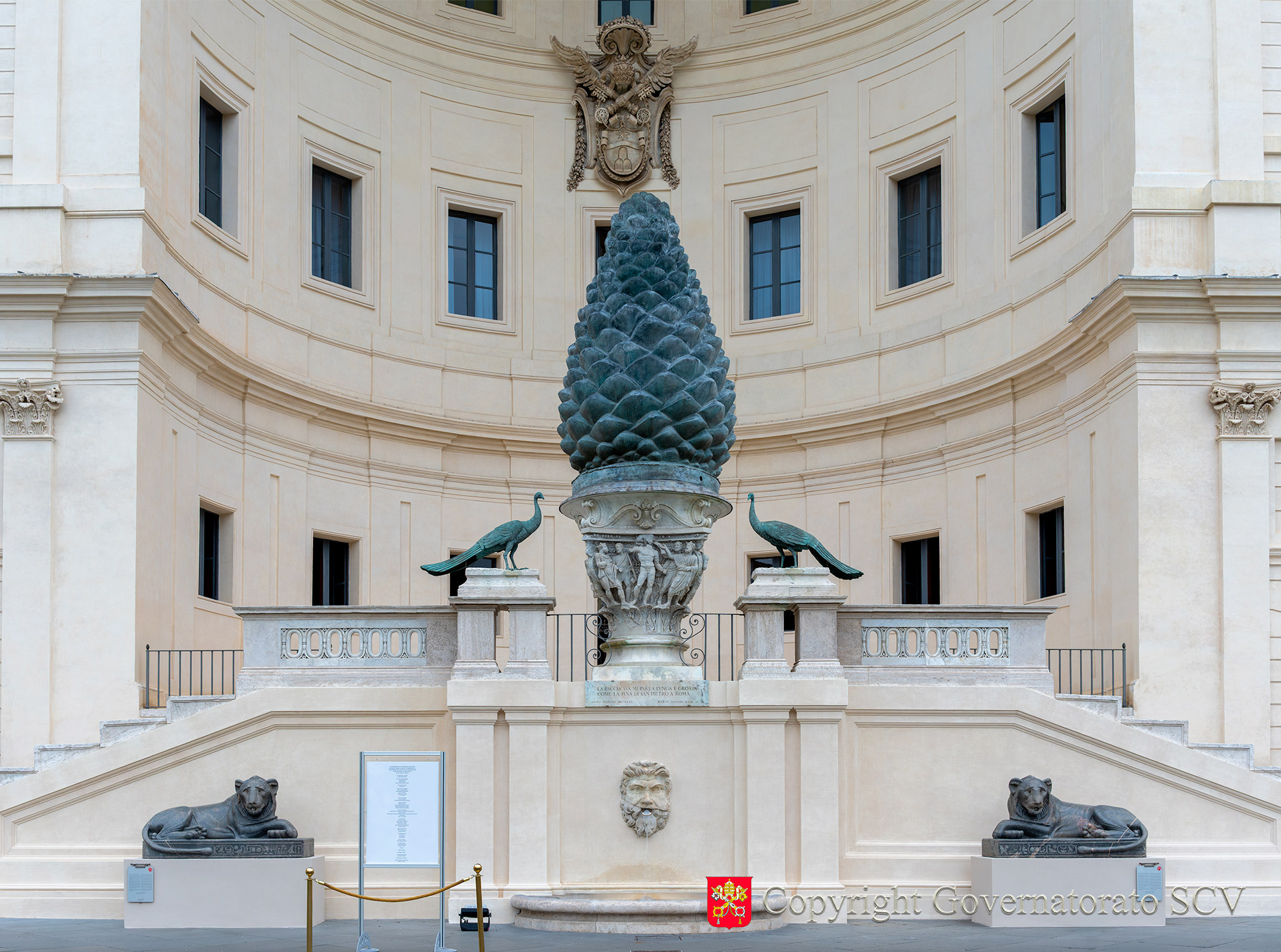
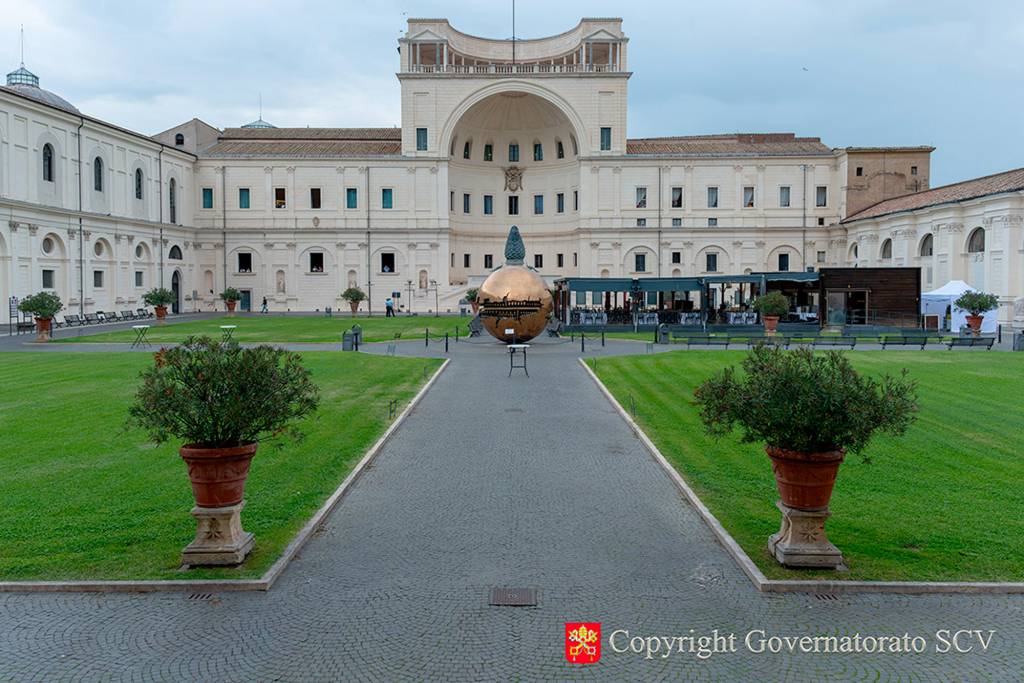
El patio, promovido en el siglo XVI por el Papa Julio II y proyectado por Donato Bramante, debe su nombre a la gran piña de bronce de época romana situada en el centro de su hornacina principal, que antiguamente se encontraba en el atrio de la basílica de San Pedro. Escenario, a lo largo de los siglos, de importantes acontecimientos y numerosas transformaciones, este espacio de tránsito y encuentro para miles de visitantes se ha convertido en uno de los lugares emblemáticos de los Museos Vaticanos, donde confluyen el arte, la historia y la cultura.
El acto conmemorativo del 6 de octubre puso fin a un largo proceso de trabajos y estudios sobre las superficies de los edificios que rodean el patio. El objetivo era recuperar la legibilidad de la arquitectura renacentista, consolidando los muros y restituyendo las tonalidades naturales de las fachadas.
La ceremonia comenzó con una conferencia en el Brazo Nuevo, en la que intervinieron Sor Raffaella Petrini, Presidenta de la Gobernación del Estado de la Ciudad del Vaticano, y la doctora Barbara Jatta, Directora de la Dirección de Museos y Bienes Culturales. Junto a ellas participó Monseñor Terence Hogan, coordinador de la Oficina de Relaciones con los Patrons of the Arts in the Vatican Museums, una asociación de benefactores que desde hace décadas financia la restauración de las colecciones y los espacios de los Museos.
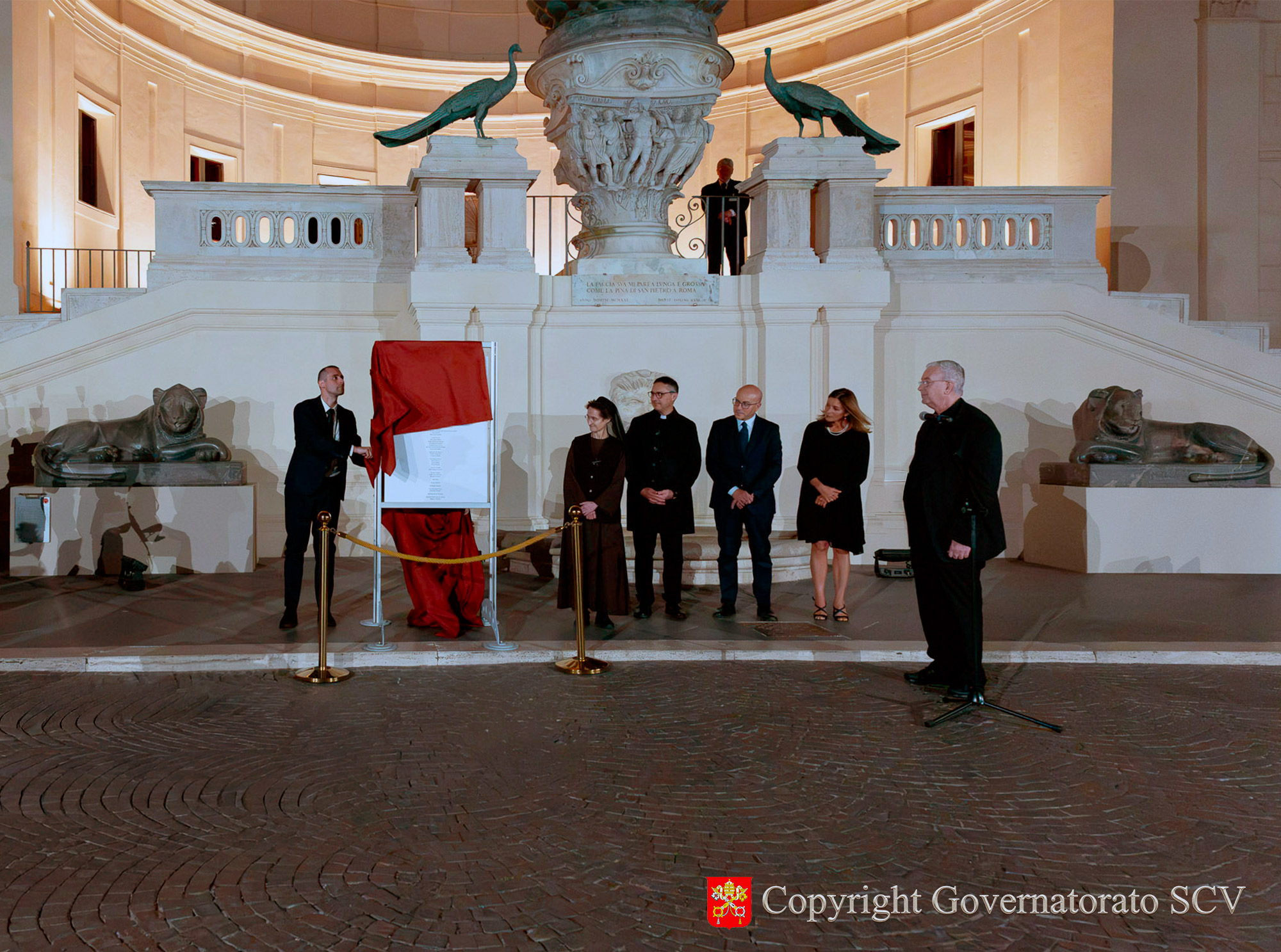
Al término de la conferencia, los invitados, entre ellos numerosos miembros de los Patrons que han financiado la restauración, fueron acompañados al patio, donde, al son de la Banda de Música de la Gendarmería, se descubrió la placa conmemorativa dedicada a los donantes del proyecto. En su honor, el patio se iluminó de manera extraordinaria, realzando las fachadas recién restauradas.
La restauración ahora inaugurada constituye la última fase de un proyecto iniciado en 2016, con la consolidación de los muros y la recuperación de los revestimientos en tonalidades naturales en todos los lados del patio.
Los trabajos se desarrollaron por fases y brindaron la oportunidad de profundizar en el conocimiento de este espacio fundamental de la arquitectura de los Museos Vaticanos, concebido por Julio II para conectar el Palacio Apostólico con la villa de Inocencio VIII, y que hoy, finalmente, ha recuperado su belleza original.
A continuación, publicamos el discurso del Presidente del Governatorato:
Distinguished guests, dear Patrons of the Arts of the Vatican Museums,
I wish to greet all of you who have gathered here this evening for this significant moment in the life of the Vatican Museums.
It is with great joy and a deep sense of gratitude that I stand before you tonight, as we celebrate the completion of the restoration of the Bramante Courtyard — a project that began in 2016 and has, over the course of these years, brought together the talents, dedication, and generosity of so many. This evening is not only a celebration of restored beauty, but a tribute to the extraordinary collaboration between the Patrons of the Arts in the Vatican Museums, the administration of the Vatican Museums, and the skilled curators and restorers who have devoted themselves to this historic undertaking.
I would like to extend my heartfelt thanks to each and every one of you who, in ways both great and small, have contributed to the protection, conservation, and restoration of this architectural masterpiece. Your generosity and commitment have made it possible to preserve not only a work of outstanding artistic and historical value, but a space that continues to inspire all who pass through it.
The preservation and conservation of artistic treasures has the ability to help us not only to understand the history of our past but allows us a glimpse of what is possible in the future.
Art has been an integral part of the Vatican for hundreds of years, whether conveyed on canvas, by sculpture, or even through the dynamic medium of architecture. The gift and joy of art has the ability to take us beyond words and allow us into the realm of beauty, which is a true and unique gift of God.
Recently, Pope Leo XIV reiterated the irreplaceable value of this gift, when addressing artists and curators during a meeting with the Dicastery for Culture and Education, here in Vatican City State (Oct. 2, 2026): «… the Church has never considered art to be merely decorative», he stated. «Instead, for the Church, art nurtures the fundamental posture of listening, through which we can learn about humanity’s aspirations and wounds, our thirst for beauty, justice and peace, and our search for meaning».
This is especially true in our age of digital transition and artificial intelligence, because, as Pope Leo point out in Magnifica Humanitas (cf. 122), algorithms lack the spark of the human, whereas art preserves this spark.
Once again, I wish to thank all who have contributed in their own way to making this evening possible as we celebrate the restoration of a most extraordinary masterpiece, especially the Director of the Vatican Museums and her staff. It is now my great pleasure to invite Monsignor Terence Hogan, Coordinator of the Patrons of the Arts in the Vatican Museums, to share with you more about this remarkable project and the journey that has brought us to this very evening.
Thank you.