

Michelangelo’s Last Judgment in the Sistine Chapel – work on extraordinary maintenance begins

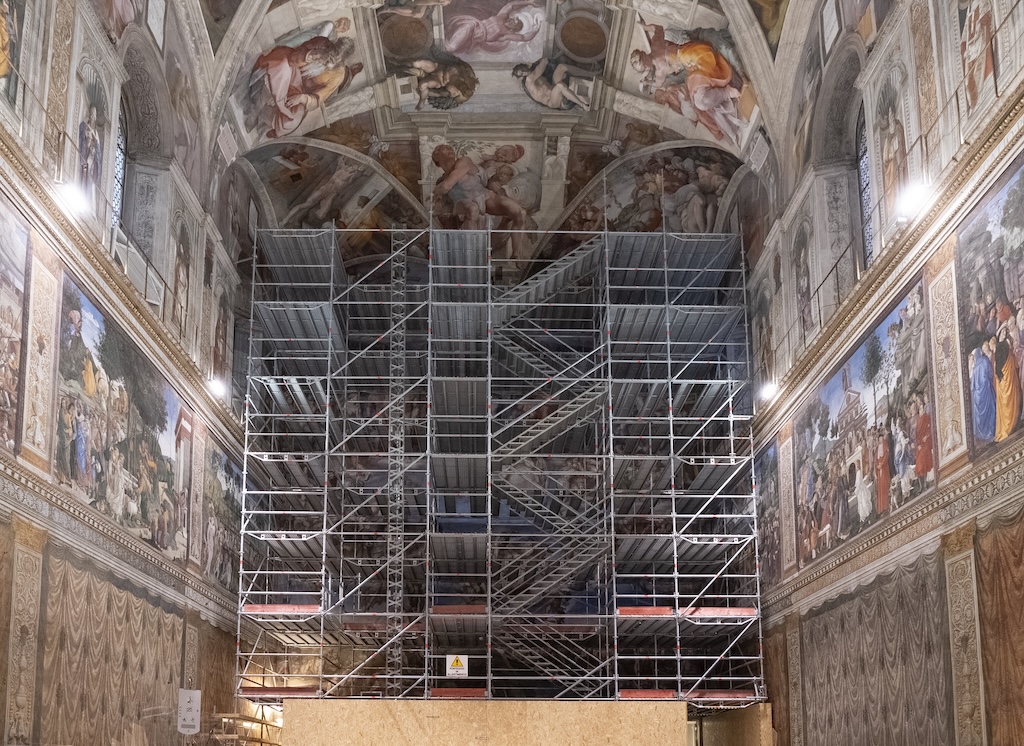
Extraordinary maintenance has commenced on Michelangelo’s monumental fresco The Last Judgment painted on the altar wall of the Sistine Chapel, following the completion of the scaffolding. The intervention has been made possible thanks to the generous contribution of the Florida Chapter of the Patrons of the Arts in the Vatican Museums.
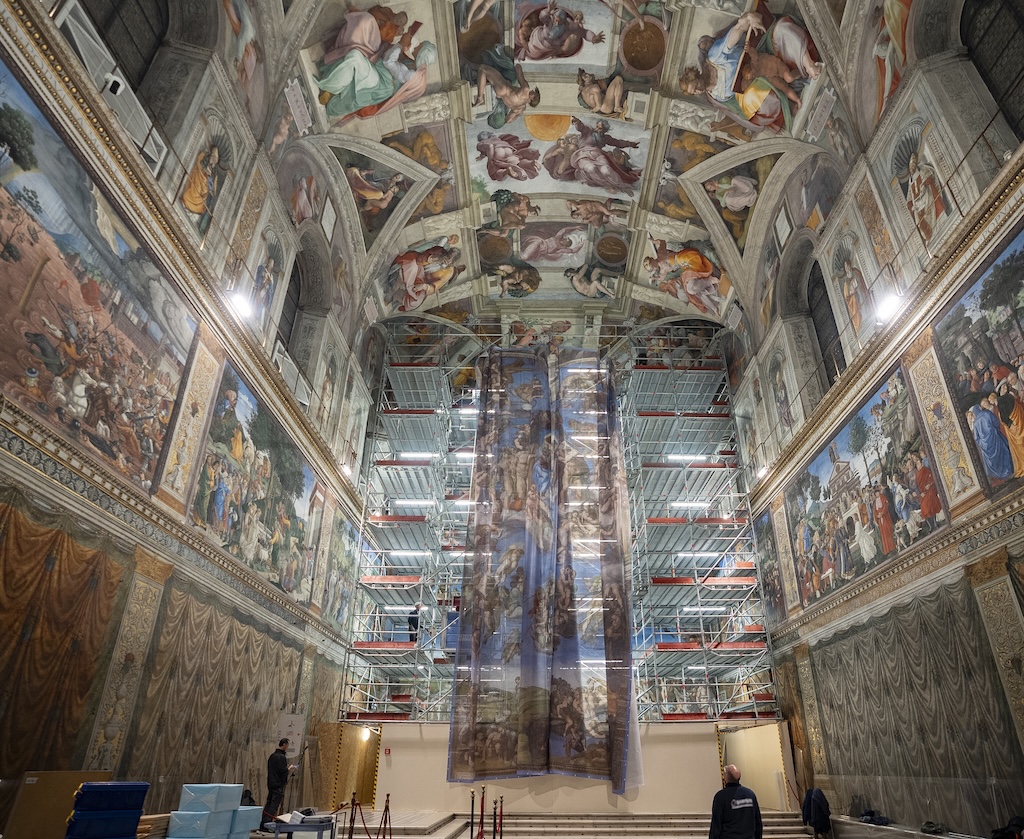
The work is scheduled to be completed by upcoming Holy Week. In the meantime, the Sistine Chapel – one of the main attractions within the Vatican Museums complex - continues to be open to visitors and for worship service, who will find the scaffolding—installed by the Directorate of Infrastructure and Services of the Governorate—covered by a screen reproducing the image of The Last Judgment.
As stated by Barbara Jatta, Director of the Vatican Museums and Cultural Heritage, “All phases of the intervention will be documented by the Photographic Laboratory of the Vatican Museums, creating a valuable record of the process which, by removing a slight patina invisible to the naked eye, will restore Michelangelo’s colors to their original splendor. Approximately thirty years after the last conservation intervention, completed in 1994 under the supervision of Director General Carlo Pietrangeli and carried out by Gianluigi Colalucci, at the time Chief Restorer of the Paintings and Wooden Materials Restoration Laboratory of the Vatican Museums, it will once again be possible to admire Michelangelo’s supreme masterpiece in the full power of his vision.”
The work is being carried out by the restorers of the Vatican Museums’ Laboratory for the Restoration of Paintings and Wooden Materials. Paolo Violini, Chief Restorer of the Laboratory, explained that the extraordinary maintenance became necessary due to “the presence of a widespread whitish veil on the painted surface, which has caused a weakening of the chiaroscuro values and a consequent alteration in the chromatic legibility of the fresco. The removal of this patina is performed through the controlled brush application of deionized water, interposed through a double layer of Japanese paper. The water allows for the complete solubilization of deposits and extraneous substances, bringing the original paint layer back to light while respecting its authentic state of conservation. The intervention is preceded by thorough preliminary scientific investigations, detailed photographic documentation, and a precise assessment of the artwork’s state of conservation, aimed at acquiring data and verifying the compatibility of our operational procedures.”
The extraordinary maintenance intervention also involves the Vatican Museum’s Scientific Research Cabinet and the Office of the Conservator.