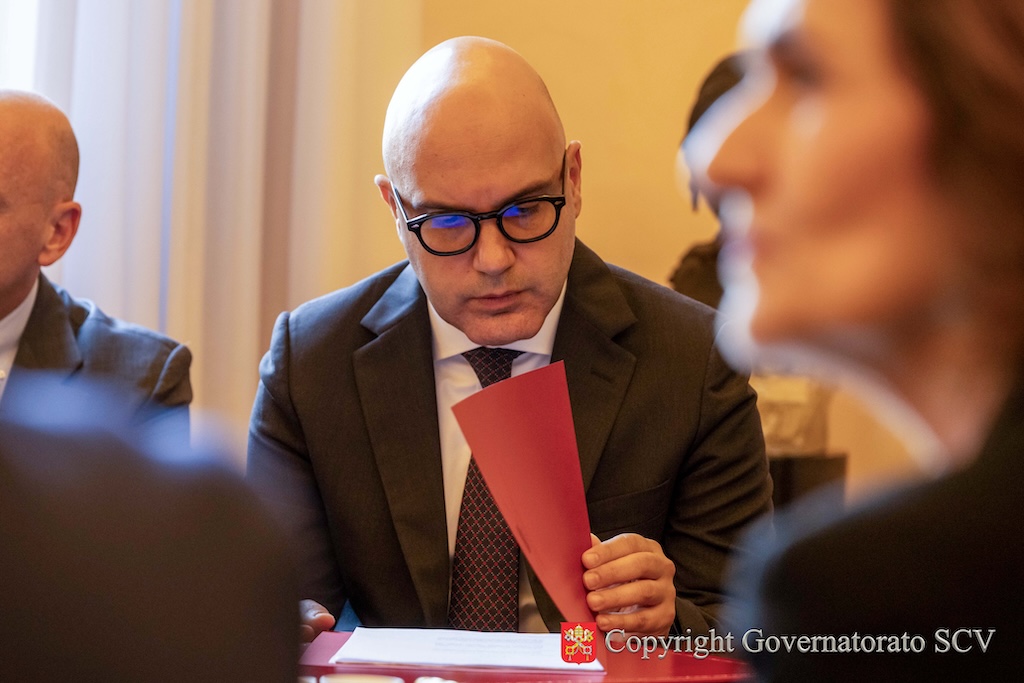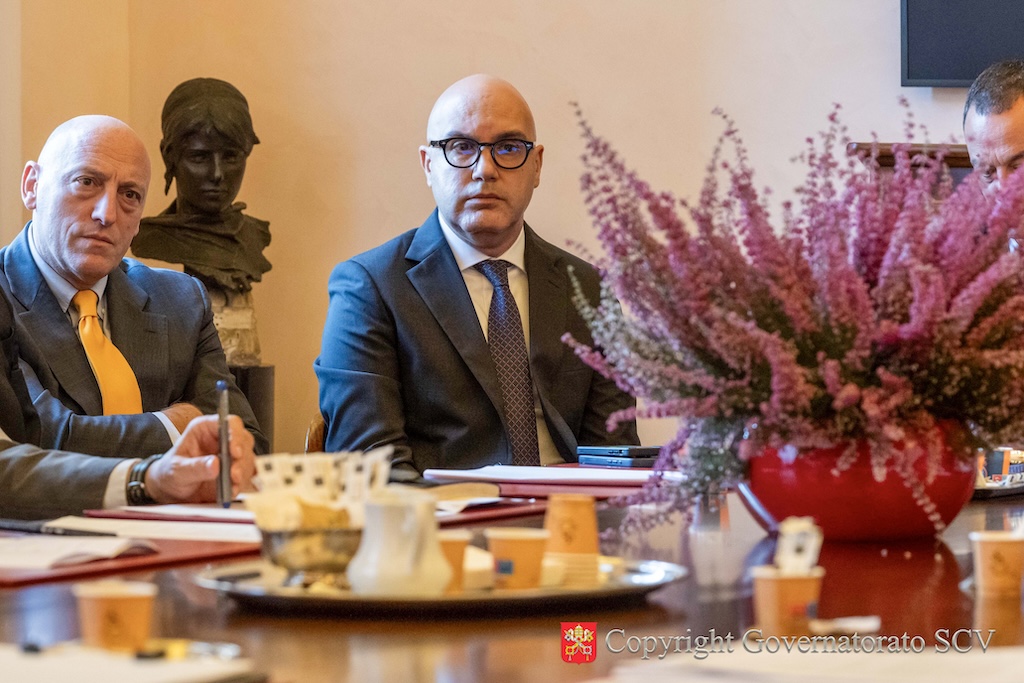


Interview with Gianni Lasaracina, Head of the Customs Services of the Governorate

International cooperation in the spotlight
In recent years the Customs Services of the Governorate have undertaken a process of modernization and innovation to align with today’s challenges. Thus, the Protocol of Cooperation between the Vatican City State and the Italian Customs and Monopolies Agency (ADM) was signed to established a coordinated system of controls and information exchange with Italy. We spoke about this with Gianni Lasaracina, Head of the Customs Services of the Governorate, who explained its strategic role and functions in this interview for www.vaticanstate.va.
What are your main duties as Head of the Customs Services?
The Head of the Customs Services directs and oversees the overall activities of the Office, ensuring the proper application of current regulations and higher directives. The work focuses on the regulation and control of all flows of goods entering and leaving Vatican territory and its functional premises, ensuring compliance with the procedures agreed upon with the Italian Republic and the correct application of the exemptions provided for by the 1930 Customs Convention.
Although operating within a small territory, this activity is remarkably complex due to the variety and sensitivity of the goods involved — from artworks destined for the Vatican Museums to medical materials for the “Bambino Gesù” Pediatric Hospital, from diplomatic goods to shipments linked to humanitarian projects and missions of the Holy See.
In this context, the Service plays a balancing and safeguarding role: on the one hand, protecting the State’s sovereign prerogatives; on the other, ensuring full compliance with the rules governing customs relations with Italy and the European Union.
Among its main operational duties are managing VAT[value added tax] exemptions through issuing certificates, verifying invoices and validating them to make the exemption effective; authorizing exit permits for goods leaving the territory temporarily or permanently; verifying customs and transport documents; classifying goods under the proper tariff codes; and ensuring compliance across various categories of merchandise.
How does your Office coordinate its work with non-Vatican institutions?
Coordination with non-Vatican institutions is a central aspect of the Customs Services’ work, since most operations involving Vatican territory inevitably concern external entities and infrastructures. The relationship with Italian institutions — particularly with the Customs and Monopolies Agency — is both daily and strategic. It is not merely administrative collaboration but a genuine technical partnership built on mutual trust and shared goals: ensuring secure flows of goods, simplifying procedures, and at the same time protecting the sovereignty of the Holy See.
Can you tell us about the Cooperation Protocol with the Italian Customs and Monopolies Agency?
The Protocol of Cooperation between the Vatican City State and the Italian Customs and Monopolies Agency (ADM), signed in February of this year, is part of the legal and operational framework governing relations between the two States in customs matters.
It was established to ensure a coordinated system of controls and information exchange capable of reconciling the State’s sovereignty with the safety and traceability procedures that regulate the circulation of goods within Italian and EU territories.
The Protocol marks an operational and cultural turning point for the Vatican Customs Services. It not only formalizes a structured technical collaboration that enables both States to act according to common criteria for inspections, verifications, tariff classifications and goods movements, but — once fully implemented — will also allow the Vatican City State to strengthen its customs efficiency in harmony with the highest international standards of security and legality. It promotes a modern and functional vision of customs cooperation founded on transparency, efficiency and mutual trust.
What are the main operational challenges the Protocol seeks to address?
The operational challenges addressed by the Protocol concern the need to harmonize procedures, timelines and administrative language between two very different entities: the Vatican City State and the Italian Republic.
On one side, the Vatican territory — extremely small but logistically complex; on the other, Italian procedures governed by the EU Customs Code, designed for a much broader and more structured context.
The Protocol therefore aims to bridge this operational gap by systematically addressing long-standing issues: procedural inconsistencies, customs clearance and transit times, management of high-value or sensitive goods, information sharing and IT interoperability, administrative simplification and reduction of bureaucracy.
In essence, the Protocol seeks to unify methods and timing, overcoming technical and bureaucratic obstacles to ensure that customs operations between the Vatican and Italy take place swiftly, securely, and with clear delineation of responsibilities — without undermining the autonomy and sovereignty of either State.
How has digitalization changed customs operations in recent years?
In recent years, digitalization has profoundly and irreversibly transformed customs operations, introducing an administrative model based on efficiency, traceability and transparency. The Vatican City State’s Customs Service has progressively abandoned traditional paper-based procedures, adopting integrated digital systems that enable faster and more secure management of operations.
Today, key processes — from issuing exemption certificates to authorizing exit permits — are handled through certified digital tools such as qualified electronic signatures, electronic protocols, and shared databases, allowing immediate document verification and greatly reducing error margins.
Direct connection with the Italian Customs and Monopolies Agency’s systems makes it possible to consult real-time data, tariff codes, registers, and electronic records, thus enabling continuous monitoring of goods flows and ongoing technical dialogue between the two administrations.
Thanks to digitalization, a shipment can now be tracked from entry to delivery, with automatic recording of each stage and instant verification by the competent offices.
This new approach has turned the Customs Services into not just a point of control, but a true information hub — ensuring speed, security, and procedural certainty. Ultimately, digitalization has combined operational efficiency with the principle of administrative transparency, strengthening the Service’s role as a guarantor for the State and its institutions.
What tools and technologies are currently used to ensure the security of incoming and outgoing goods?
The security of goods flows is one of the top priorities of the Vatican City State’s Customs Services. Each incoming or outgoing operation undergoes a risk analysis system that identifies potential issues in advance and calibrates control levels according to the nature, origin, and destination of the shipment.
Several technologies and operational methods support this process: random checks and targeted document inspections based on risk indicators and product categories; weighing and sealing systems to ensure correspondence between declared and actual quantities; tariff and goods databases to verify correct classification and origin; and X-ray inspection systems that allow non-invasive examination of goods, reducing time and unnecessary handling.
These technologies, combined with constant cooperation with the Italian Customs and Monopolies Agency and the Vatican Gendarmerie, help maintain a balance between security and operational speed.
How important is international cooperation in combating smuggling and customs fraud?
International cooperation is a cornerstone of modern customs activity and holds particular importance for the Vatican City State.
No customs authority can operate in isolation: border security depends on the ability to establish collaborative relationships, information exchange, and mutual recognition with other competent administrations.
In this perspective, the Vatican Customs Services actively participate in a network of institutional relations that — through the Italian Customs and Monopolies Agency — connects them to the main European and international cooperation networks dealing with customs security, anti-smuggling efforts and protection of economic rights. This privileged channel enables the timely exchange of information, fostering coordinated actions and a preventive rather than repressive approach.
Through these synergies, the Vatican Customs Services — despite their limited scale — contribute to the overall security of international trade flows, strengthening transparency and combating fraud, counterfeiting and illicit trafficking. Thus, international cooperation is not merely a technical tool, but a true form of shared responsibility among States — essential to ensuring legality, security, and mutual respect in global trade processes.
What kind of training or assistance do you provide to the Governorate’s Departments to ensure regulatory compliance?
Training and technical assistance are essential aspects of the Customs Services’ activities, ensuring that all State entities operate in compliance with current customs rules and procedures.
The Office provides constant support to the Departments of the Governorate and other Vatican entities, offering advice and guidance on tariff classification, tax exemptions, customs documentation and currency declarations.
Specific customs procedures are also developed — often in close collaboration with various Departments and Dicasteries — to meet the particular needs of the State and its institutional activities, ensuring traceability, regularity, and administrative transparency at every stage. This includes the creation of standardized documentation templates and simplified internal procedures that help requesting offices correctly manage import and export operations, in accordance with the rules agreed upon with Italian authorities.
What role will technologies such as artificial intelligence and blockchain play in future customs processes?
New technologies represent an important frontier in the evolution of customs processes, offering tools that can make procedures faster, safer and more transparent.
In the Vatican context, the goal is not innovation for its own sake, but the gradual and thoughtful integration of digital solutions that genuinely improve operational management without compromising the administrative and institutional nature of the system.
Artificial intelligence (AI), for example, could be used for automated document analysis, anomaly detection, and enhanced risk assessment — enabling quicker identification of shipments that require further inspection.
Similarly, blockchain technology could introduce new levels of traceability and authenticity: through distributed digital ledgers, it would be possible to certify the origin and destination of goods in an incorruptible manner, particularly those of high value or related to humanitarian projects and international donations. However, the introduction of these technologies must remain balanced with the Vatican administration’s tradition of rigor and restraint. For innovation to be effective, it must remain at the service of people and institutions, enhancing human expertise and administrative responsibility.
In this light, the Vatican Customs Services look to the future with a pragmatic and realistic approach — embracing the potential of automation and digitalization without losing sight of the sense of moderation, proportion, and ethical purpose that should accompany every act of public administration in the Vatican City State.