

Planted in the Vatican Gardens, a Ginkgo Biloba Tree

Symbol of Resilience and Longevity
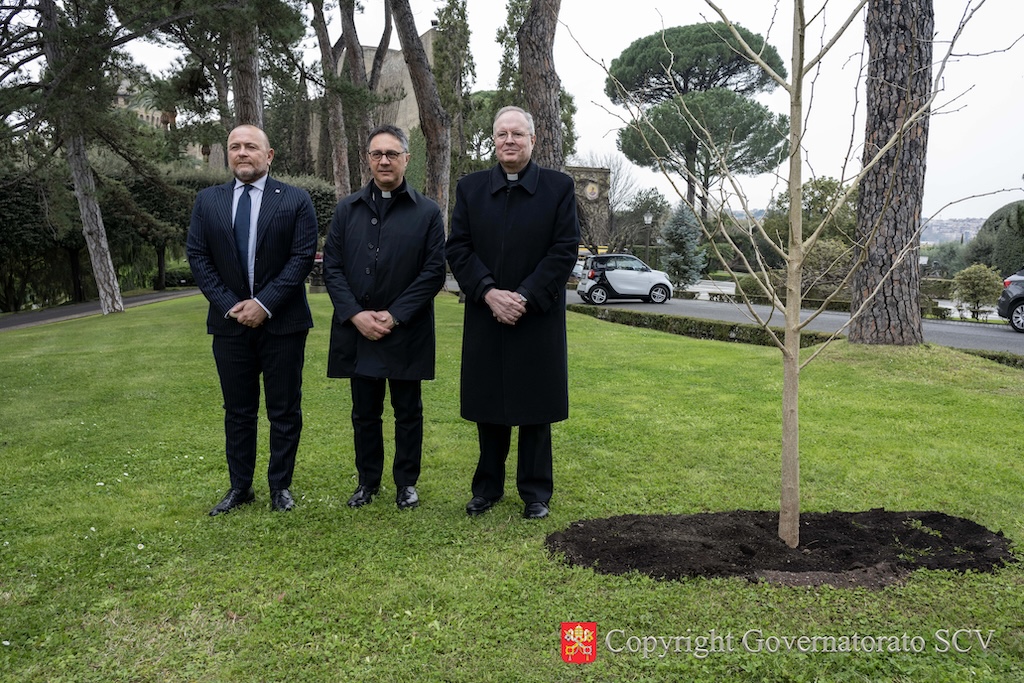
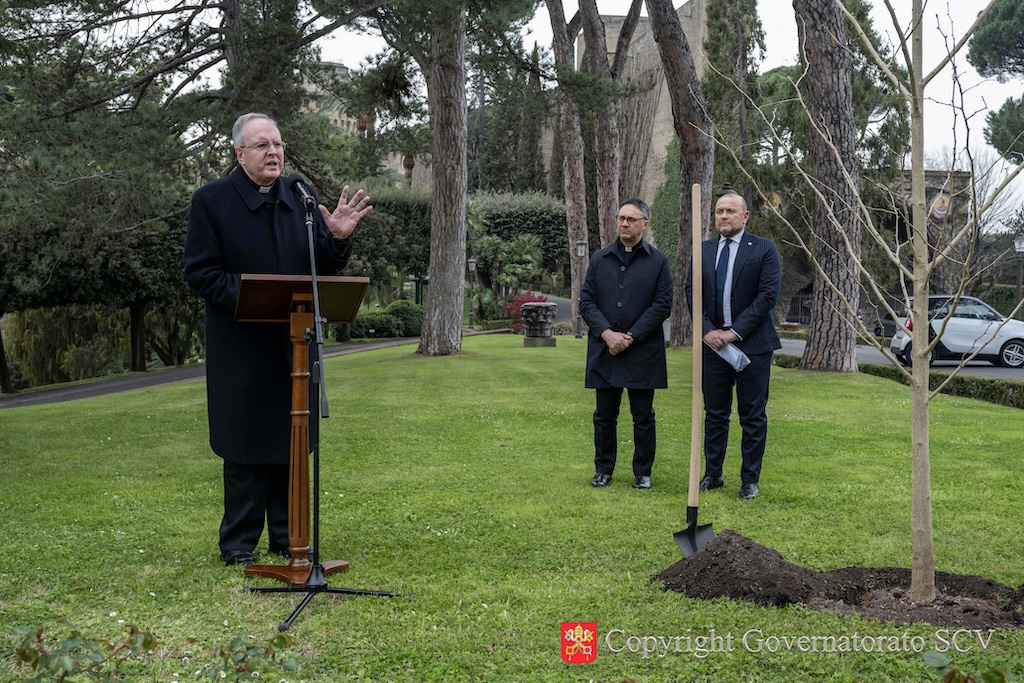
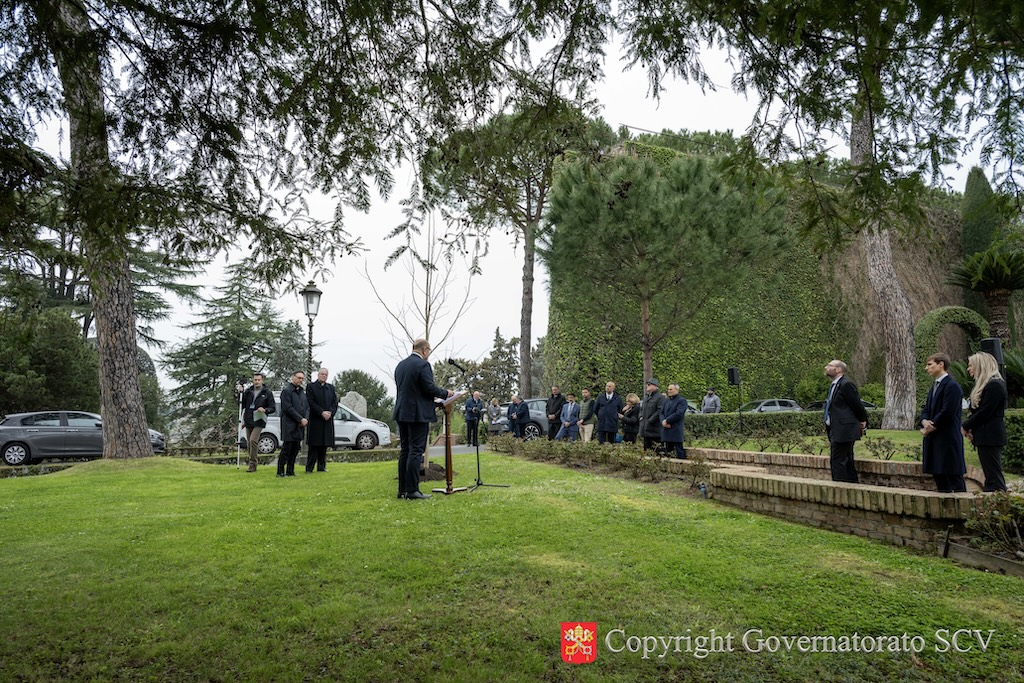
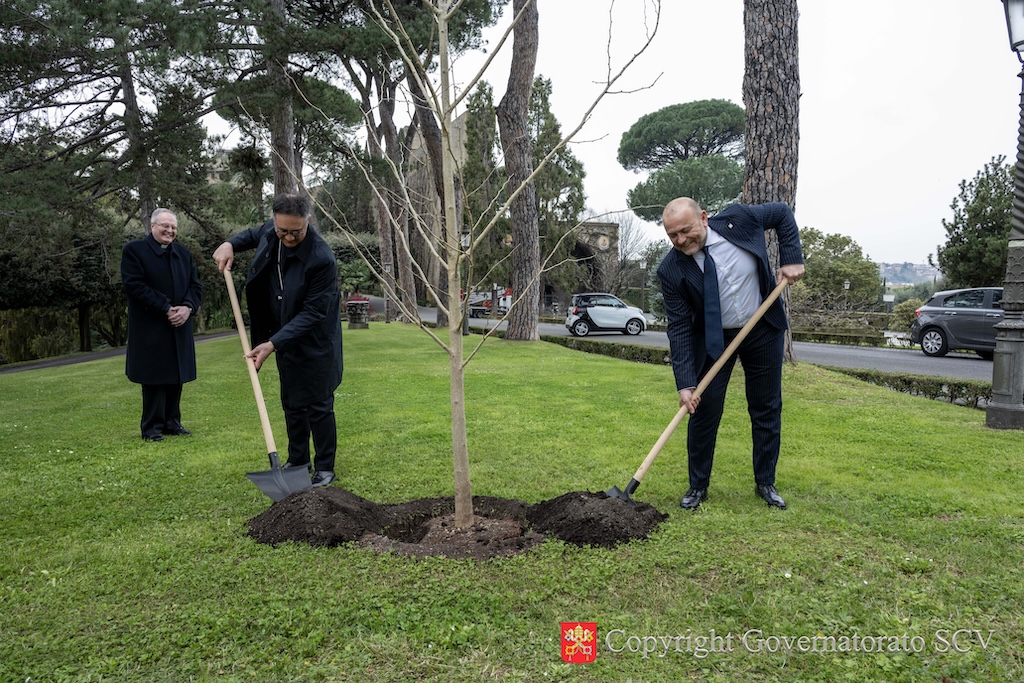
The Ginkgo Biloba survives in polluted urban environments, tolerates various soil types, and resists diseases and parasites. In many Asian cultures, it is a symbol of longevity. The tree offers numerous benefits, including improving urban air quality and creating shaded, cooling areas during the warm seasons. A specimen of this species was planted on March 6 in the Vatican Gardens.
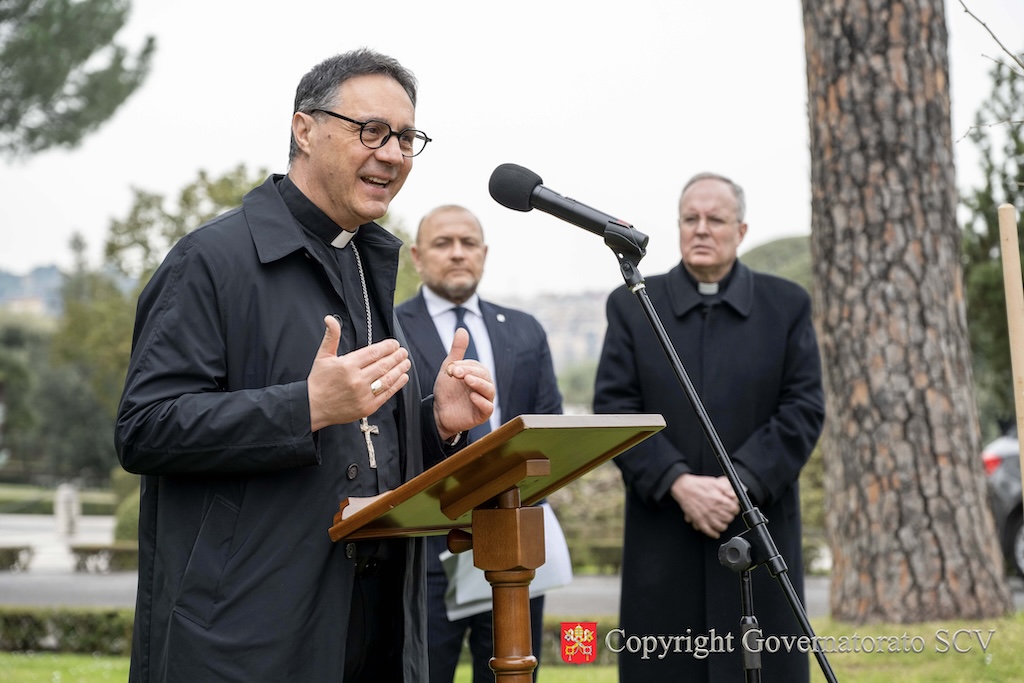
Presiding over the ceremony was Archbishop Emilio Nappa, Secretary General of the Governorate of Vatican City State, who offered those present a brief greeting. Mauro Uniformi, President of the National Council of the Order of Agronomists and Forestry Doctors (CONAF), explained the reasons behind the gift of the tree.
Among those attending the planting were Monsignor Fernando Chica Arellano, Permanent Observer to the United Nations Organizations and Agencies for Food and Agriculture (FAO, IFAD, WFP), and Stefano Giampaolo, Head of the Gardens and Environment Service of the Directorate of Infrastructure and Services of the Governorate.
Beyond its ornamental value, the Ginkgo Biloba possesses remarkable resilience: six specimens survived the devastating effects of the atomic bomb in Hiroshima, sprouting again from their roots and thus becoming a symbol of rebirth and hope.
Below the address delivered by the President of CONAF:
Archbishop Monsignor Emilio Nappa,
Secretary General of the Governorate of Vatican City
This first symbolic act follows what was proposed in a private audience by the Holy Father last year, on the eve of the opening of the 19th National Congress of Agronomists and Foresters.
On that occasion, the Holy Father made a strong appeal of hope to our category, inviting us to consider our work as a mission.
More precisely, he pointed out to those working in agriculture their responsibility to manage Creation as:
‘a concrete form of charity towards our Mother Earth and towards future generations: the Earth is not a possession, but a gift! It precedes us and will be taken away from us. It is a mother who nourishes, not material to be exploited. Those who cultivate it with respect and wisdom participate in God's creative work and contribute to peace among men’.
The Holy Father expressed gratitude for the silent and qualified work of those who protect the soil, water and forests, recalling that the ecological crisis ‘is also a spiritual crisis’ and that care for creation comes from ‘a heart reconciled with God and with nature’.
He also encouraged us to became ‘artisans of a new alliance between science and conscience,’ putting technical knowledge at the service of the common good rather than immediate profit.
Last year, the audience at the Vatican concluded with our commitment to translate the Pope's words into practical actions for protection, education and sustainability, aware that protecting the Earth means protecting humankind.
Along these lines, we draw up the Carta di Roma, a policy document written in the XIX National Congress “Roots in the Future”. Today, this document orientates the job of agronomists and foresters for the future, turning the responsibility of caring for natural capital, production systems and territories into operational commitments.
Today, we want to embody these principles by planting a Ginkgo biloba, a “living fossil” tree, the only surviving species of an ancient group of plants dating back over 200 million years. Today, this feature is perceived as a guardian of the Earth's memory.
Due to its extraordinary ability to adapt, Ginkgo biloba became a symbol of resilience, longevity and rebirth, capable of surviving after the atomic explosion in Hiroshima: severely damaged trees were able to regenerate, becoming a powerful message of hope and continuity of life.
Thanks to its resistance to pollution, disease and adverse climatic conditions, Ginkgo biloba is widespread in urban contexts around the world, where it grows without losing its ancient elegance.
It thus represents a true bridge between nature and modern urban resilience, a tree that embodies historical memory and the capacity for rebirth.
Ginkgo biloba, however, is not just a botanical wonder: over time, it has become a powerful spiritual archetype, capable of embodying memory, equilibrium and transformation.
It is a symbol of inner stability: its deep roots evoke anchoring, while its canopy opening towards the sky indicates openness to growth.
In short, it is a symbol of balance, memory, resilience and transformation. It is the image of a soul that traverses the centuries without breaking, that integrates polarities and that, even after destruction, finds the strength to flourish again.