

Joint Philatelic Issue Presented by the Vatican City State and the Grand Duchy of Luxembourg

Celebrating the100th Anniversary of the Pontifical Institute of Christian Archaeology
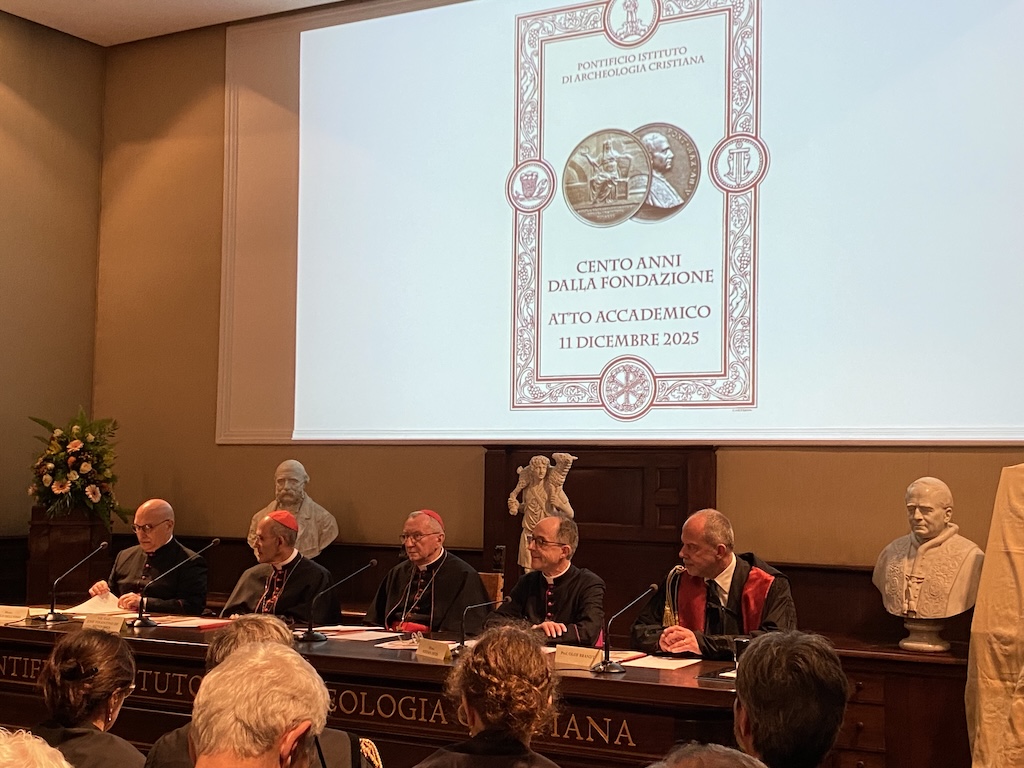
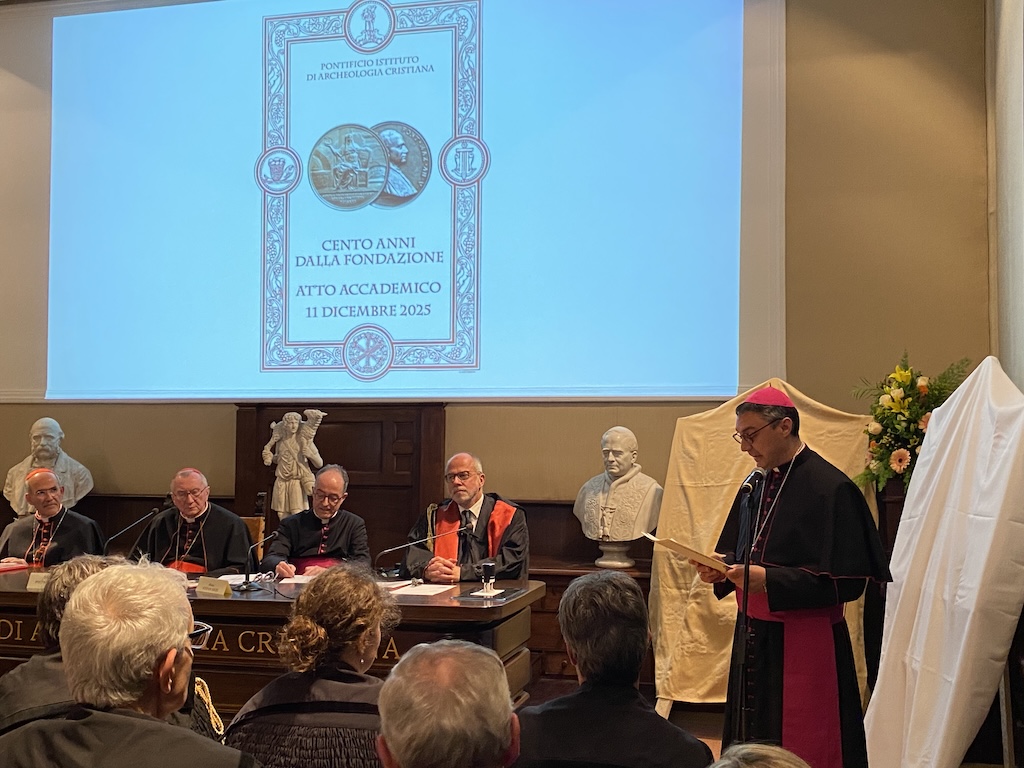
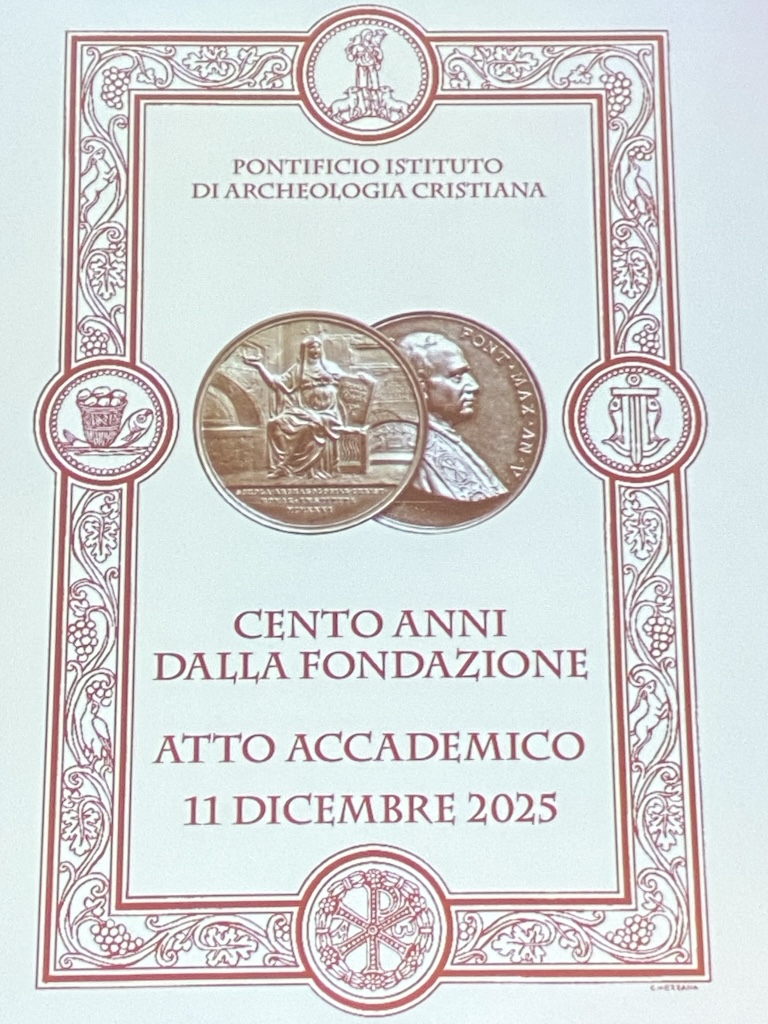
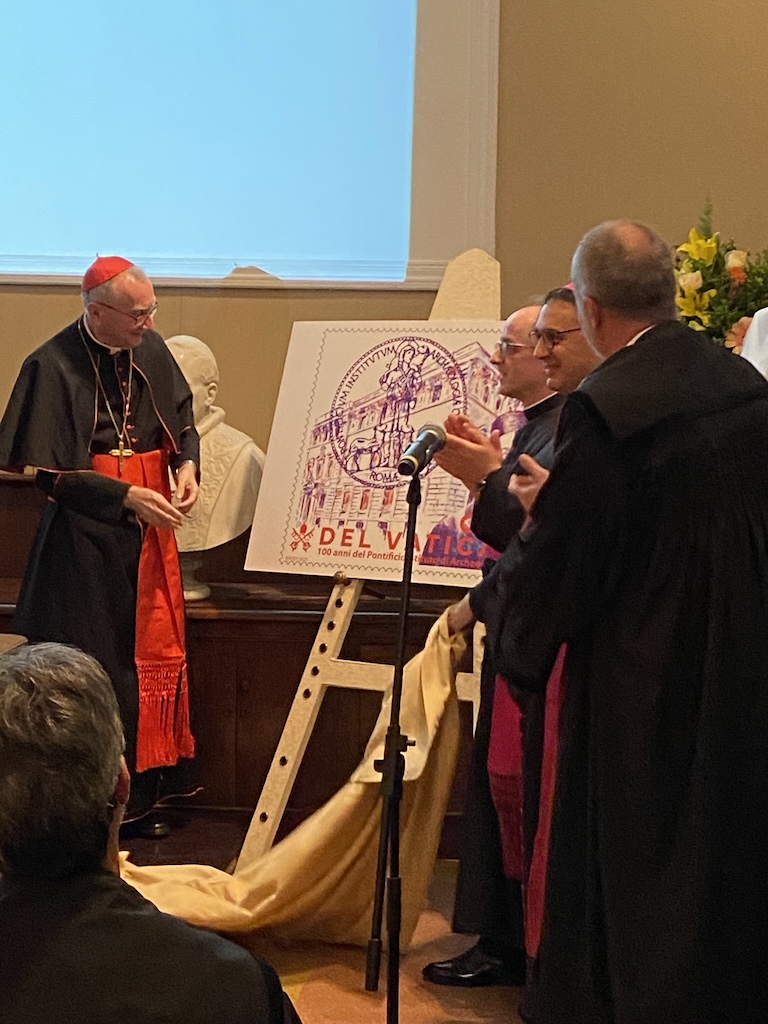
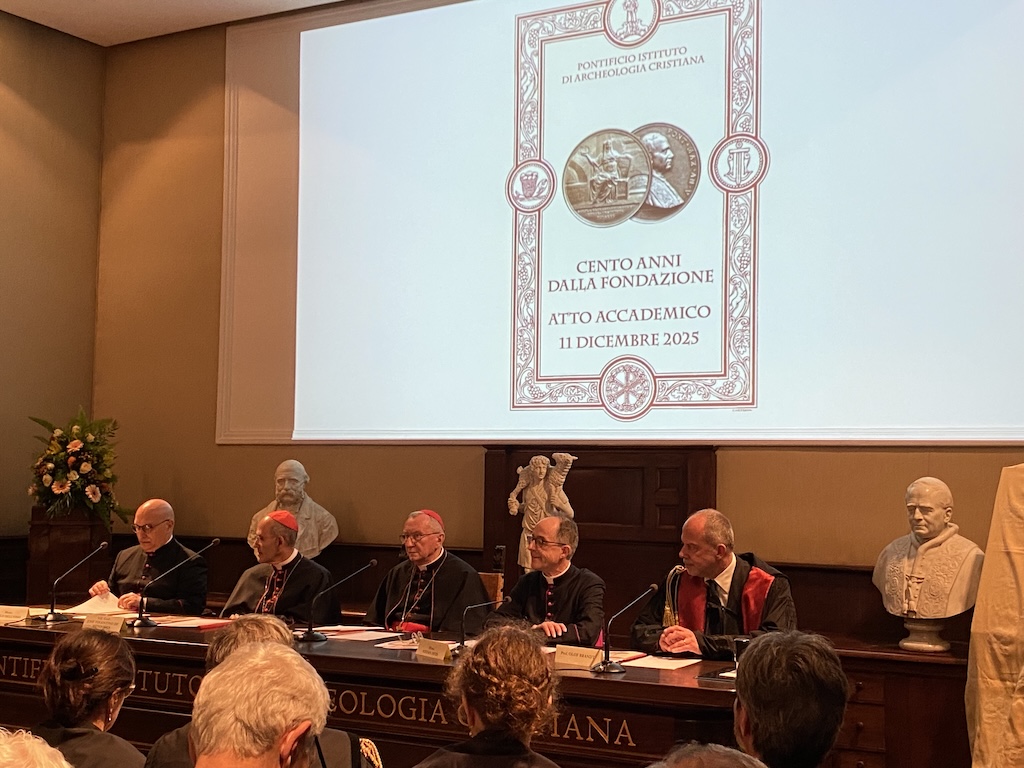
On 11 December, exactly one hundred years after its foundation, the unveiling ceremony of the two commemorative stamps jointly issued by the Vatican City State and the Grand Duchy of Luxembourg took place at the Pontifical Institute of Christian Archaeology.
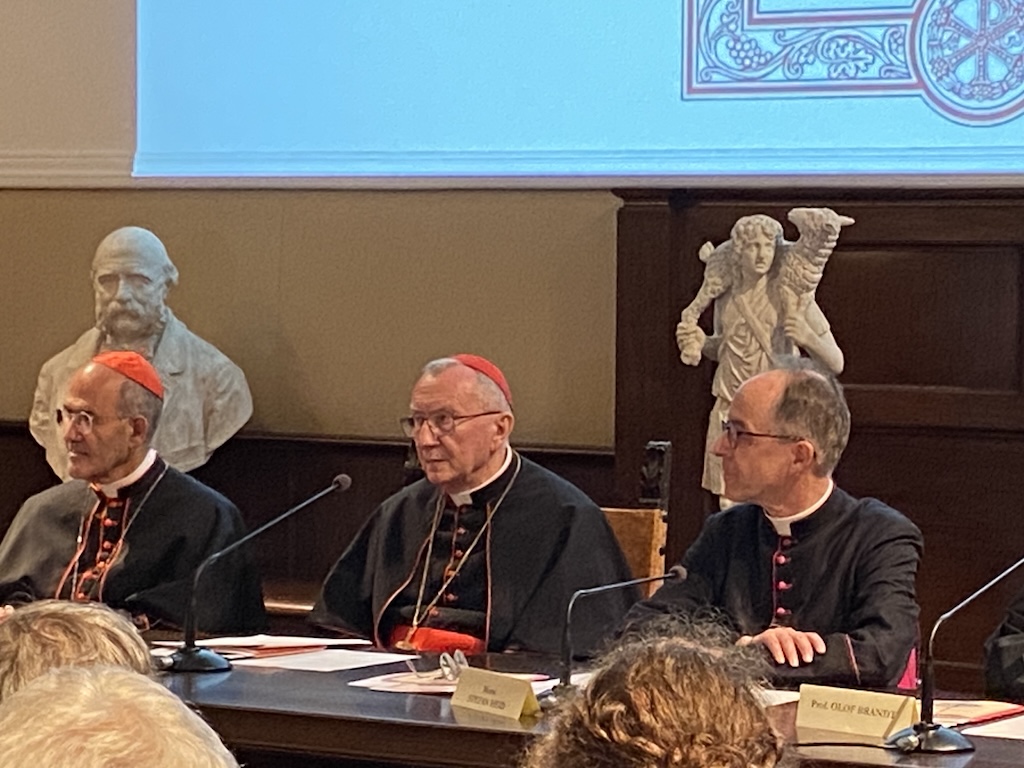
The project had already taken shape in 2023, when Jean-Claude Kugener—at the time Ambassador of Luxembourg to the Holy See and Director of Cultural Affairs at the Luxembourg Ministry of Foreign Affairs—came across, by chance, the tomb of Johann Peter Kirsch at the Campo Santo Teutonico. Kirsch was a Luxembourg prelate and a figure of outstanding importance who, about a hundred years earlier, had contributed to the foundation of the Pontifical Institute of Christian Archaeology (PIAC). Ambassador Kugener thus conceived the idea of promoting, on the occasion of the Institute’s centenary, the creation of a joint stamp by the Luxembourg Post and the Vatican Post. This initiative reached its culmination on Thursday afternoon, 11 December, at the Institute’s headquarters, in the presence of the Secretary of State, Cardinal Pietro Parolin; the Grand Chancellor of the Institute and Prefect of the Dicastery for Culture and Education, Cardinal José Tolentino de Mendonça; and the Secretary General of the Governorate, Archbishop Emilio Nappa, as well as the highest authorities and representatives of the Institute’s academic body, including the Rector, Monsignor Stefan Heid.
The Pontifical Institute of Christian Archaeology was officially founded by the motu proprio of Pope Pius XI, “I primitivi cimiteri cristiani” (Early Christian Cemeteries), with Johann Peter Kirsch as its first Director. The Institute is primarily concerned with the material and literary evidence of early and early medieval Christianity, offering advanced specialization courses to archaeologists from all over the world.
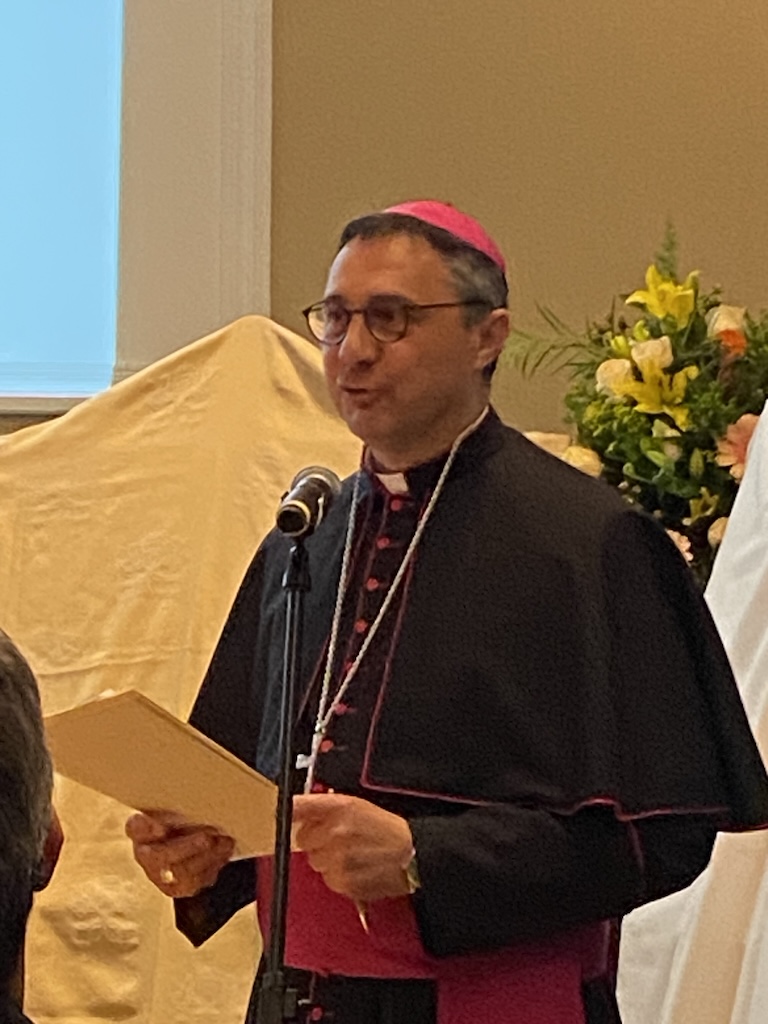
Below is the address delivered by the Secretary General of the Governorate, Archbishop Nappa:
I extend my greetings
to His Most Reverend Eminence Cardinal Pietro Parolin, Secretary of State;
to His Most Reverend Eminence Cardinal José Tolentino de Mendonça, Grand Chancellor of the Pontifical Institute of Christian Archaeology and Prefect of the Dicastery for Culture and Education;
to Monsignor Stefan Heid, Rector of the Pontifical Institute of Christian Archaeology;
to the Authorities;
to the Members of the Academic Body;
to the Faculty, the students,
and to all of you present here.
Today we are gathered to commemorate an important anniversary of this Institute of Christian Archaeology, whose foundation took place officially on 11 December one hundred years ago, under the auspices of Pope Pius XI and thanks to the commitment of the Luxembourg prelate and scholar Johann Peter Kirsch. From these very halls, he made a contribution of historic significance to the development of methodology and to the international establishment of the then emerging discipline of Christian archaeology, understood in its function as an investigation extending to all manifestations of Christian life, from the earliest centuries through the Middle Ages.
The founding act we commemorate today represented the culmination of a project pursued with faith and courage, which providentially came to fruition despite the grave adversities of the time—above all the many wounds left behind by the Great War and the long-standing and still unresolved “Roman Question.”
Even amid the climate of international instability that formed the backdrop to its early decades, culminating in the tragedy of the Second World War, the Pontifical Institute of Christian Archaeology never failed in its scientific and educational role. It ensured continuity of teaching and, over the years, consolidated a tradition that today makes it a point of reference in the academic world, also thanks to constant and discerning updating on ever broader topics. The adherence of the Governorate of the Vatican City State to the initiative of a joint philatelic issue with Luxembourg—the homeland of Monsignor Johann Peter Kirsch, founder of this Institute—is a sign of gratitude for his contribution to scientific research inspired by the values of the Church, a meritorious activity that requires constant dedication and a sincere spirit of self-sacrifice.
The commemorative stamp we are about to unveil, together with the special die emissionis postal cancellation, is the result of philatelic cooperation between the Postal and Philatelic Service of the Governorate of the Vatican City State and the Luxembourg Post.
The Prelate is portrayed on the stamp with the headquarters and the symbol of the Institute, in the background. In addition, the historic seat of the Institute, located on Via Napoleone III in Rome, is depicted, along with the emblem recalling the ancient Paleochristian iconography of the “Good Shepherd,” as handed down to us from the earliest centuries of Christian art. Its most famous version is preserved in the Pio-Christian Museum in the Vatican and is expressly cited in this issue to symbolize the ideals shared by our institutions.
The cancellation features a detail of the statuette of the “Good Shepherd,” housed in the Vatican Museums, and the inscriptions “100 anni del Pontificio Istituto di Archeologia Cristiana,” “Poste Vaticane,” and “die emissionis 25.11.2025.”
With this issue, the Postal and Philatelic Service wishes to pay tribute to a century of studies dedicated to understanding Christian roots, underscoring the role of research as a meeting place of memory, faith, knowledge, and dialogue among different cultures.
This is the contribution of the Governorate of the Vatican City State to this institution, founded by Pope Pius XI as a research center fully integrated into the system of pontifical academic institutions and dependent on the Holy See.
I hope that this gesture of friendship may be remembered as a meaningful milestone along your—and our—journey toward the future.
Thank you.