

An Interview with Paolo Violini, the New Head of the Restoration Laboratory for Paintings and Wooden Material at the Vatican Museums

Further Centuries of Artistic Splendor
The restoration of Raphael’s Loggia, the launch of the preliminary study program for the Sala dei Chiaroscuri, and, in the seventeenth-century sphere, a project to restore the entire Scala Regia—the monumental entrance to the Apostolic Palaces designed by Gian Lorenzo Bernini.
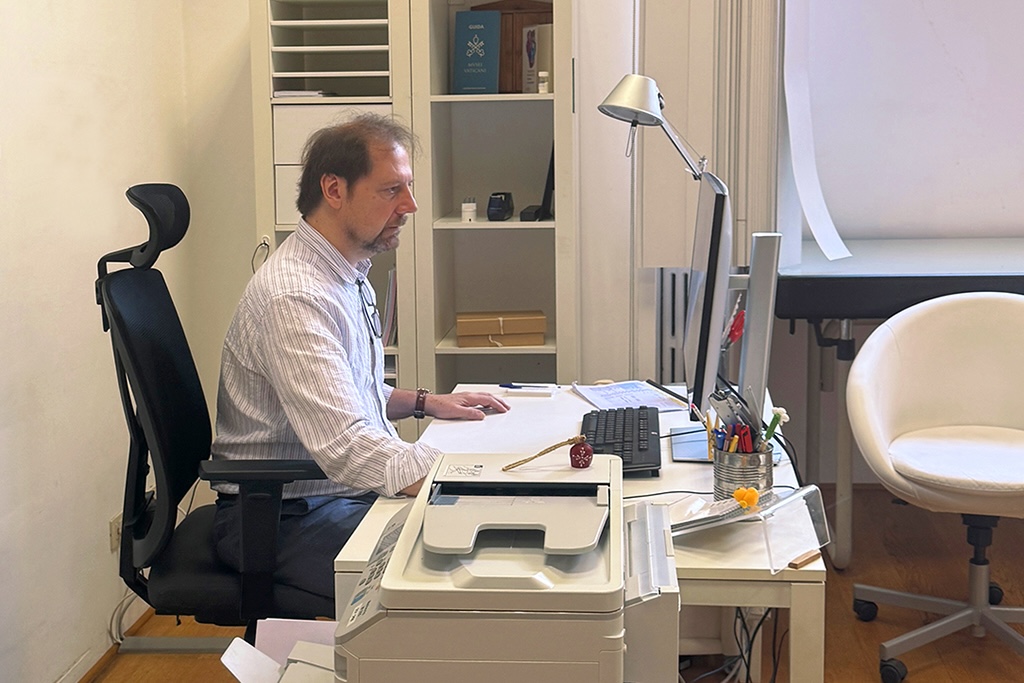
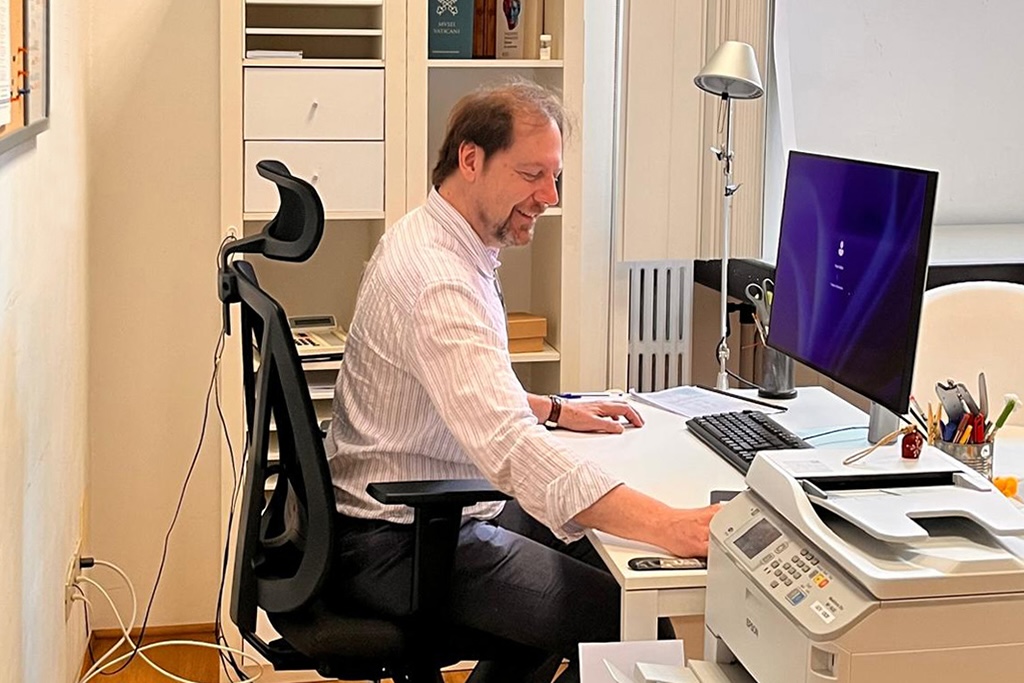
These are some of the initiatives announced in this interview with Paolo Violini, who, as of August 1, is at the helm of Italy’s oldest most renowned restoration workshop: the Restoration Laboratory for Paintings and Wooden Material at the Vatican Museums. [www.vaticanstate.va](http://www.vaticanstate.va)
Can you tell us about your professional journey leading up to this new position?
I graduated as a paintings restorer from the IIAAR in Rome in 1984, under the academic direction of Gianluigi Colalucci, then Head Restorer of the Paintings Laboratory at the Vatican Museums. At the same time, I was also studying architecture at La Sapienza University in Rome, still unsure which path to take. After graduating, I began working independently with a group of colleagues and discovered that restoration fascinated me more and more—it could, in fact, become my professional future.
A few years later, toward the end of 1988, on a Friday, I received a phone call from Colalucci asking if I might be interested in a position at the Vatican Laboratory. Surprised, I hesitated and tried to buy time… my independent work was going well and gave me great satisfaction. They told me I could think about it over the weekend… On Monday morning, I delivered my résumé to Dr. Fabrizio Mancinelli, then Curator of the Byzantine, Medieval, and Modern Art Department, and on December 1 I started work at the Museums. My life’s choice was made.
After a few years spent working in the laboratory and on various fresco restoration sites, in the early 1990s Colalucci brought me onto the project for the restoration of the Sistine Chapel ceiling. The close encounter with Michelangelo—so stunning, emerging miraculously from the shadows under the hands of the restorers—was overwhelming.
After completing work on the Last Judgment in the Sistine Chapel, which also included the adjacent scene by Perugino, The Journey of Moses, inaugurating the cycle of work on the Quattrocento register, I began my work on the frescoes of the Raphael Rooms. From 1995 to 2012, I personally oversaw the restoration of the Stanza della Segnatura and the Stanza di Eliodoro, with the collaboration of a small group of skilled colleagues.
I was fortunate to begin this cycle with The School of Athens, Raphael’s first completed fresco in the Vatican, and to proceed in chronological order. This allowed me to discover and understand, fresco after fresco, the extraordinary development of his technique and style during his Vatican years. In the Liberation of Saint Peter, Raphael managed to convey in paint the sensation of the damp atmosphere of a nocturnal scene turning to dawn, thanks to a technical device—a limewater glaze—that he had already begun experimenting with in earlier works. Raphael was complex artist, open to dialogue and exchange, whose growth was constant—completely different from Michelangelo, who was more self-referential and consistently faithful to himself.
Beyond the Raphael Rooms, I continued with other works by Raphael, restoring the Madonna of Foligno, the Oddi Altarpiece and its predella in the Vatican Pinacoteca, and the painting of Saint Peter, kept in the papal apartments.
I also led, for the Vatican Museums Laboratory, the restoration of the Sistine frescoes in the Sanctuary of the Holy Stairs at the Lateran—a project that lasted seven years, from 2013 to 2020, covering about 2,000 square meters of frescoes painted under Pope Sixtus V at the end of the sixteenth century. It was completed in the midst of the pandemic, with the collaboration of about ten colleagues hired on contract by the Museums’ Directorate.
What was your first reaction to being appointed head of the laboratory?
A mix of excitement and apprehension—feelings that only later gave way to satisfaction, in the awareness of coordinating a laboratory responsible for safeguarding some of the most important works of art in existence—an inestimable heritage of humanity.
What first drew you to the world of restoration, particularly of paintings and wooden materials?
Suggestions from some of my high school classmates and their parents. I attended the Cavour Scientific High School, near the Coliseum and not far from the former headquarters of the Istituto Centrale per il Restauro in San Pietro in Vincoli. At that time, my knowledge of art was purely academic, and I knew nothing about restoration—but I had always shown a strong inclination for precise drawing, copying from life, and faithful reproduction. Some classmates, well aware of this talent (and often taking advantage of it by having me draw for them), knowing about the Institute’s work, strongly encouraged me to consider this path—which was, for me, completely unknown.
Not being entirely convinced, I also began studying architecture—a training that later proved particularly useful in understanding many conservation and interpretive aspects of mural paintings, which we can consider, in today’s terms, decorated architectural surfaces.
What values or guiding principles do you consider fundamental in the restoration of works of art?
In addition to the sacred principle of the material conservation of a work of art, I consider equally essential the recovery—wherever possible—of its immaterial value: that is, its meaning, what the painter intended to express, the intrinsic message every artistic artifact carries.
A good restoration must strive for this restitution as well—a complex and difficult process that requires constant dialogue with art historians, who are better equipped than restorers to reconstruct the historical and cultural context in which the work was created.
In the context of the Vatican Museums, and more generally within the vast artistic heritage of the Holy See, the recovery of the immaterial value of paintings takes on an even more essential role, given that these works were created with a precise purpose—linked to catechesis and the dissemination of the message of faith. This awareness, well understood by all my predecessors, has ensured that our laboratory—the oldest in Italy, founded in 1923—has, from the beginning, developed criteria and techniques that have always prioritized the figurative unity of works and the completeness of the recovered image.
Have there been specific experiences that have particularly shaped you as a professional?
When you reach my age, having always and only practiced one profession, you realize that the entire journey—from school to university, from numerous projects to the daily direct encounter with the greatest painters, to the management of complex worksites—has contributed to forming a broad, varied experience, capable of spanning different yet related fields.
What is, in your view, the role of multidisciplinarity in the laboratory?
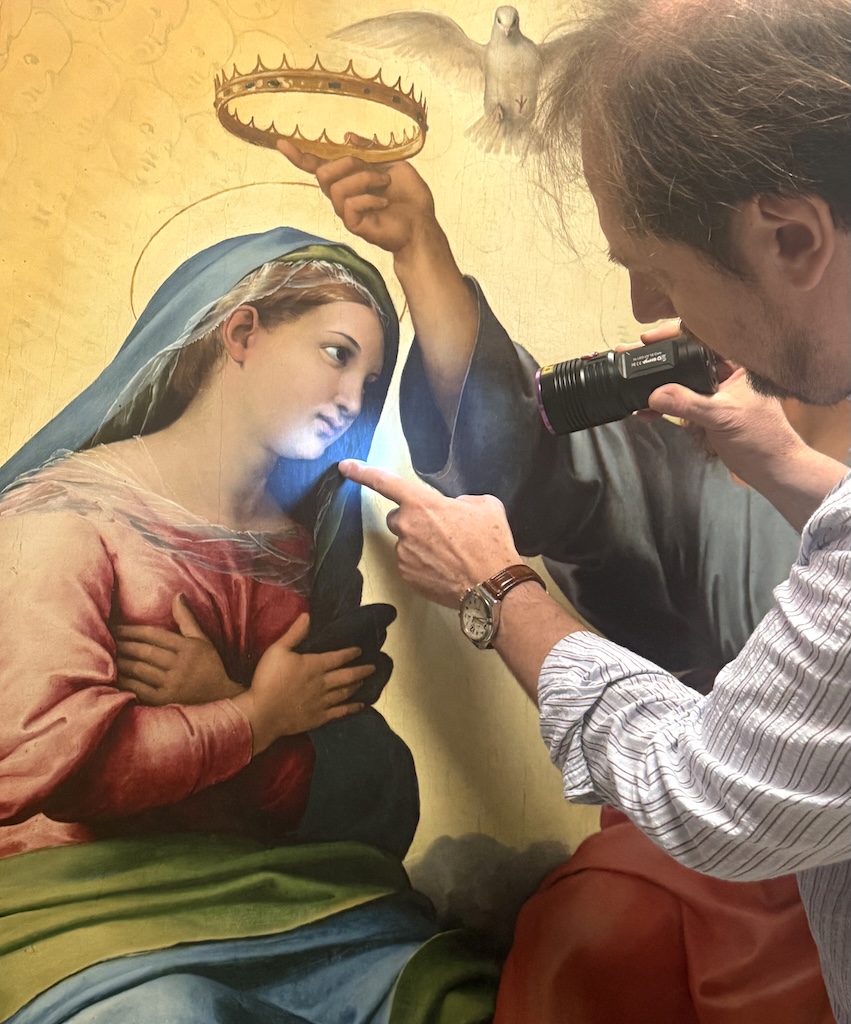
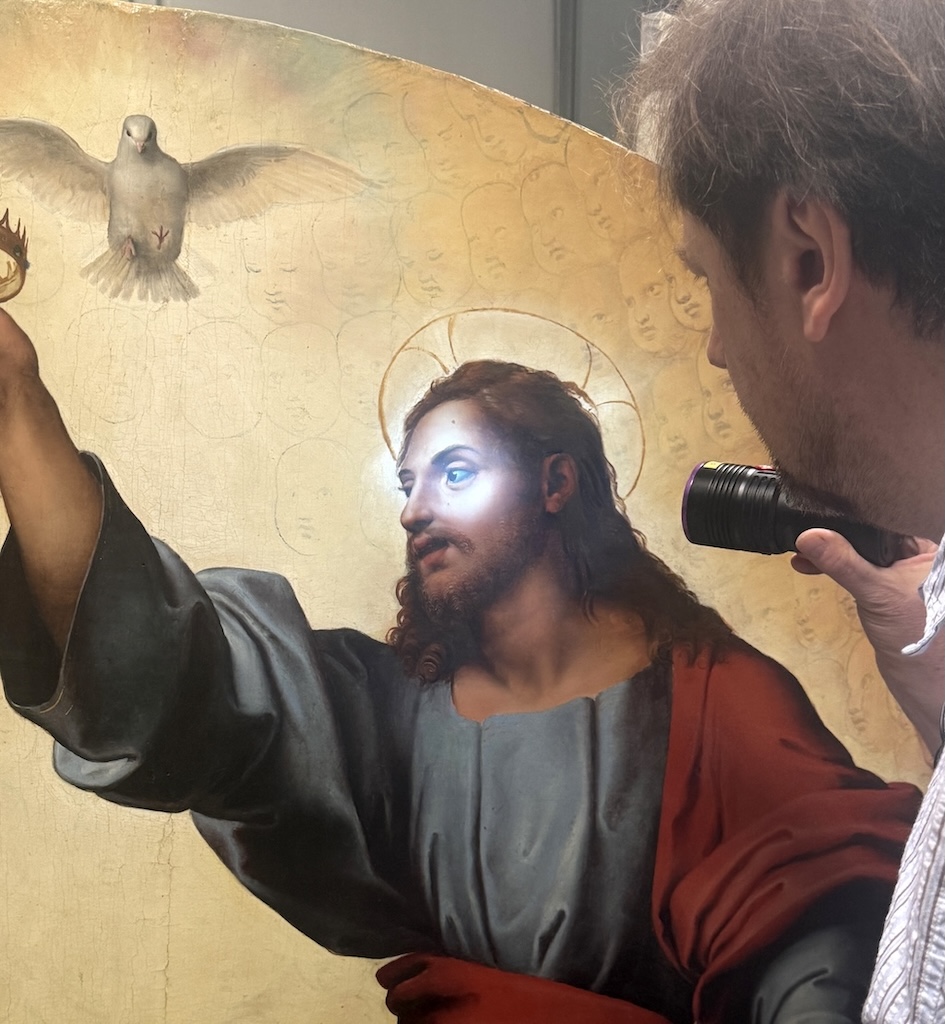
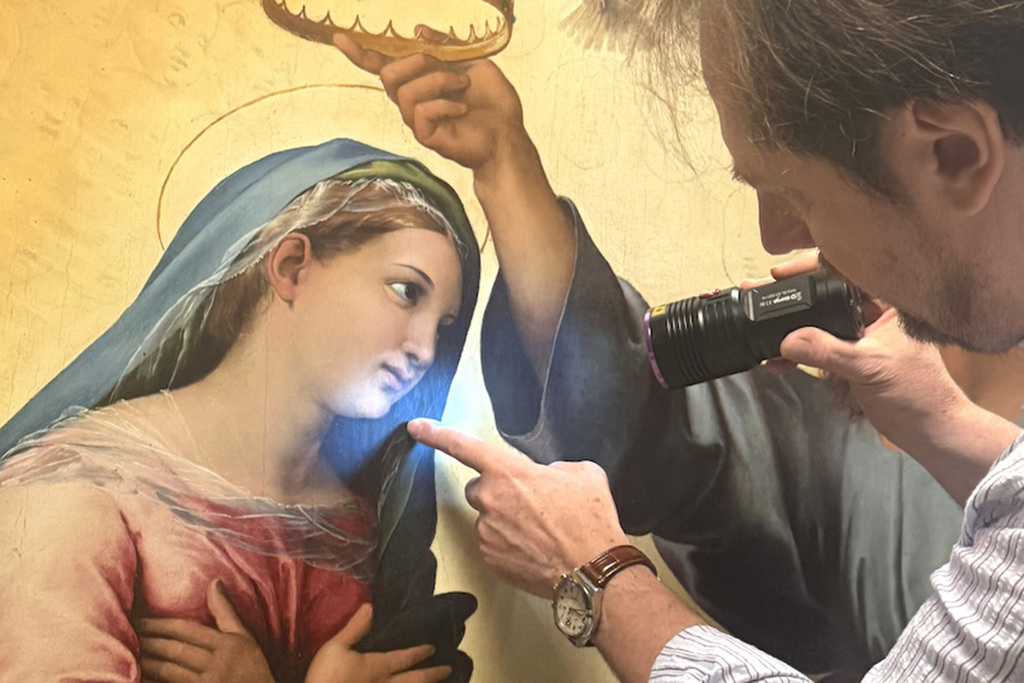
Today, in all fields, there is much talk of multidisciplinarity and sharing. The challenge, at times, is putting it into practice. For our work, it is indispensable. In addition to the direct relationship with art historians, which I have already mentioned, we must work in close contact with those involved in art diagnostics. At the Vatican Museums we are especially fortunate to have our own Scientific Research Department, also of long-standing tradition, which supports us in all aspects of scientific research on works of art. This allows us to operate in the best possible way, thanks to rigorous protocols for preliminary investigations before each restoration, and ongoing checks during the work.
Is there a project or line of research you would like to develop in the long term?
There are several very challenging projects already planned for the coming years. We will begin the restoration of Raphael’s Loggia—a complex, extremely delicate work that will keep us engaged for five years. At the same time, I would like to complete the cycle of the Raphael Rooms with a revision of the restoration of the third Room painted by Raphael, the “Fire in the Borgo”, while a preliminary study program is about to be launched for the Sala dei Chiaroscuri, whose decoration was begun by his workshop. In the seventeenth-century sphere, we have a project to restore the entire Scala Regia, the monumental entrance to the papal palaces designed by Gian Lorenzo Bernini.
In your opinion, what are the main challenges restoration will face in the coming years?
The consequences of climate change, which we are now confronting, also have a significant impact on the conservation of artistic heritage—especially when combined with the problem of increasing mass tourism. Historical and monumental structures like ours must face daily challenges to meet conservation needs, updating systems and optimizing visitor flows according to safety and conservational requirements.
How are new technologies changing—or how will they change—the restorer’s work?
Frankly, I cannot imagine it fully now, but I am sure that technological development—with its impressive growth curve—will also revolutionize the field of conservation and restoration. The first effects are already tangible today. It is important, however, that technology always be guided by experience.
Is there a phrase, principle, or motto that guides you in your daily work?
I hope to work with serenity, in a spirit of constructive collaboration with others, and—on my part—always with a good dose of self-irony.