

Inauguration of the Art Gallery of the Shrine of Pompeii

A Masterpiece by Andrea Mantegna
From the Deposition of Christ by Andrea Mantegna to twelve other works, this artistic and spiritual journey unfolds through the images of the Virgin Mary’s life.
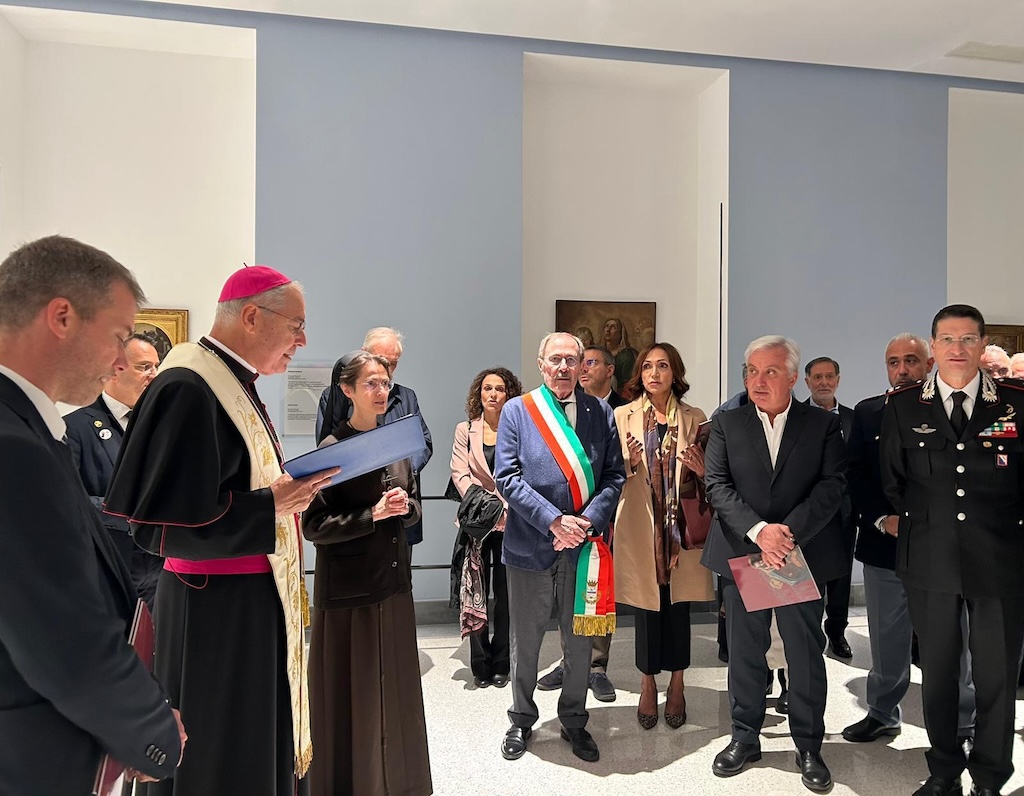
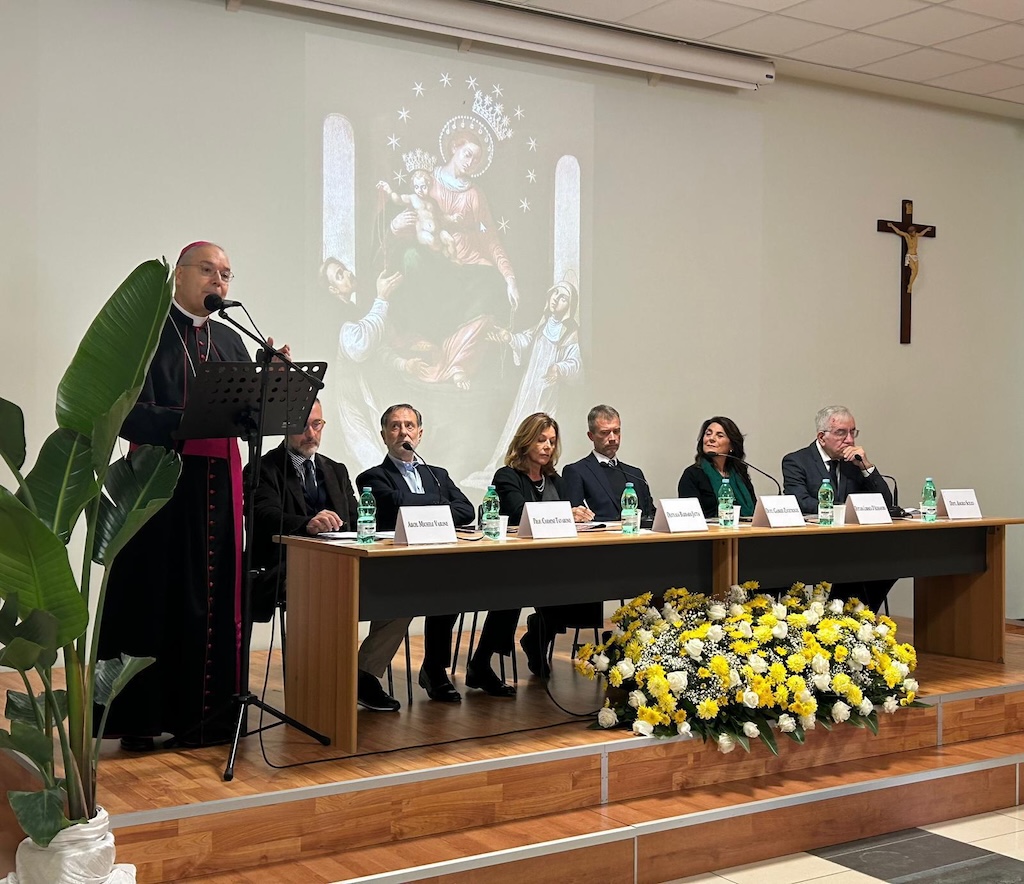
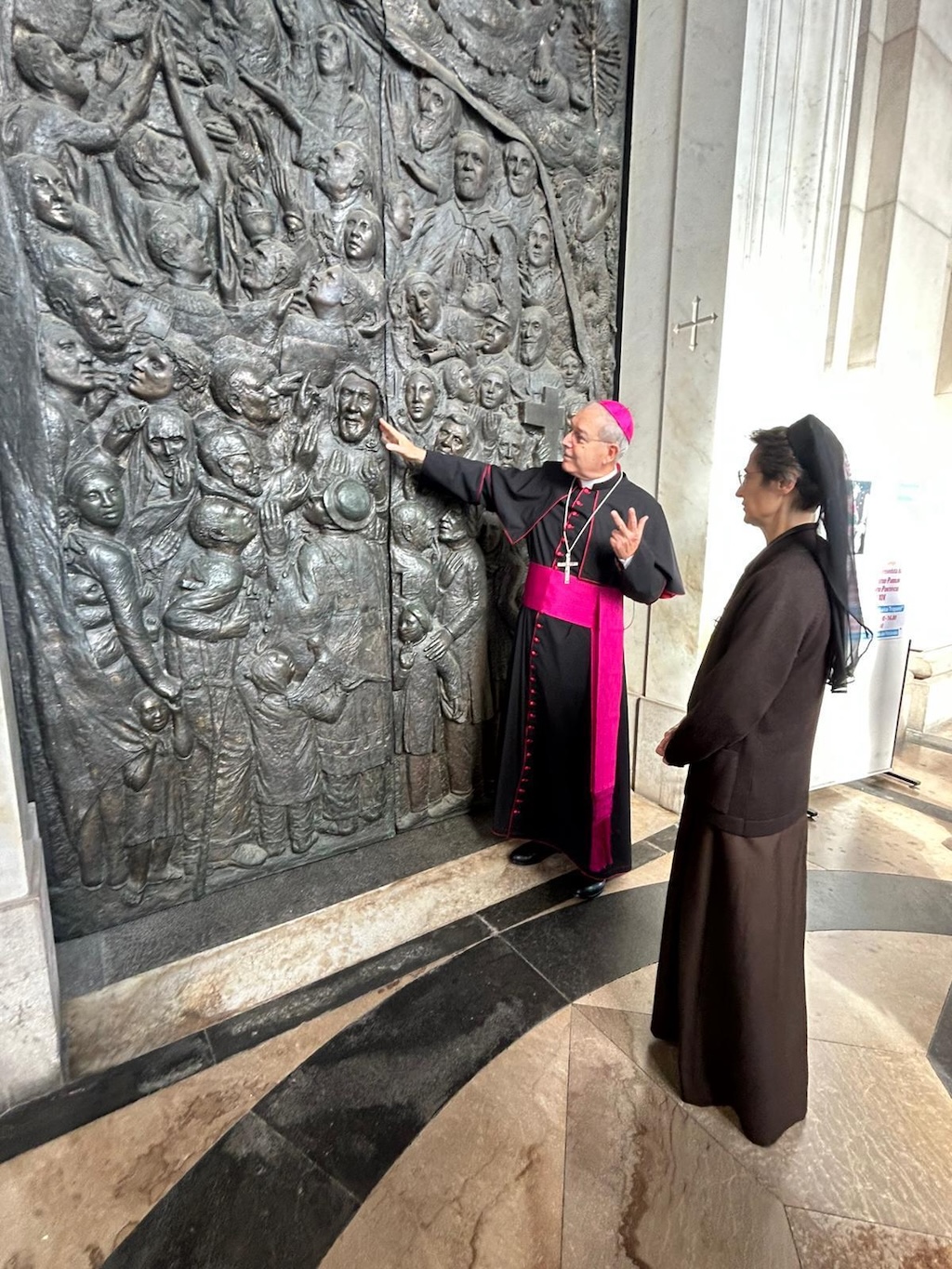
These are the masterpieces displayed in the new exhibition space dedicated to sacred art at the Marian Picture Gallery of the Pontifical Shrine of Pompeii. The gallery was inaugurated on Saturday morning, November 8, in the Marianna De Fusco Hall, by Archbishop Tommaso Caputo, Prelate and Pontifical Delegate of Pompeii, and Sister Raffaella Petrini, President of the Governorate of the Vatican City State.
In his address, Archbishop Caputo referred to the ongoing Jubilee Year and its significance for the Shrine, stating that “Art is a path to the heart of Pompeii’s spirituality. The gallery we are inaugurating today is another piece in the work begun at the end of the 19th century by Saint Bartolo Longo — the light of art alongside the flame of devotion.”
Each work on display, he said, represents a step toward the Virgin Mary: “Think about it — the entire history of the new Pompeii begins with a painting, the one Bartolo Longo brought among the peasants of the valley 150 years ago. It was an image in need of restoration that became the beating heart of the new town.”
Archbishop Caputo also highlighted the importance of Mantegna’s painting: “Even in this canvas, rediscovered after years of neglect, we can read a similarity between our times and those of Saint Bartolo. And today, we continue to enrich the artistic and spiritual heritage of the city.”
For her part, Sister Petrini noted that in the new gallery, “among the various works of art that beautifully bear witness to Marian devotion in the Naples area, particularly during the Baroque period, one Renaissance work stands out — a masterpiece by Andrea Mantegna.”
Indeed, this artwork has recently returned to the attention of scholars and the faithful. Its rediscovery is the result of collaboration between the Vatican Museums and the Pontifical Shrine. The painting, documented as early as the 16th century in the Basilica of San Domenico Maggiore in Naples, had disappeared from historical records.
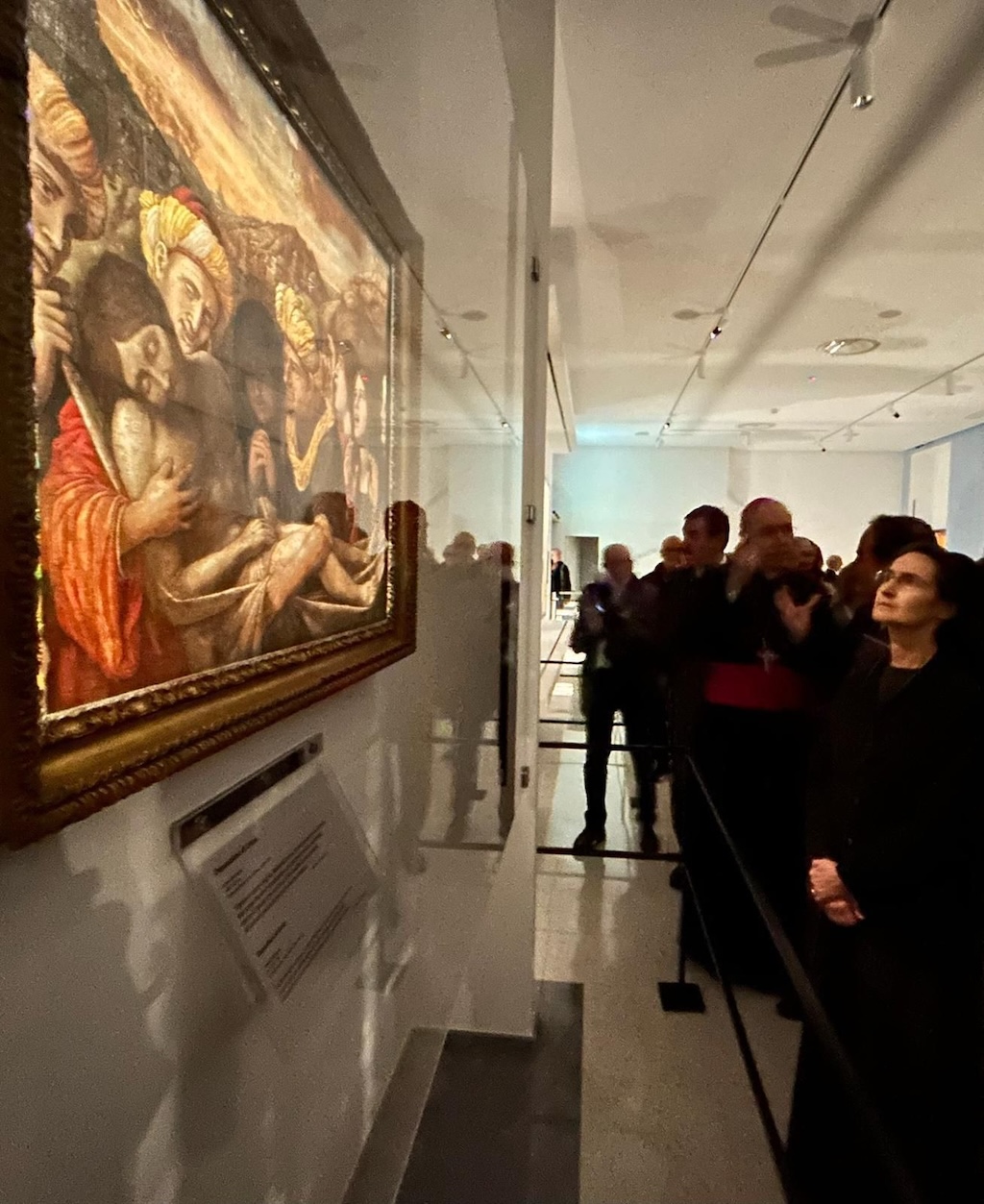
In this regard, the research of Stefano De Mieri from the University Suor Orsola Benincasa in Naples proved crucial. He recognized the originality of the painting, whose image had been available online on the website of the Italian Episcopal Conference. Expert analyses and recent restoration work have confirmed that the Deposition of Christ, kept at the Shrine of Pompeii, is indeed a work by the Venetian painter Andrea Mantegna.
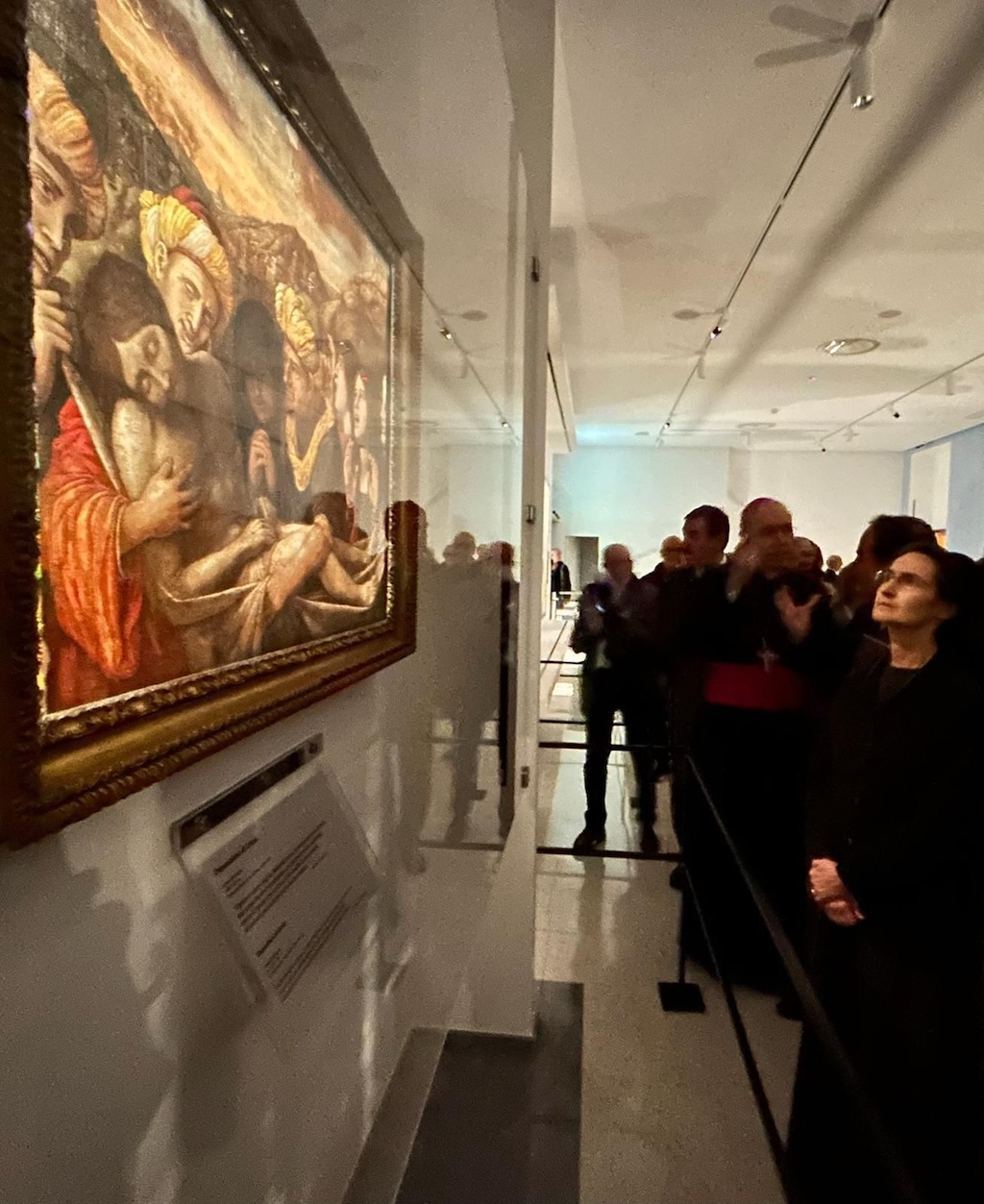
After being exhibited at the Vatican Museums, in Hall XVII of the Pinacoteca, in a show titled “The Mantegna of Pompeii: A Rediscovered Masterpiece,” the painting has now returned to the Shrine, where it has been displayed since Saturday, November 8, in the Marian Picture Gallery.
In Mantegna’s Deposition of Christ (c. 1497), the core of the exhibition, the drama of suffering erupts with intensity. Anguish is etched on Mary’s face, set almost in the background as if fading away. Few figures appear in the composition, all marked by despair, against the backdrop of a vast sky.
Throughout the museum’s path, the Virgin Mary is portrayed in different moments of her life — as the Immaculate Conception in a large 17th century painting from the circle of Andrea Vaccaro; as the Mother presenting the Child to the world in the Nativity and Flight into Egypt; and again as the Virgin and Child in a canvas reminiscent of the style of Bartolomeo Cavarozzi, a Roman painter of the early 17th century.
She appears as Queen in a painting attributed to Giovan Bernardino Azzolino (17th century), as Queen of the Rosary in Vincenzo Diano’s 1787 canvas, and glorified among the Saints in another work from the latter half of the 17th century.
This new space dedicated to sacred art enriches both the cultural and spiritual heritage of the Marian city of Pompeii.The inauguration was attended, among others, by Barbara Jatta, Director of Museums and Cultural Heritage, Alberto Albanesi, Deputy Director for Administration and Management at the Vatican Museums, Francesco Biferali, Head Curator of the Department of Fifteenth- and Sixteenth-Century Art, Gabriel Zuchtriegel, Director General of the Archaeological Park of Pompeii, Lorenza D’Alessandro, restorer and professor at the University of Tuscia, Michele Varone, head of the Shrine’s technical office, and Carmine Tavarone, art historian. The event was moderated by Angelo Scelzo, Director of the periodical Il Rosario e la Nuova Pompei.
Address by Sister Raffaella Petrini
It is a great joy for me to be present today at this important ceremony — the inauguration of a new museum established at the Pontifical Shrine of the Blessed Virgin Mary of the Holy Rosary of Pompeii, one of the most venerated Marian shrines and a privileged destination for millions of devotees and pilgrims from all over the world.
I am here today, together with Secretary General, Giuseppe Puglisi-Alibrandi, not only to convey the greetings of the Governorate of the Vatican City State to Archbishop Tommaso Caputo and all his collaborators —— but also to pay homage to beauty, in a fortunate and in some ways unique circumstance, occurring just three weeks after the canonization of Bartolo Longo, the distinguished founder of the Shrine of Pompeii.
In the homily of the Mass celebrated on October 19 in St. Peter’s Square, the Holy Father referred to the seven new Saints as those “who, with the grace of God, kept the lamp of faith burning — indeed, they themselves became lamps capable of spreading the light of Christ.”
Among them was Saint Bartolo Longo, who, following Christ’s example, devoted his life to charitable works in Pompeii — founding in 1887 an orphanage for girls and in 1892 a home for the children of prisoners, to name only two of his most significant initiatives.
In the new museum inaugurated today, among the various works of art testifying to Marian devotion in the Neapolitan area, especially during the Baroque period, stands a Renaissance masterpiece: the Deposition of Christ by Andrea Mantegna.
Dating from the late 15th century, the painting was described in a 1524 letter by the humanist Pietro Summonte as “a panel depicting Our Lord taken down from the cross and laid in a shroud, by the hand of Mantegna.” At the time, it must have appeared as a remarkable and singular presence within the artistic landscape of Naples and, more broadly, of southern Italy.
This magnificent canvas — the subject of an exhibition at the Vatican Museums between March and September of this year, and of a catalog tracing its history, iconography, meticulous restoration and scientific analysis — presents an expressive and moving image: Christ, just taken down from the Cross on Golgotha (whose barren summit with three crosses can be glimpsed in the upper right corner), is carried to the tomb by Nicodemus and Joseph of Arimathea, while His mother Mary, shadowed and almost petrified by grief, St. John the Evangelist and St. Mary Magdalene mourn His death with extraordinary and compelling pathos.
It is precisely Mary Magdalene, her face furrowed with tears, who holds in her right hand a rosary made of coral beads with a rock-crystal pendant — a detail most fitting for a shrine dedicated to Our Lady of the Rosary.
Mantegna’s vivid and dramatic depiction of the dead Christ, now occupying a place of honor in the new Pompeii Museum, inevitably recalls the suffering and poverty tended to throughout the life of Saint Bartolo Longo — who, driven by his deep call to recognize in the poor and afflicted the very heart of Christ, His sentiments and His most profound choices, to which every saint seeks to conform, as recalled in the recent Apostolic Exhortation Dilexi te (3).
Let me conclude, then, by entrusting the new art gallery to the Queen of the Rosary, recalling together the first words of Pope Leo XIV, who, upon his election on May 8 — the day of the Supplica to the Virgin Mary — appeared at the Loggia of Blessings of St. Peter’s Basilica and turned his first thought to Mary, our Mother. Let us invoke her again today, that she may continue to walk with us, remain close to us and help us through her intercession and maternal love.
Thank you.