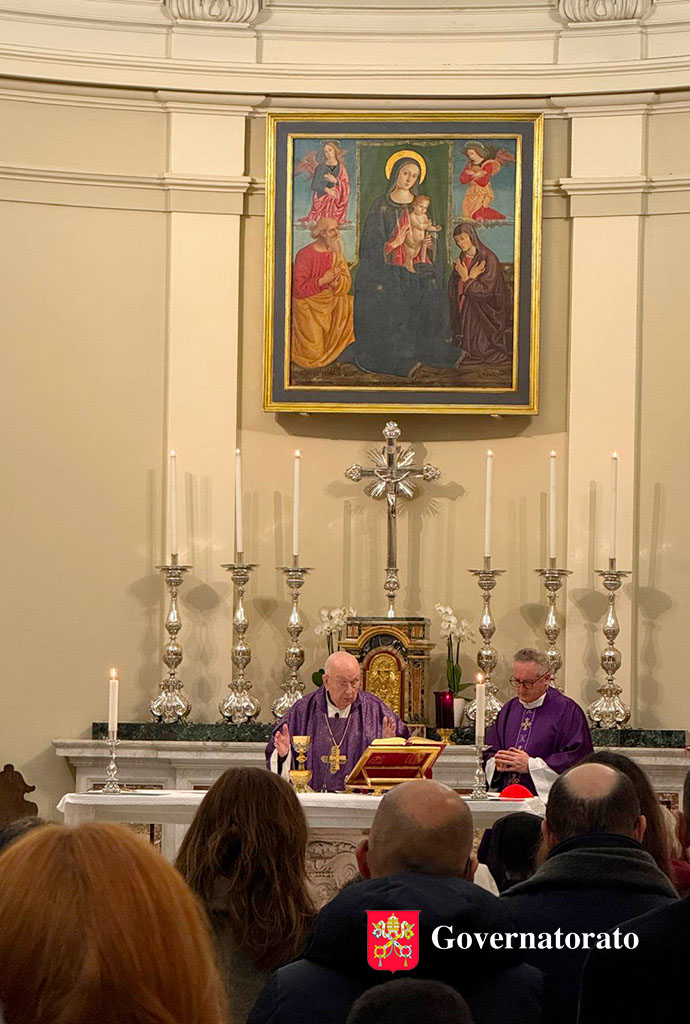


Cardinal Fernando Vérgez Alzaga Celebrated Mass for the Staff of the Directorate of Health and Hygiene
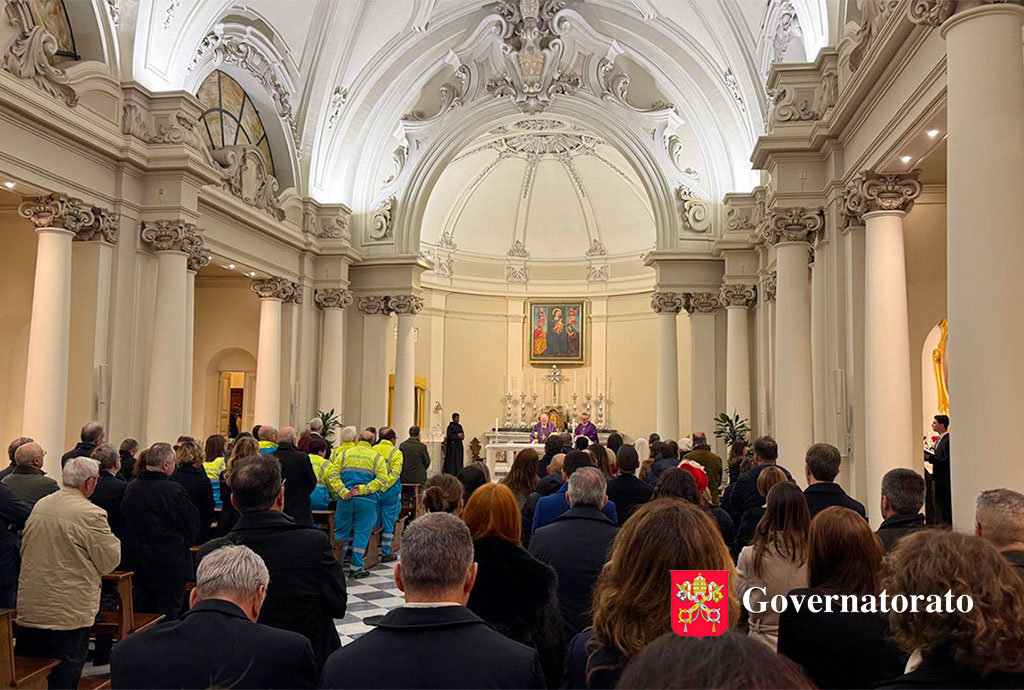

God Draws Near and Shares Human Frailty
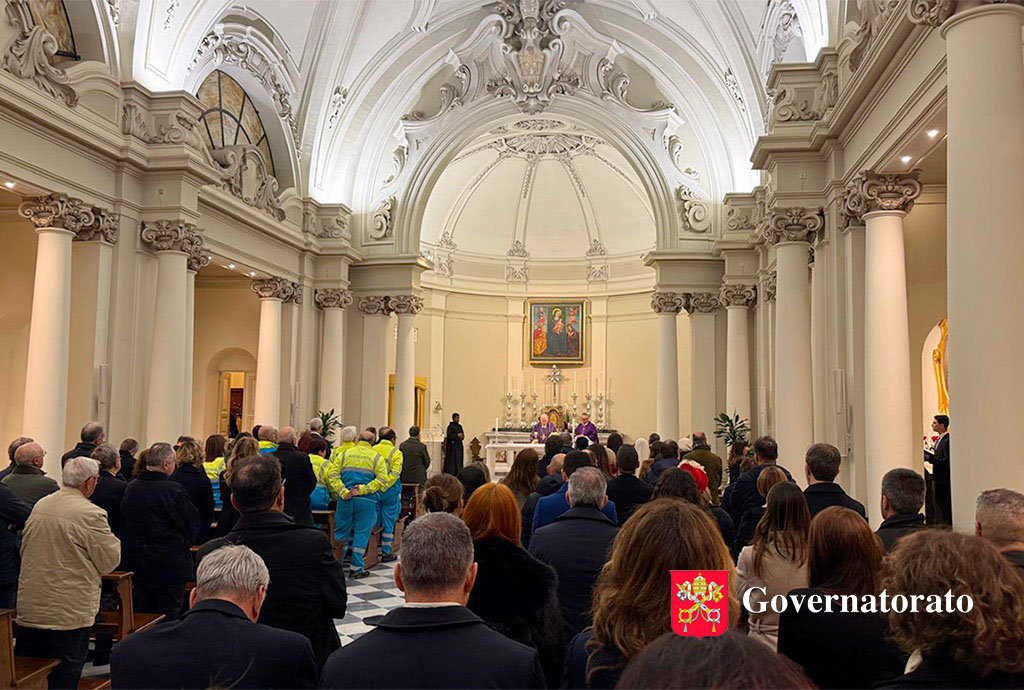
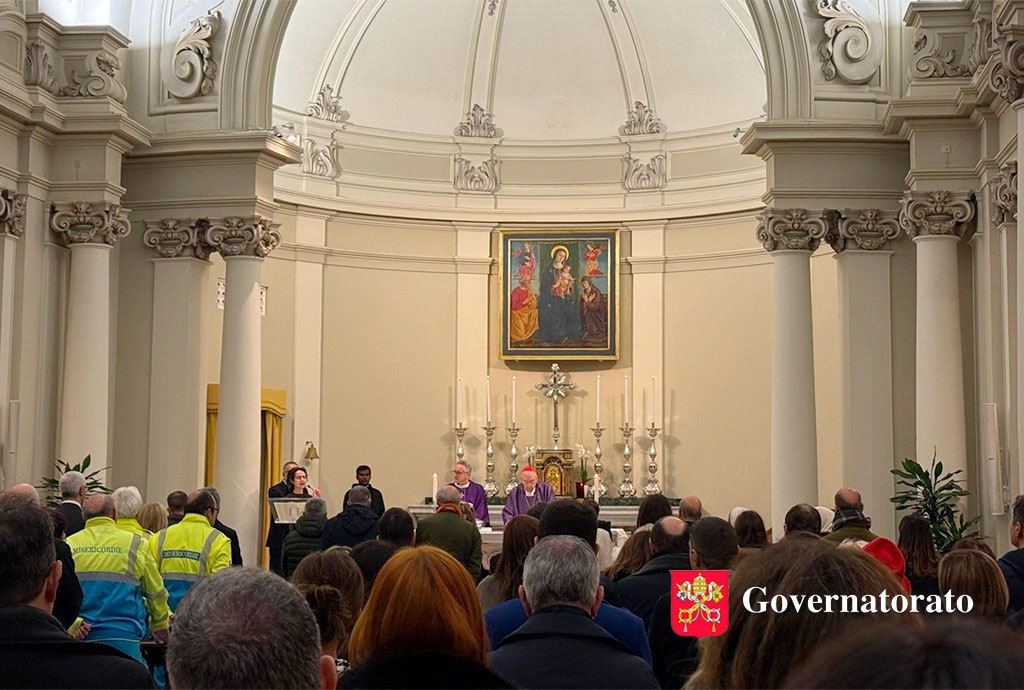
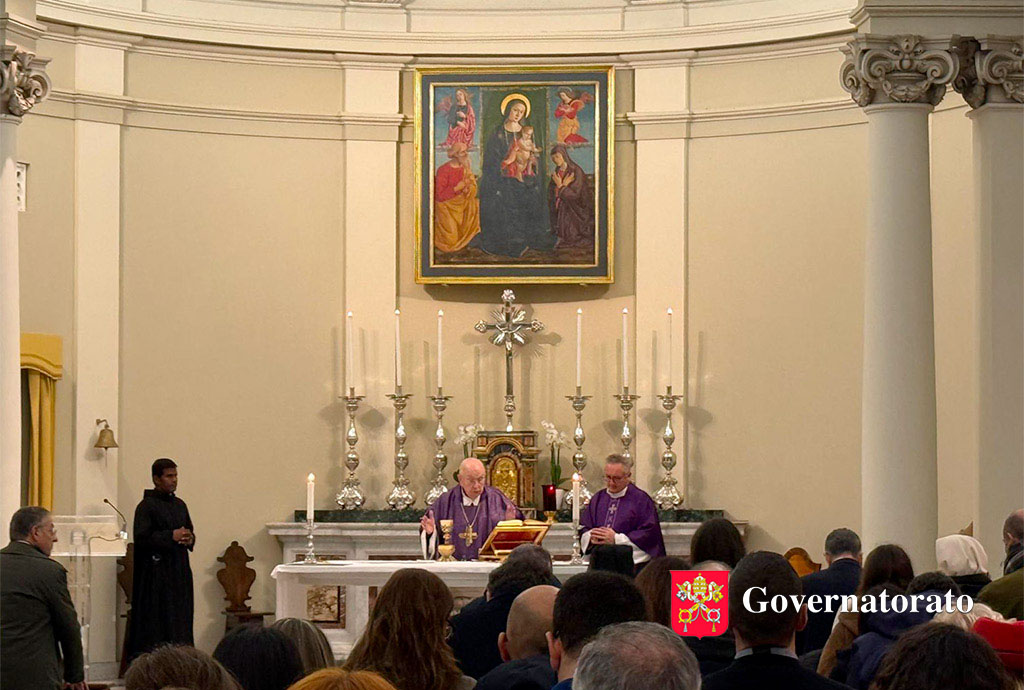
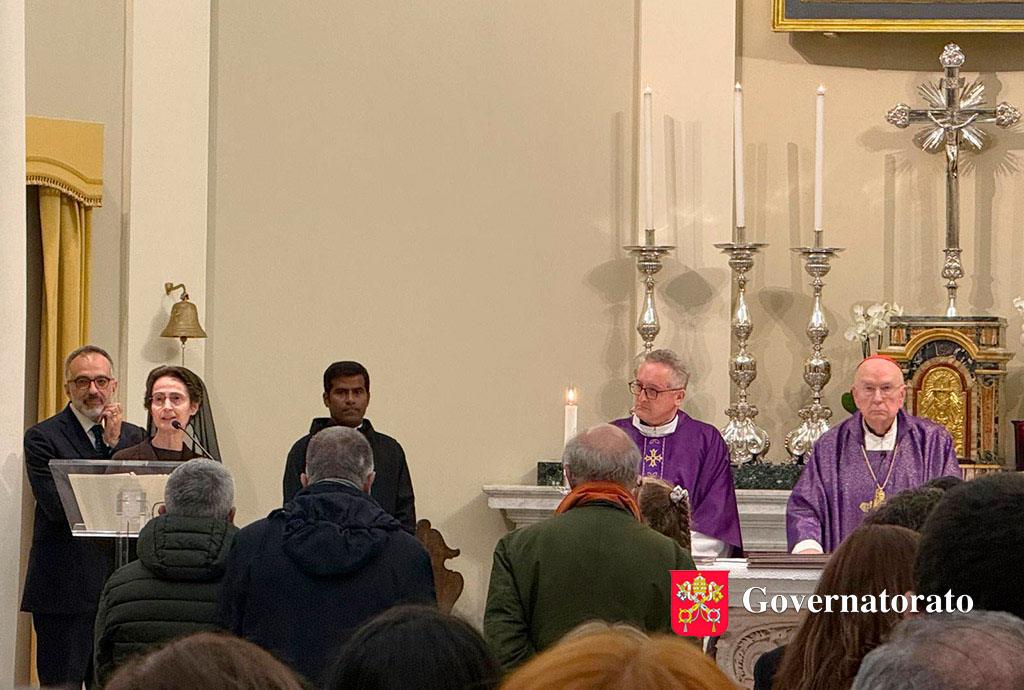
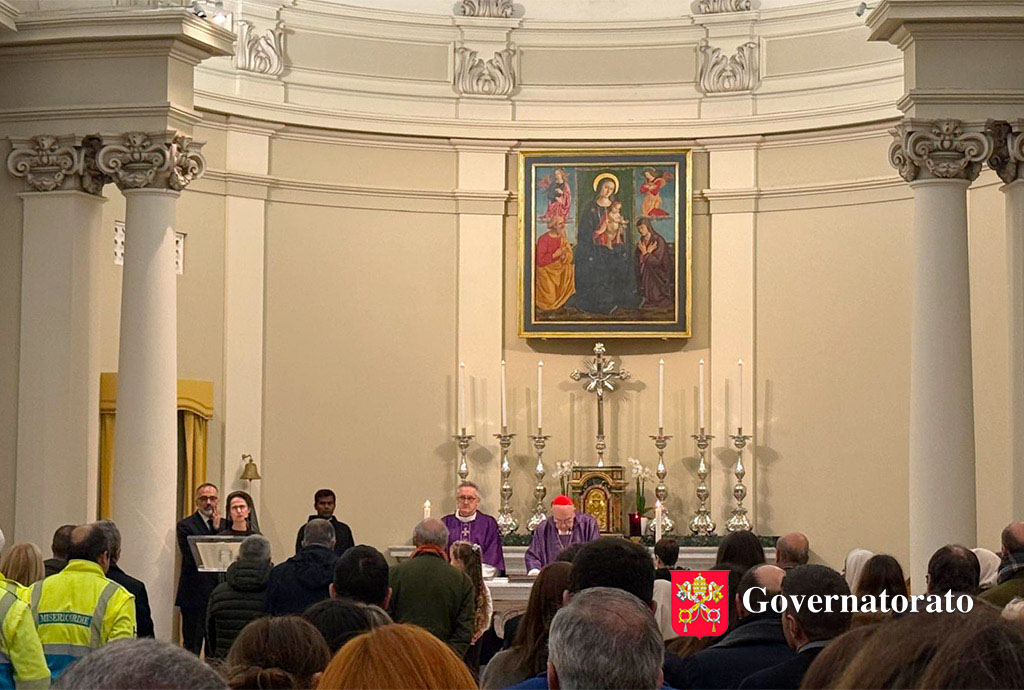
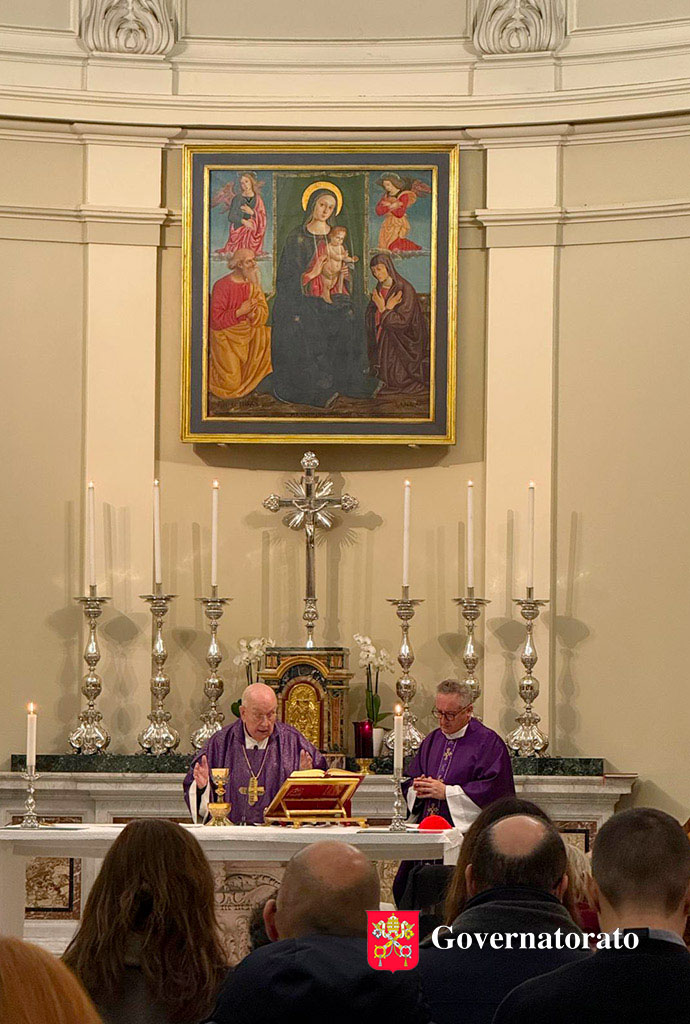
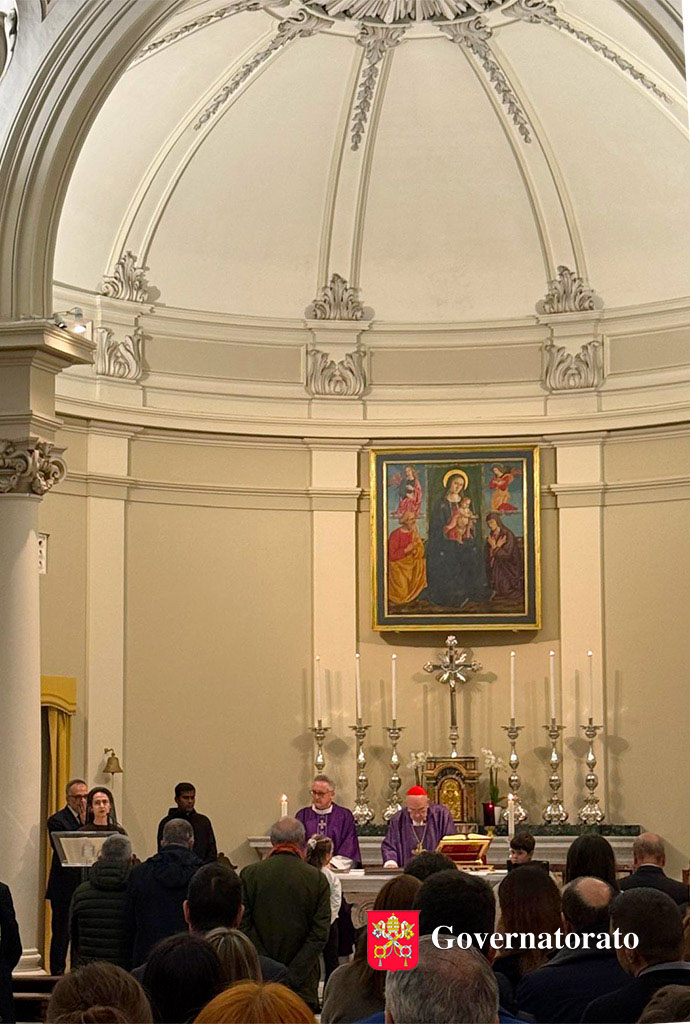
In places of care, God continues to make Himself present each day through the often hidden service of those who work for the good of others. This was emphasized by Cardinal Fernando Vérgez Alzaga, President Emeritus of the Governorate of Vatican City State, during the celebration of a Holy Mass in honor of the Christmas season on Saturday afternoon, 20 December, in the Church of Mary, Mother of the Family, at the Governorate.
During the Mass, celebrated for the staff of the Directorate of Health and Hygiene, the Cardinal invited those present to reflect on the meaning of Emmanuel—God who draws near by sharing human frailty, and who continues to make Himself present through the quiet service of those who care for others. Another element on which he focused was the figure of Saint Joseph. He underlined that Joseph is a model of prompt obedience, capable of transforming listening into action according to God’s plan. Concelebrating was Friar Dario Vermi of the Order of the Hospitaller Brothers of St. John of God (Fatebenefratelli), Spiritual Counselor of the Directorate of Health and Hygiene.
Among those present were Sister Raffaella Petrini, President of the Governorate; Archbishop Emilio Nappa and Giuseppe Puglisi-Alibrandi, Secretaries General; Doctors Luigi Carbone and Maurizio Soave, respectively Director and Deputy Director of the Directorate of Health and Hygiene, together with physicians, pharmacists, nurses, medical personnels, administrative staff, and employees of the Directorate.
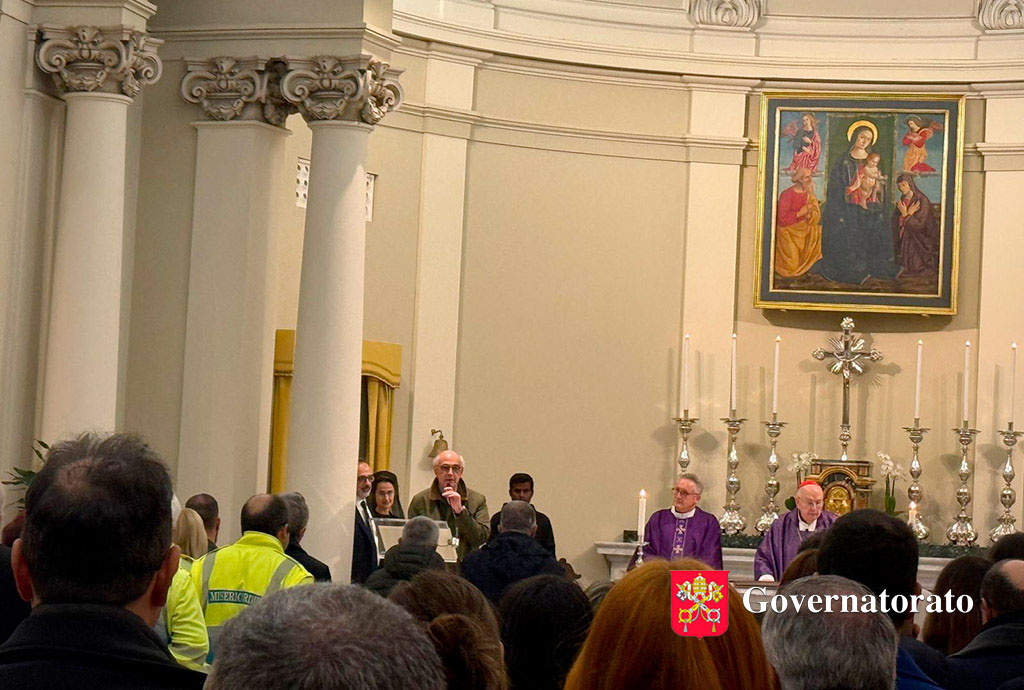
At the end of the Mass, Dr. Carbone addressed those present, noting that “the celebration of the Eucharist always represents a precious opportunity to pause, look back on the path we have taken, and place the deepest meaning of our service once again at the center.” In this sense, he explained, “Working at the Directorate of Health and Hygiene of Vatican City State means, first of all, carrying out a service to the Holy Father and to the Church. It is a service that requires competence, responsibility and discretion, but also a spirit of genuine collaboration, in which each person is called to place their professional skills, experience and personal commitment at the service of the common good.”
Indeed, he added, the Directorate “is a community made up of people with different roles and skills, which finds its strength in working together in a coordinated and supportive manner.” The Director also thanked the volunteers of the Misericordiae and of the Order of Malta, who “with generosity and a spirit of service support our daily activity in assisting the faithful, offering a presence that is precious, attentive and profoundly human.”
Dr. Carbone then stressed how “our daily work, often quiet and far from the spotlight, is nonetheless essential to ensuring protection, safety and attention to the person, both as a patient and as a worker, in keeping with the values that inspire Vatican City State.”
In this service, he added, “the human and spiritual dimensions mean, first of all, recognizing the dignity of every person, especially those who are most fragile or in difficulty. This is the style that is asked of us: a style of closeness, responsibility and dedication.”
Sister Raffaella Petrini also offered a brief greeting to the participants, extending her Christmas wishes and presented the 2024 philatelic volume of the Governorate’s Postal and Philatelic Service to three of the five employees who have retired in recent months.
Below is Cardinal Vérgez’s homily:
Dear Sister Raffaella Petrini, President of the Governorate,
Dear Secretaries General, Monsignor Emilio Nappa and Giuseppe Puglisi-Alibrandi,
Dear Doctors Luigi Carbone and Maurizio Soave, Director and Deputy Director,
Dear friends and staff of the Directorate of Health and Hygiene,
On this Sunday preceding Christmas, Scripture invites us to enter a story made more of silences than of words, more of choices than of speeches. At the center we do not find a showy protagonist, but a discreet figure: Saint Joseph. A man called to trust when everything seems dark, to decide without having reliable maps, to walk in the night of uncertainty.
The situation before him is unusual. Mary is expecting a child, and Joseph knows he is not the father. He could react by defending himself, appealing to the law, safeguarding his own reputation. Instead, the Gospel tells us that “since he was a righteous man and did not want to expose her to public disgrace, he planned to dismiss her quietly.” He chooses a different path: he protects, he safeguards, he does not expose. This is his justice—a justice that does not wound, that does not humiliate, that leaves room for mercy. It is not rigidity, but depth of spirit.
Joseph’s story speaks powerfully to those who today bear the weight of responsibility, especially in delicate fields such as healthcare. Governing, deciding, and guiding complex choices often means moving through territories marked by urgency, limited resources, and conflicting expectations. The good is not always immediately evident, and at times results come long after decisions are made.
Before acting, Joseph allows himself time for reflection. He does not react impulsively. He pauses, weighs matters, lets silence become a space for clarification. It is there that God finds a way to speak to him. This attitude becomes a precious lesson: learning to discern, not to be overwhelmed by haste, to consider the human face behind every choice—especially when dealing with the health and lives of people.
In the dream, the angel invites him not to be paralyzed by fear. “Do not be afraid” is not only a word of comfort, but a call to courage. “Do not be afraid to take Mary as your wife, for the child conceived in her is from the Holy Spirit. She will give birth to a son, and you are to name him Jesus.” Do not be afraid to take on a demanding task. Do not be afraid to care for others. Do not be afraid to believe that good can be born even in ambiguous situations. The world of healthcare knows well the temptation of fear: fear of making mistakes, of being judged, of not being up to the task. Yet it is precisely there that the possibility of authentically human choices is at stake.
The child who will be born will bear a name rich in meaning: Emmanuel. God does not remain distant, does not observe from a safe distance, but chooses to share the frailty of existence. He enters into flesh, into limitation, into pain. This message resonates in a particular way in places of care, where every day God continues to make Himself present through the often hidden service of those who work for the good of others.
Once awakened, Joseph does not remain a prisoner of doubt. He turns listening into action. He seeks no compromises, does not postpone, does not withdraw. His obedience is concrete, daily, and silent. It is a powerful reminder for those who exercise leadership roles: the integrity between what one recognizes as right and what one carries out in operational choices.
The First Reading also places us before a critical moment. King Ahaz lives in a time of instability and threat. God offers him a sign, even leaving him free to ask for it. But Ahaz holds back. Behind an apparently devout response lies the decision not to entrust himself, not to question his own strategies. It is the fear of changing course, of opening oneself to a greater trust.
This dynamic does not belong only to the past. Even today, especially in decision-making contexts, there can arise the temptation to rely exclusively on technical, economic or organizational criteria, forgetting the deeper dimension of trust, vision and the centrality of the person.
God, however, does not withdraw. Despite human resistance, He still gives a sign: a life that is born, fragile and defenseless. Not an act of power, but a presence. Not an imposition, but a gift. That sign finds its fulfillment in Jesus, Emmanuel.
In this time of Advent, as we draw near to Christmas, we are invited to let ourselves be shaped by this logic: to be righteous people, capable of listening, of assuming full responsibility, of making choices that make no noise but generate life.
May the service of the Directorate of Health and Hygiene continue to make visible this God who does not distance Himself, but remains close to humanity, especially when it is most fragile.
Best wishes to all of you and to your families for a Blessed Christmas and a Happy New Year.