

Interview with Engineer Antonino Intersimone, Director of Telecommunications and Information Systems, on the occasion of the AI for Good Global Summit 2025


Facing Global Challenges
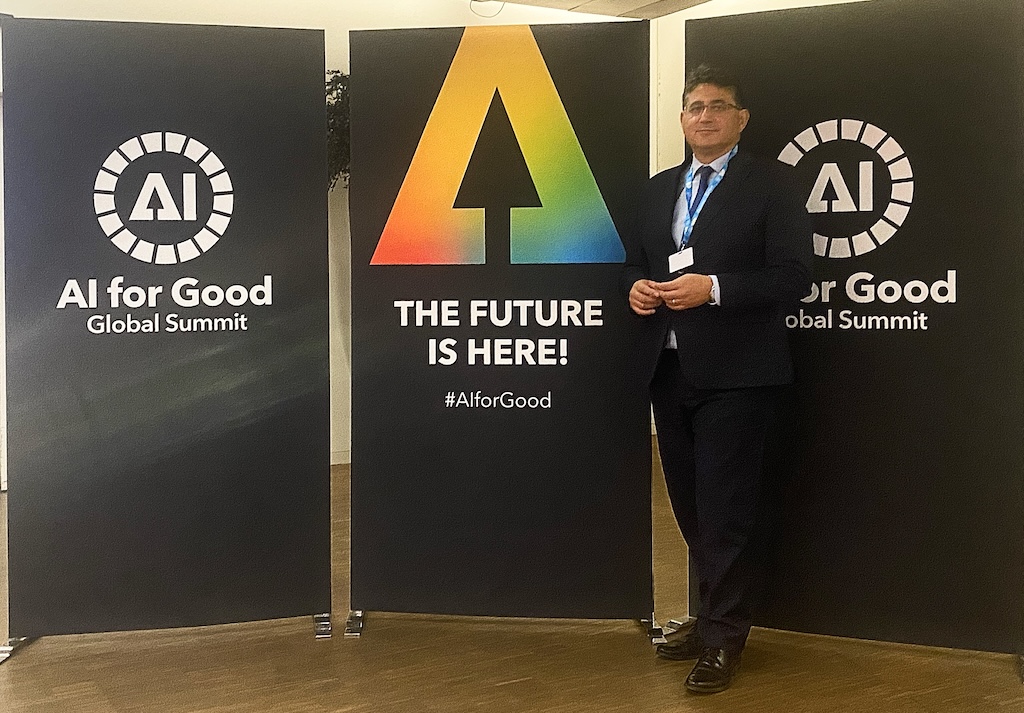
A call for careful discernment so that Artificial Intelligence may become a tool for the common good, promoting dialogue and fraternity. This appeal was made by Pope Leo XIV to the participants of the AI for Good Global Summit 2025, held in Geneva from July 8 to 11.
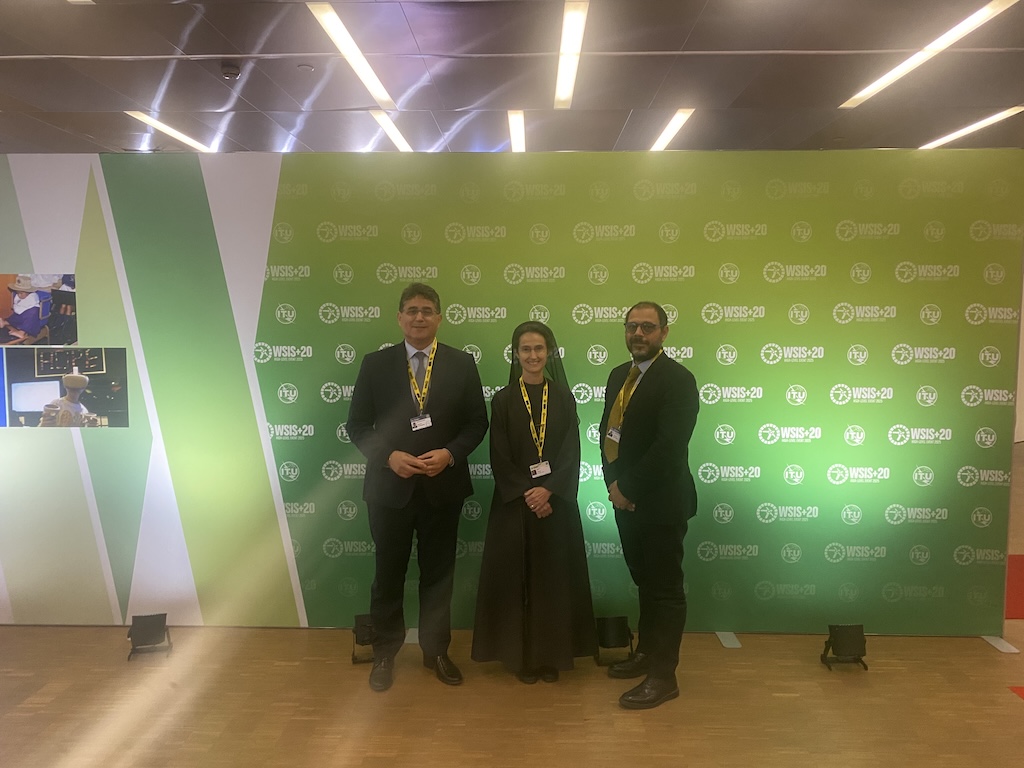
A Vatican Delegation also took part in the international meeting, led by the President of the Governorate of the Vatican City State. In this interview, Engineer Antonino Intersimone, Director of the Directorate of Telecommunications and Information Systems, shares insights and also offers an overview of the World Summit on the Information Society (WSIS) +20 High-Level Forum 2025.
What are the WSIS+20 High-Level Forum 2025 and the AI for Good Global Summit 2025?
The WSIS, or World Summit on the Information Society, is a multi-stakeholder platform initiated by the United Nations. It was launched through two major summits (Geneva 2003 and Tunis 2005) with the aim of fostering information societies centered on people and committed to equitable and sustainable development.
The WSIS+20 High-Level Forum 2025 took place in Geneva from July 7 to 11, 2025, organized by the ITU [International Telecommunication Union] along with other UN agencies such as UNESCO, UNDP, and UNCTAD, with support from the Swiss Confederation. This High-Level Forum was a "review event" assessing the progress and challenges faced over the past 20 years since the WSIS process began. It also set the stage for implementing new action lines for the future of global digital cooperation over the next two decades.
Thus, it served as a crucial step in preparing for the formal review of the WSIS platform by the UN General Assembly, which will be held on December 16–17, 2025, in New York.
The AI for Good platform, on the other hand, is the United Nations’ leading initiative on Artificial Intelligence. Its goal is to identify and promote innovative AI applications to tackle global challenges and support the achievement of the 17 UN Sustainable Development Goals (SDGs).
The AI for Good Global Summit was held in Geneva from July 8 to 11, 2025, concurrently with the WSIS+20 High-Level Forum. It was organized by the ITU in cooperation with over 40 UN Agencies, other international organizations, NGOs, academics, and key private-sector players. The Summit, by its nature, focused on the practical applications of AI in key areas such as health, climate, agriculture, education, and communications—promoting concrete solutions and facilitating dialogue and collaboration between innovators, institutions, and policymakers to ensure that technological progress is fair, inclusive, and driven by informed choices.
A central topic of discussion at the AI for Good Global Summit was also the governance of AI, particularly regarding ethical standards and interoperability.
What were the most significant developments or discussions related to the future of the Information Society and the role of AI?
What struck me most was the growing emphasis on the need for global AI governance that is inclusive and rooted in human rights. At WSIS+20, there was extensive discussion on how digital technologies can either accelerate or hinder the achievement of the SDGs. Meanwhile, at AI for Good, the focus was more on concrete solutions—but the underlying themes of equity and universal access were strong in both settings.
In this context, the message from Pope Leo XIV—read during the AI for Good Global Summit 2025 by Archbishop Ettore Balestrero, Permanent Observer of the Holy See to the United Nations Office and Specialized Agencies in Geneva—resonated clearly and profoundly. The message outlined a clear and incisive vision for the development and use of Artificial Intelligence, with the human person at the center. The Pope called for careful discernment so that AI may become a tool for the common good, promoting dialogue and fraternity.
In today’s era of profound innovation, in which our very understanding of humanity is being redefined, AI represents enormous potential—but also a crucial crossroads. We must ensure that this technology serves the interests of all humanity, always prioritizing human and social values.
How do you think the recommendations or conclusions from these summits might concretely influence national or global policies or initiatives in the coming years?
I believe the recommendations and defined action lines will provide a solid foundation for the years ahead. In particular, I expect to see increased investment in digital infrastructure in developing countries and a stronger push for regulatory frameworks that protect privacy and prevent algorithmic bias in AI.
The hope is that these initiatives will not remain merely on paper but will translate into real actions at both national and international policy levels.
A concrete example was presented by the Vatican Delegation. During the Ministerial Roundtable held on July 9 at WSIS+20, the President of the Governorate and Head of Delegation, Sr. Raffaella Petrini, presented the significant steps taken by the Vatican City State. Among these, the Governorate issued the “Guidelines on Artificial Intelligence” through Decree No. DCCII of the Pontifical Commission for the Vatican City State, which came into force on January 1, 2025.
These Guidelines promote measures to support the ethical development and use of AI within the Vatican City State. They address the specific needs of ensuring individual protection, security, and transparency, and offer a framework for technological advancement that prioritizes fraternity and peace—while ensuring fair and sustainable distribution of the benefits brought by AI.
Moreover, along with this regulatory act, the Governorate launched an extensive training plan on the use of digital technologies, with a specific focus on tools enabled by Artificial Intelligence.
What key synergies or differences did you notice in the ITU’s approach to the WSIS+20 and AI for Good Global Summit themes?
The main synergy lies in the shared goal of leveraging technology for social good. The WSIS+20 took a broader and more strategic approach, reviewing the overall progress of the Information Society over the past two decades. AI for Good, in contrast, was much more focused on the practical application of AI for achieving the Sustainable Development Goals, with concrete use cases and greater engagement from the private sector and innovators.
The two summits complemented each other very well.
At AI for Good, I was particularly struck by the sophisticated demonstrations of robots capable of interacting with humans—with applications ranging from rehabilitation and care to medical devices that support individuals with various disabilities, from mobility to vision impairments.
What future opportunities or urgent challenges do you think must be addressed, based on the discussions held, to ensure that digital evolution and AI serve global well-being rather than becoming sources of new inequality?
One major opportunity is certainly the acceleration of the SDGs through AI and digital technologies, particularly in areas such as health, education, and climate action.
The most urgent challenge, in my view, is ensuring that this digital evolution does not widen the digital divide and that its benefits are accessible to all.
We must also urgently address the ethical issues associated with AI—such as algorithmic bias in linguistic and social contexts—and data protection, in order to build a digital society that is fair and inclusive.
Therefore, it is essential to focus on global dialogue and collaboration to ensure that AI truly serves humanity—for the benefit of current and future generations.
In conclusion, we must not waste our energies in competition between States, Companies, and Organizations, but rather move forward united in collaboration, building an equitable and shared future for the well-being of all.