


July 13: Saint Henry, Emperor
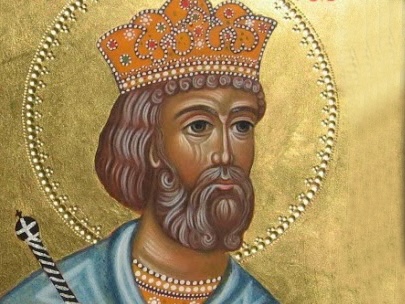

A Model of Justice in Leadership
Saint Henry, Emperor of the Holy Roman Empire, stands as a shining example of righteousness and justice in governance. In a challenging era for Europe, he managed to live out the principles of the Gospel while exercising temporal power.
The son of the Duke of Bavaria, Henry was born in 973 in a castle along the banks of the Danube. He came from a deeply religious family; his brother Bruno became Bishop of Augsburg, one sister, Bridget, became a nun, and another, Gisela, married Saint Stephen, King of Hungary. As a young man, Henry was educated by the canons of Hildesheim and later by Bishop Wolfgang of Regensburg, a monk from the Abbey of Einsiedeln.
According to tradition, during a visit to the Monastery of Saint Vanne in Verdun, Henry once asked the abbot to allow him to join the monastic life. The abbot wisely responded that Henry’s vocation was to continue fulfilling his duty in the world: to govern in obedience. At the time, Henry was King of Germany (since 1002) and of Italy (since 1004), and would soon be crowned Holy Roman Emperor. He succeeded his cousin Otto III, who died young, and ascended the throne at just thirty years old.
A profound event marked his early adulthood. At age 23, Henry had a dream in which his former teacher, Bishop Wolfgang—recently deceased—appeared and wrote the words "In six" on the wall of his room. Henry believed he had six days to live and spent them in prayer and penance. When the six days passed, he interpreted the dream to mean six months, and then six years. At the end of those six years, in 1014, he was crowned Emperor—spiritually strengthened to face the burdens of leadership.
Throughout his reign, Henry showed wisdom and determination. Two years after becoming king, he was crowned Emperor in Rome by Pope Benedict VIII, alongside his wife Cunegonde. On his return from Rome, he elevated the monastery of Bobbio to a bishopric and met Saint Romuald in Verona.
His reign was far from easy. He faced revolts in both Germany and Italy, particularly from Arduin of Ivrea, who had been elected King of Italy. Dissatisfied with Arduin’s rule, Italian nobles asked Henry to intervene and offered him the Iron Crown of Lombardy.
But Henry’s strength was not only political or military. He was a deeply spiritual and charitable man, humble and open to advice from wise figures like the Abbot of Verdun. At his side was his equally devout wife Cunegonde, who was later canonized. Together, they dedicated themselves to personal holiness and to the well-being of their subjects.
One of Henry’s closest friends was Odilo, Abbot of Cluny and a major figure in the monastic reform movement. Following Odilo’s counsel, Henry governed with a Christian spirit marked by honesty, charity, and moral integrity. He actively supported the reform of the clergy and monasteries and successfully petitioned the Pope to introduce the recitation of the Creed during Sunday Mass and major feasts to strengthen the people’s faith.
Henry died on July 13, 1024, at the age of 52, after a long illness borne with patience. He was buried in Bamberg and canonized by Pope Eugene III in 1146.