


2 March: Saint Agnes of Bohemia
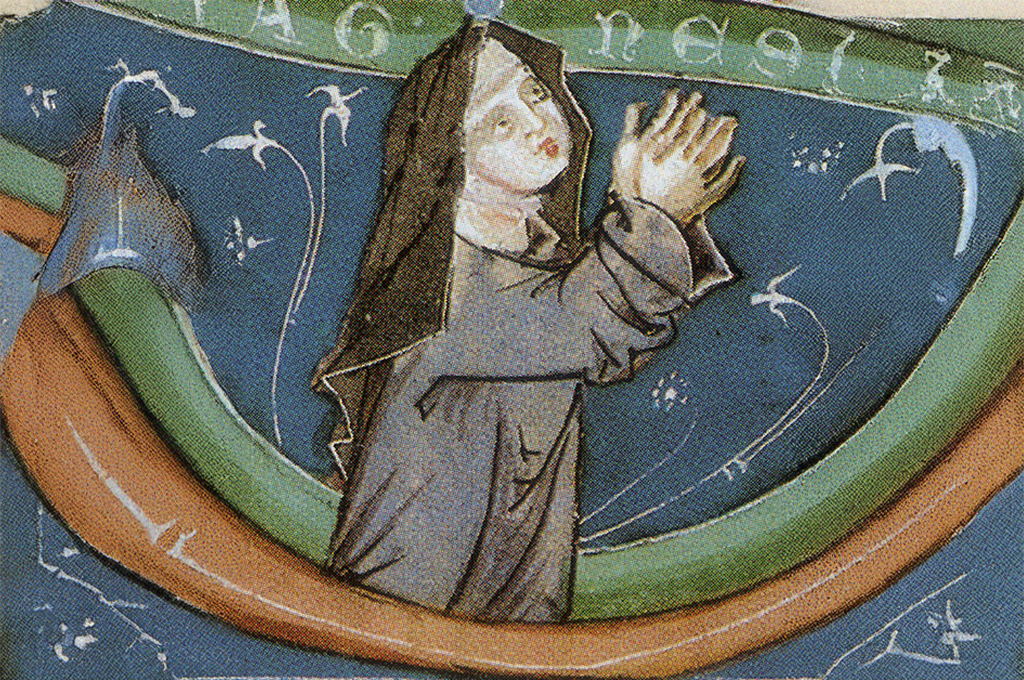

The Princess Who Chose Poverty
Agnes of Bohemia was born in Prague in 1211 to King Přemysl Otakar I and Queen Constance of Hungary. Her brother later ascended the throne of Bohemia as Wenceslaus I.
At the age of three, in order to receive an education befitting her rank, she was sent to the Cistercian monastery of Třebnice, where her aunt, Saint Hedwig, lived. It was her aunt who guided her in coming to know Christ and in learning the life of prayer.
Seeking to strengthen ties with the most important royal houses, her father arranged her betrothal in 1220 to Henry, son of Frederick II, Holy Roman Emperor. Until 1225 she lived at the court of Vienna, when the engagement was broken off.
Her father then attempted to arrange her marriage to Henry III of England. However, Agnes had long since consecrated herself to God and did not wish to marry. Thus, in 1231, she appealed to Pope Gregory IX to grant her permission to live in virginity, dedicating herself entirely to the Lord.
At that time, through the preaching of the Friars Minor, she had heard of Saint Clare and her way of life. She chose poverty and decided to follow the form of life of the Poor Clares. With her possessions, she founded a hospital dedicated to Saint Francis, a religious order—the Knights of the Cross with the Red Star—and a monastery of Poor Ladies, which she herself entered on June 11, 1234.
Agnes maintained regular correspondence with Saint Clare; four of these letters have come down to us.
Like Clare, Agnes obtained from the Pope the Privilege of Poverty for her monastery, making it—together with the monastery of Assisi—the only one to follow the Rule written by Clare in 1253 with this privilege.
Agnes was called to serve as abbess of her community and held this office until her death on March 2, 1282. She was canonized on November 12, 1989, by Saint John Paul II.