


22 December: Saint Frances Xavier Cabrini
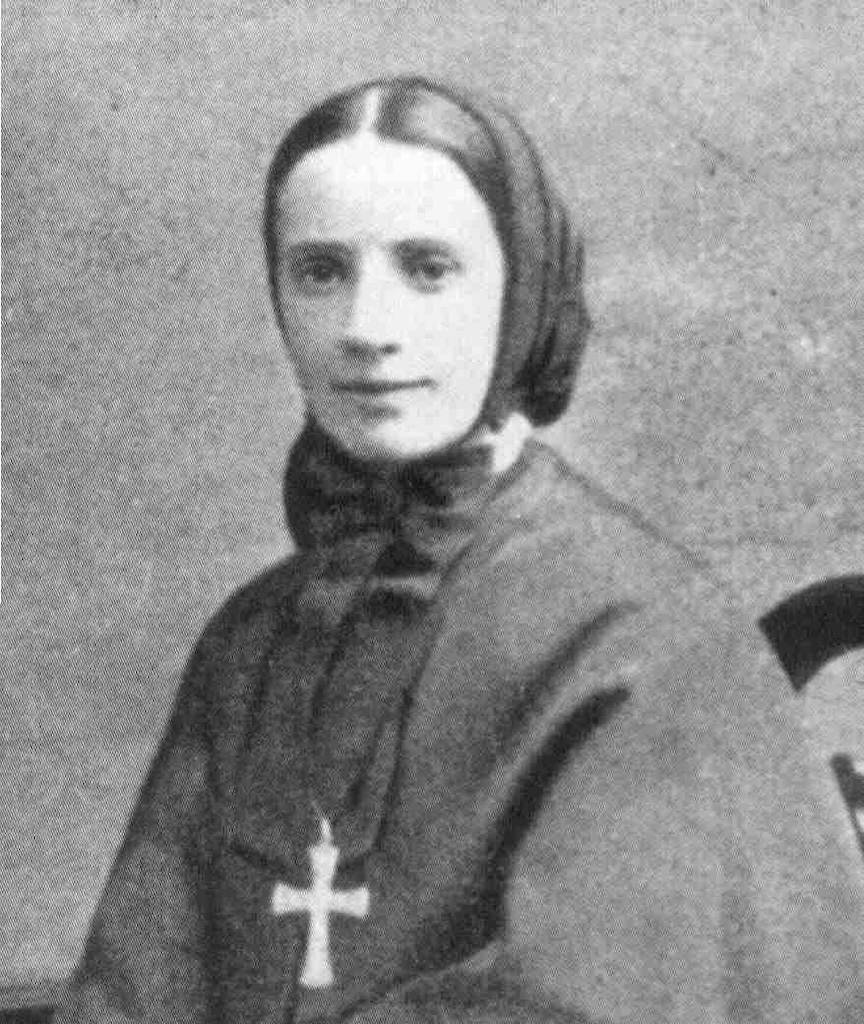

A Mother to Migrants
The youngest child in a large family of ten, Maria Francesca Cabrini was born on 15 July 1850 in Sant’Angelo Lodigiano, near Milan. From an early age she listened with fascination to the stories of missionaries, and these accounts awakened in her the desire to consecrate her life to God in religious life.
She pursued her studies diligently and became a qualified teacher. She attempted to join the Daughters of the Sacred Heart, her former teachers, but her fragile health prevented her from being accepted. She did not abandon her calling, however: she accepted an invitation from Father Antonio Serrati to work at the House of Providence in Codogno, where she taught and assumed positions of responsibility. There she professed her vows in 1877 and added the name Xavier to her own, in honor of the great Jesuit missionary.
The difficulties faced by the community in which she lived led the Bishop of Lodi, Domenico Gelmini, to encourage her to found a new institute. Thus, in 1880, together with seven young women, she established the Missionaries of the Sacred Heart of Jesus. Francesca proved to be a woman of ardent faith and remarkable initiative: she always managed to find supporters, resources, and assistance to help her works grow.
From childhood she had dreamed of evangelizing the East, but her encounter with Bishop Scalabrini—who was deeply involved in the care of Italian emigrants—and later her audience with Pope Leo XIII, radically changed her path. The Pope told her, “Not to the East, but to the West.” Her mission would not be China, but the United States of America, where thousands of Italians were living in conditions of severe hardship.
In 1889 she arrived in New York with several sisters. The initial difficulties were many, but Cabrini was not discouraged. She organized catechesis and schools, took in orphans, and founded houses and institutions despite enormous obstacles. For immigrants she became a guide, educator, mother, and support: she worked to restore their dignity and roots, helping them to integrate without losing their cultural identity. Her work, supported by the sisters and many lay collaborators, aimed at building a more just and fraternal society.
In time, requests came from all over the world. Francesca traveled tirelessly: she crossed the Atlantic many times, journeyed through Latin America on horseback and on foot, and visited Europe and the United States to found schools, hospitals, orphanages, and other works of mercy. By the end of her life, the institutions she had founded numbered sixty-seven.
She was convinced that the success of the mission did not depend solely on external activity, but above all on prayer. For this reason, she insisted on adoration and on a constant bond with God, the foundation of apostolic work. Alongside the countless material responsibilities—buildings, funds, reconstructions, and new foundations—her primary commitment was to make known and spread the love of the Heart of Jesus, especially among the most marginalized.
After years of tireless service, she died on 22 December 1917 in Chicago. She was beatified in 1938 and canonized in 1946 by Pope Pius XII. In 1950 she was proclaimed Patron Saint of all migrants. She was the first citizen of the United States of America to be canonized by the Catholic Church.