


25 December: Solemnity of Christmas
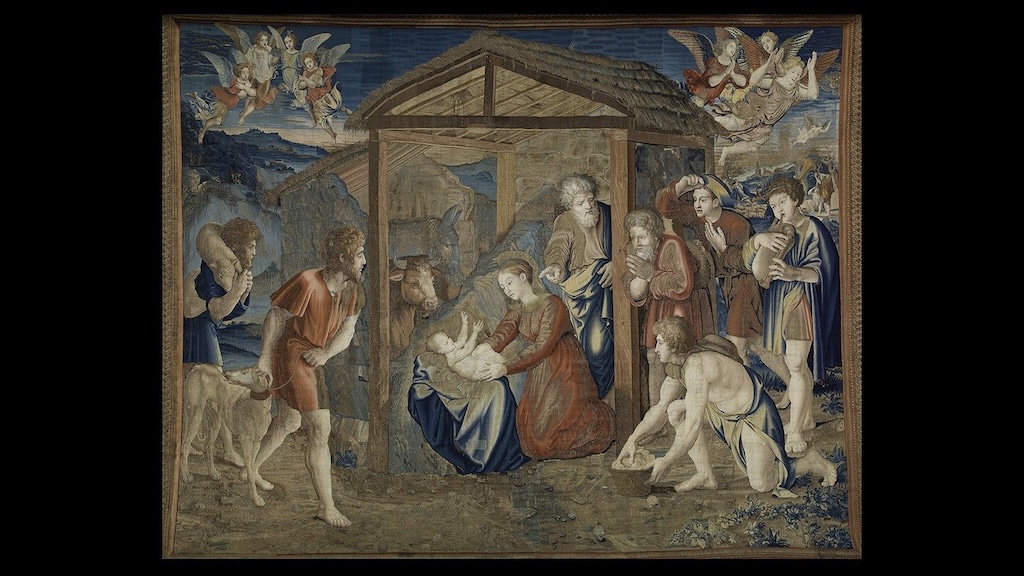

The Word became flesh
The birth of Jesus into the world, although it cannot be dated with precision either as to the year or the day, was already honored as a feast in both Eastern and Western Christian communities at the beginning of the fourth century. Gradually, under the influence of Roman tradition, the celebration of 25 December became established—a date chosen also to counter the ancient pagan festival dedicated to the rising sun, which fell precisely around the time of the winter solstice. Christians saw in that day the symbol of the appearance in the world of the true light, Christ, who breaks through the darkness produced by sin.
In the Eastern regions, by contrast, the mystery of the Incarnation was commemorated on 6 January with the solemnity of the Epiphany. From a homily by John Chrysostom, however, we learn that in Antioch both celebrations were already observed: Christmas on 25 December and Epiphany on 6 January. The spread and consolidation of these two feasts were also encouraged by the Christological controversies of the fourth and fifth centuries—particularly those connected with the teachings of Arius, Nestorius, and Eutyches—which called into question either the true divinity of the Word or improperly mingled the divine and human natures. These doctrines were rejected by the great Ecumenical Councils of Nicaea, Constantinople, Ephesus, and Chalcedon, which reaffirmed the perfect divinity and full humanity of Christ.
The liturgical texts of Christmas and Epiphany consistently reflect this truth: the Son of God assumed flesh without losing his equality with the Father and without confusing the two natures, which remain complete and distinct. In Rome, already in the early centuries, the practice also arose of celebrating three Masses on Christmas Day, for spiritual and pastoral reasons.
To live this feast in a truly Christian way means to conform oneself to the style of life chosen by Jesus: simplicity, service, and the radical gift of self. The lay faithful, in particular, are called to embody this mystery in daily life, helping to make the world holier through their work, enlightened by the spirit of the Beatitudes. The initiatives typical of the Christmas season—from the Nativity scene to the Christmas tree, and acts of solidarity—must spring from an authentic evangelizing intent and become opportunities to radiate the light of the Gospel in the lives of individuals, families, and society as a whole.