


December 30: Saint Felix I, Pope
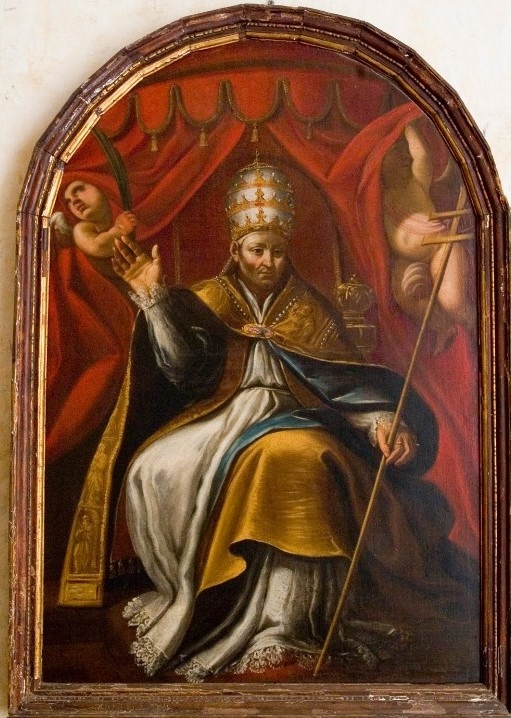

Defender of the Faith in the Trinity
Felix I, a native of Rome and the son of a man named Constantius, led the Church as Bishop of Rome from 269 to 274. He is known for promoting the celebration of the Eucharist at the sites where the relics of Christian martyrs rested, and for firmly defending faith in the Trinity and in the Incarnation of Christ.
Contrary to what is reported in the Liber Pontificalis, there is no evidence that Felix died as a martyr: his name appears in the list of bishops (Depositio episcoporum), not in that of the martyrs, which indicates that in Rome he was not regarded as such in the early decades of the fourth century. The date of his death also differs from the traditional account: not May 30, but December 30.
Some attributions are clearly inaccurate as well: it is not certain that he had a basilica built on the Via Aurelia, nor that he was buried there. In fact, the Depositio episcoporum confirms that his tomb was in the Cemetery of Callistus, along the Via Appia. The error likely arose from confusion with a martyr named Felix who was actually buried on the Via Aurelia. The liturgical decree and the alleged letter sent to the Church of Alexandria—cited by Saint Cyril of Alexandria and read at the Council of Ephesus—are also considered apocryphal.
The only historically certain information about Felix concerns his pontificate, as attested by the Depositio episcoporum. During his tenure, he dealt with the matter concerning Paul of Samosata: he received the synodal letter sent to Pope Dionysius by the Council of Antioch in 268, after the latter’s death. In those years, Emperor Aurelian, following the deposition of Paul, entrusted the property of the Church of Antioch to the faithful who remained in communion with Rome—a decision that fell under the responsibility of Felix.