


July 18: Saint Bruno of Segni, Bishop
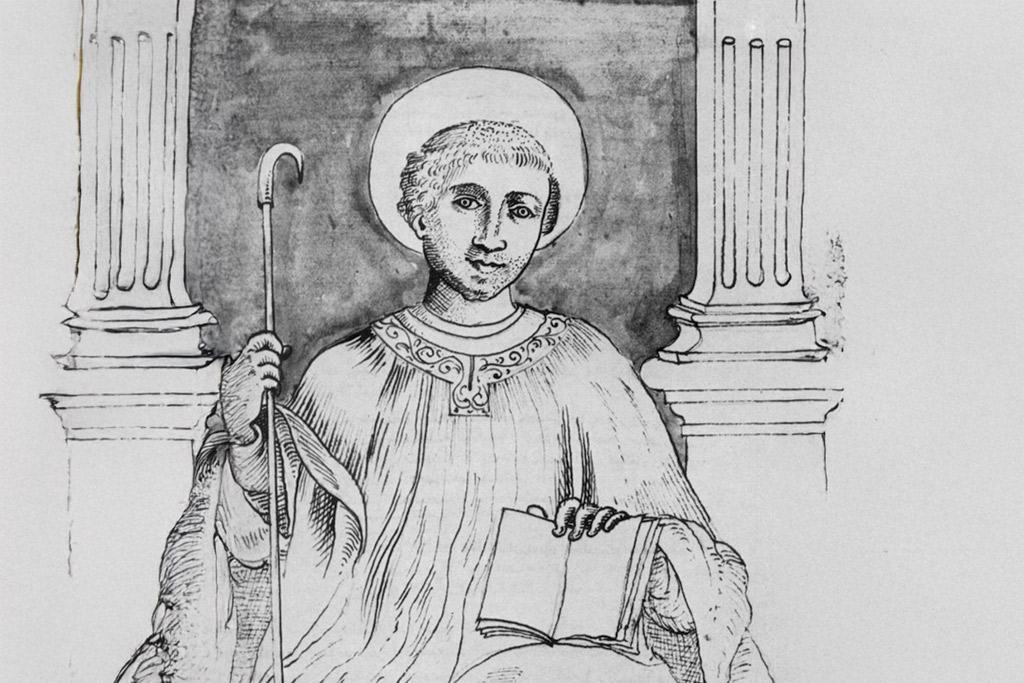

In the Service of the Popes and the Church
Saint Bruno of Segni was born between 1045 and 1049 in Solero d’Asti (now in the Province of Alessandria in northwestern Italy) to a modest family. Educated by the Benedictines, he continued his studies at the University of Bologna where he specialized in the trivium and quadrivium. After being ordained a priest, he became a canon in Siena and wrote biblical commentaries.
In 1079, he participated in the Roman synod that refuted the Eucharistic heresy of Berengar of Tours. On that occasion, he caught the attention of Pope Gregory VII, who appointed him Bishop of Segni. Bruno boldly supported the Gregorian Reform, opposing simony, clerical concubinage, and lay investiture. For this, he was imprisoned several times, yet he never ceased to defend the papacy.
Bruno was also close to Pope Urban II, taking part in key synods such as those in Piacenza and Clermont (1095), where the First Crusade was proclaimed. After renewed political hostilities, he was again imprisoned multiple times, both in Segni and in Rome, in the Mausoleum of Hadrian (Castel Sant’Angelo). After his release in 1103, longing for peace, he retired to the Benedictine monastery of Monte Cassino, where he lived faithfully according to the Rule. After only five years of monastic life, he was elected abbot.
Though displeased with his departure from the diocese, Pope Paschal II recognized his value and entrusted him with diplomatic missions, appointing him also as Papal Legate.
In 1110, Bruno strongly opposed Paschal II’s concession of imperial investiture rights to Emperor Henry V. As a result, he lost the privilege of holding both offices. Humbly, he resigned from Monte Cassino and returned to Segni in 1111, where he was welcomed with joy.
In his final years, he devoted himself to prayer, study, and pastoral care. He died on July 18, 1123, in Segni, where he was buried in the cathedral. The author of important theological and liturgical works, he was canonized in 1183 by Pope Lucius III.