


July 21: Saint Lawrence of Brindisi, Doctor of the Church
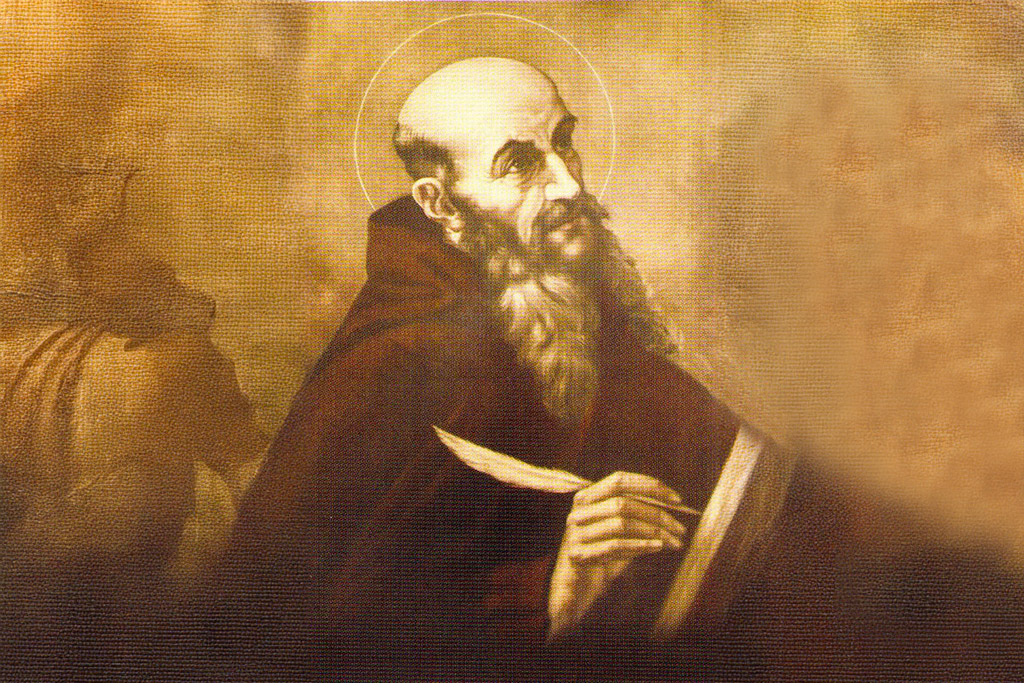

Defender of Church Doctrine
He carried out every task with simplicity and humility, defending the Church from attacks by enemies of the faith, promoting peace among warring powers, and leading the Order of Capuchin Friars Minor with dedication.
Saint Lawrence of Brindisi, born Lorenzo Russo, was born in Brindisi on July 22, 1559. He began his studies with the Conventual Franciscan Friars in Brindisi. Between 1565 and 1567, he took the religious habit and attended the school for aspiring friars. From a very young age, he began preaching in public, as was customary among the Conventuals. At the age of 14, he moved to Venice to live with a priest uncle. There, he came into contact with the Capuchin Franciscan Order and asked to join. After his novitiate and studies in philosophy, theology, and Sacred Scripture, he was ordained a priest on December 18, 1576.
Thanks to his deep knowledge of religious subjects, his remarkable oratorical skills, his profound spirituality, and his rigorous ascetic lifestyle, Lawrence earned the respect of both his fellow friars and the scholars of his time.
He traveled throughout Italy preaching the Word of God. His spiritual gifts made him a compelling and effective speaker. Following Franciscan teaching, his preaching was always firmly rooted in Sacred Scripture, which he delivered with clarity of thought and a rich, engaging style. Many conversions occurred around him, often including people who were not Christians.
Within the Order, he held many important positions: he was Novice Master and superior (guardian) in 1586, Provincial Minister in Tuscany (1590–92), Veneto (1594–96), and Liguria (1613–16); General Commissioner in Bohemia and Austria (1599–1602 and 1606–10), and in Bavaria-Tyrol (1611–13); and Minister General of the Order (1602–05).
Due to his abilities, he was entrusted with major missions across Europe. Between 1592 and 1594, he preached to the Jews of Rome on behalf of the Pope. In 1599, he founded a Capuchin mission in Prague. In 1601, he took part in the war against the Ottoman Turks as a military chaplain, encouraging Christian troops at the Battle of Albareale (Hungary). He also undertook delicate diplomatic missions: to the Duke of Mantua, Vincenzo Gonzaga (1602); to the governor of Milan, Pedro de Toledo (1616 and 1618); to the Bavarian court as a representative of the Holy See (1610–13); and to the Spanish court to support the German Catholic League (1609).
In 1618, while in Naples, he was asked by local nobles to go to Spain to denounce to King Philip III the injustices and abuses committed by the viceroy, Don Pedro Girón, Duke of Osuna. After facing several obstacles and surviving an attempted ambush, he was granted an audience with the king on May 26, 1619. During the meeting, he foretold his imminent death and warned that if the king failed to act on behalf of the Neapolitan people, he himself would die within two years. On July 22, 1619, his 60th birthday, Lawrence died suddenly in Belém, near Lisbon—possibly poisoned. As he had prophesied, Philip III died two years later, in 1621, without having taken action.
In 1783, Pope Pius VI beatified him; in 1881, Pope Leo XIII canonized him; and in 1959, Pope John XXIII declared him a Doctor of the Church.