


July 28: Saint Victor I, Pope
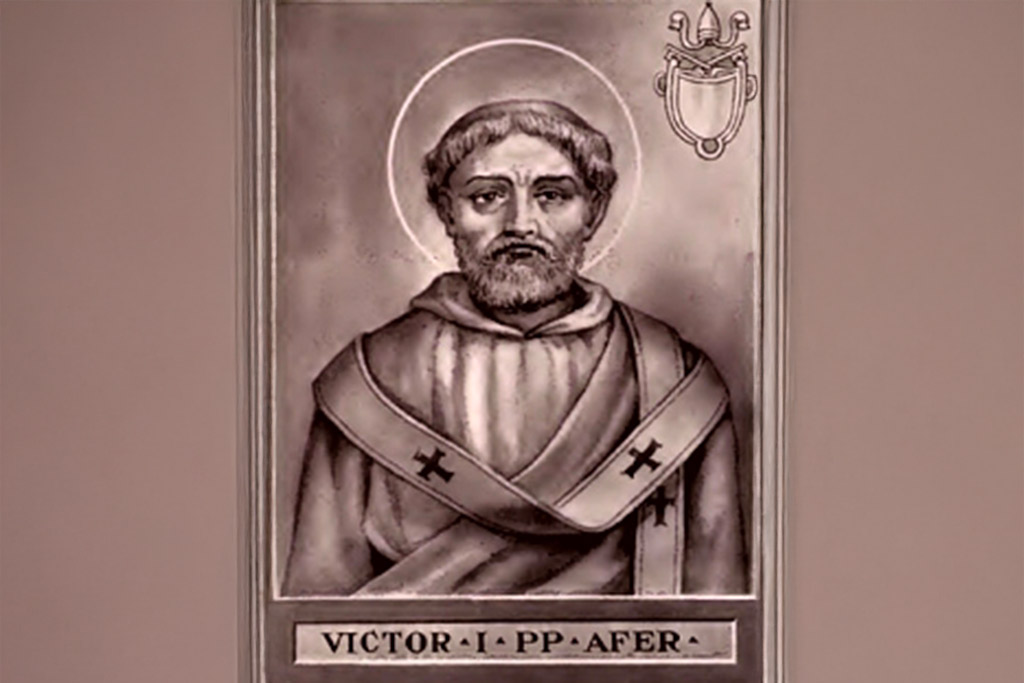

The First African Pontiff
Victor was the first African Pope of the Church of Rome. During his pontificate, Emperor Commodus suspended the persecutions against Christians and met with the Pope. On that occasion, Victor presented him with a list of Christians who had been condemned to forced labor in the mines of Sardinia. Commodus ordered their release, marking the first time the Roman Empire officially negotiated with the Church and the Bishop of Rome (in the year 190).
Victor, who succeeded Saint Eleutherius, strengthened the authority of the Roman Church over other Christian communities and actively opposed heresies. He died on July 28 around the year 199 and was buried on the Vatican Hill, near the tomb of Saint Peter.
During his pontificate, an important controversy intensified: when to celebrate Easter. Christians from Asia residing in Rome followed a different calendar, which allowed them to celebrate Easter even on non-festive days. To address this divergence, the first known synod in the history of the Church was held in Rome.
The Churches of Asia, following an ancient tradition, celebrated Easter on the 14th day of the month of Nisan, according to the Jewish calendar. This date coincided with the Jewish Passover, the day on which the Passover lamb was sacrificed, and marked the end of their Lenten fast. In contrast, other Christian Churches preferred to end the fast and celebrate Easter on the Sunday following that date. In this way, they emphasized not so much the death of Jesus but rather the moment of his Resurrection, which occurred three days after the crucifixion—on a Sunday, the "Lord’s Day" par excellence.
Over time, during the 3rd century, the Roman practice of celebrating Easter on a Sunday became the norm throughout the Church. Moreover, according to Saint Jerome, Pope Victor was the first to write in Latin, whereas up to that time all ecclesiastical texts had been written in Greek.