


August 6: The Transfiguration of the Lord
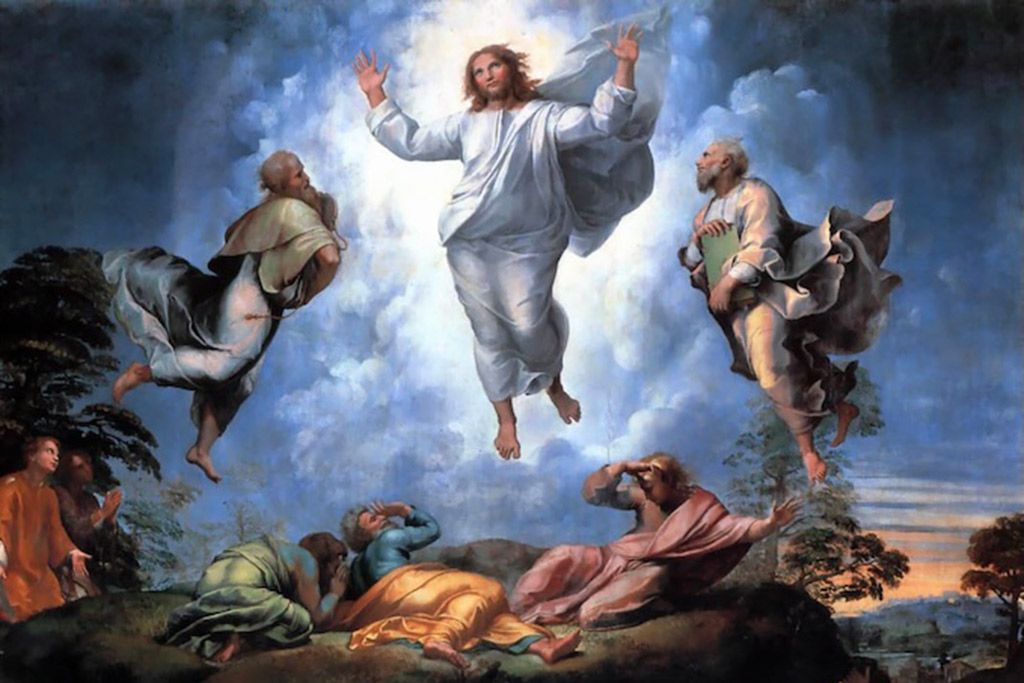

The Revelation of Divine Glory
The Feast of the Transfiguration of the Lord commemorates the episode in which Jesus, on Mount Tabor, was transfigured before the Apostles Peter, James, and John, revealing his divine glory as the beloved Son of the Father. On that occasion, Moses and Elijah appeared beside him—symbols of the Law and the Prophets—confirming his salvific mission.
Moses and Elijah, who appeared alongside Jesus, are "in glory" because they had already experienced the profound presence of God on Mount Sinai (Exodus 33; 1 Kings 19). Peter’s desire to build three tents recalls the Tent of Meeting from the time of the Exodus, where God spoke with Moses "face to face."
In the Gospel of Luke, we read that Jesus took Peter, John, and James with him and went up the mountain to pray. During prayer, his face transformed and his garments became dazzling white with light (Luke 9:29–30). This is the event of the Transfiguration, which the Church celebrates on August 6—exactly forty days before the Feast of the Exaltation of the Cross.
Through this event, Christ sought to prepare the Disciples to face the suffering of the Cross by strengthening their faith with a vision of his divine glory. But the Transfiguration is also an announcement of the “wonderful adoption” that transforms believers into the children of God, destined one day to share in the light and glory of the Son.
The Transfiguration is a feast of divine glory, already revealing the ultimate goal of salvation history: the full entry of humanity into the life of the Trinity.
This feast has been known in the Christian East since the end of the 5th century and is likely connected to the dedication of the basilicas on Mount Tabor, the traditional site of the Transfiguration.
This solemnity is celebrated both in the Western Church and in the Eastern Churches of Byzantine, Syriac, and Coptic tradition.