


August 7: Saint Cajetan of Thiene
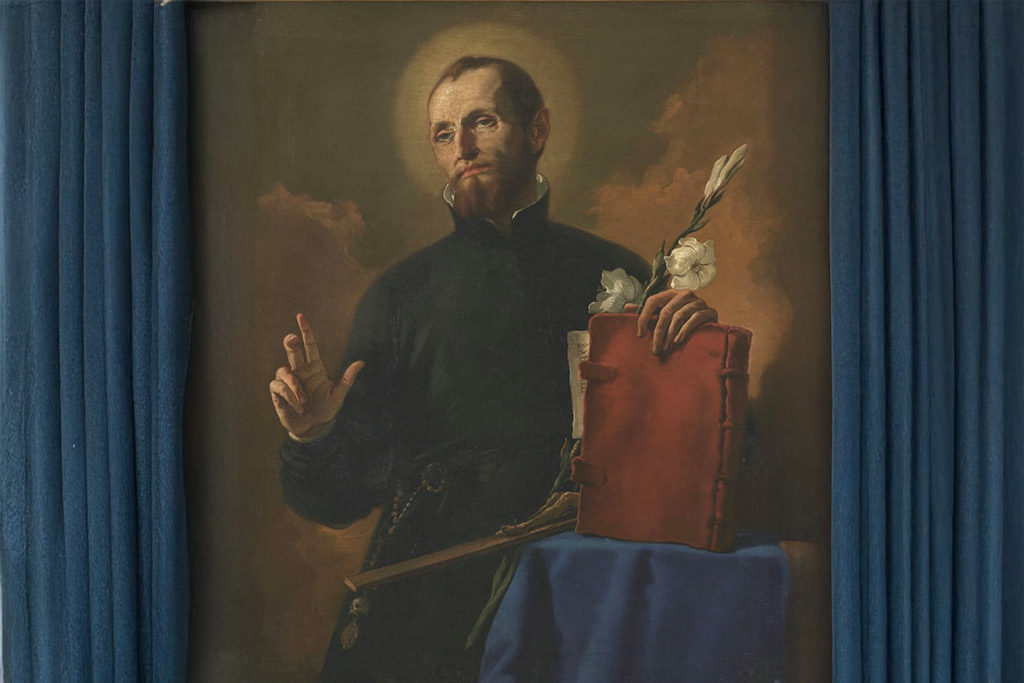

The Saint of Divine Providence
He is invoked as the Saint of Divine Providence for his unwavering trust in God. He turned to the Lord in all his endeavors, and even when needs seemed insurmountable, he always managed to find the resources to help the poor and the needy.
This is Saint Cajetan of Thiene, a nobleman from Vicenza born in 1480. He is remembered as one of the key figures of the Church’s spiritual reform during the time of the Reformation. From a young age, he was taught charity toward the poor by his mother, as the needy often knocked at their door. He studied law in Padua, where he earned a degree in both civil and canon law (utroque iure), and with the bishop’s permission, he donned clerical vestments.
In 1507, he moved to Rome, where Pope Julius II appointed him Apostolic Protonotary, entrusting him with delicate tasks in which he distinguished himself by wisdom and prudence. However, desiring a more radical expression of his faith, he was ordained a priest in 1516.
Cajetan chose to serve God by offering concrete help to others. He joined the Compagnia del Divino Amore (Company of Divine Love), a group of laypeople and priests devoted to the spiritual life and to caring for the sick, the poor, orphans, and women in difficulty. He founded hospitals for the incurable and promoted charitable works in Vicenza, Verona, and Venice, where he tirelessly assisted the sick, even those afflicted with the most contagious and worst diseases.
In 1523, urged by his spiritual director, Dominican friar Battista Carioni, he returned to Rome to contribute to the reform of the Church, by then widely called for. With the support of Pope Clement VII, he founded in 1524 the Clerics Regular of the Theatines, together with Giampietro Carafa (the future Pope Paul IV), Bonifacio da Colle, and Paolo Consiglieri. These priests, known among the people as "the reformers," lived in poverty, sustained themselves through alms, and dedicated their lives to preaching, caring for the sick, and assisting pilgrims, especially during the Jubilee of 1525.
During the Sack of Rome in 1527, he was captured, stripped, and tortured, but managed to escape with his companions thanks to the intervention of some Spaniards and fled to Venice. There, he transformed a confraternity into a center of intense spiritual and charitable activity, continuing to assist the sick—especially those suffering from syphilis—and promoting works for orphans, with the help of his spiritual disciple, Saint Jerome Emiliani.
For the good they had done in Venice, the people of Naples earnestly requested the presence of the Theatines. In 1533, Pope Clement VII ordered that some religious be sent to Naples, and Cajetan of Thiene was chosen. He moved to the city, where he would remain until his death, except for a brief return to Venice from 1540 to 1543 to lead the community there.
In Naples too, Cajetan promoted numerous spiritual and social initiatives. With the help of Sister Maria Carafa, sister of Bishop Giampietro, he founded a monastery for reformed Dominican nuns. He supported Maria Lorenza Longo, founder of the Hospital for the Incurables, in reviving the Capuchin Poor Clares’ monastery, and encouraged Maria d’Ayerbo, widow of the Duke of Termoli, to establish a monastery for women who had renounced their disordered lives.
Among his most enduring works was the founding of the Monte di Pietà of Naples, established to free the poor from usury by allowing them to obtain loans in exchange for a small pledge.
He died on August 7, 1547, was beatified by Pope Urban VIII on October 8, 1629, and canonized by Pope Clement X on April 12, 1671.