


August 16: Saint Stephen of Hungary
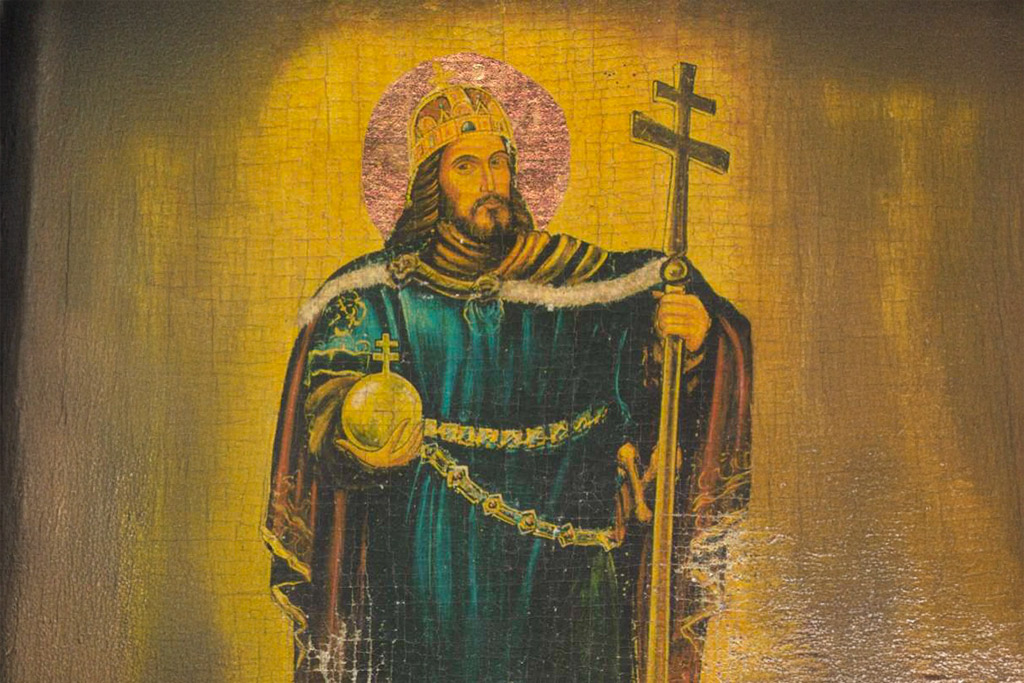

Evangelizer of the Magyars
Founder of the Kingdom of Hungary in the year 1000 and evangelizer of his people, King Stephen I is not only the patron saint of the Hungarian nation but also a central figure in the identity of the Magyar people.
He was the key architect of the Magyars' conversion to Christianity — a nomadic people who had come from the East and settled in the fertile plains of the Danube, among Slavic populations. In 997, he succeeded his father Géza, a pagan duke married to a Christian woman, and undertook the evangelization of the country. This mission had already begun in the 9th century under the Church of Constantinople, but Stephen relied especially on the Benedictines from Cluny.
He strengthened national unity by combating tribal power, while wisely preserving the people’s customs through the clan system, which he recognized as a valuable social and economic structure. Positioned on the frontier between worlds, he chose the West over the East, and independence over vassalage to the Holy Roman or Byzantine Empires.
He founded numerous monasteries, including that of Saint Martin in Pannonhalma, and through the monk Anastasius and the Bishop of Prague, he was crowned “Apostolic King” by Pope Sylvester II in the year 1000. He died in 1038 and was immediately venerated as a saint by the Hungarian people.