


September 28: Saint Wenceslaus, Martyr
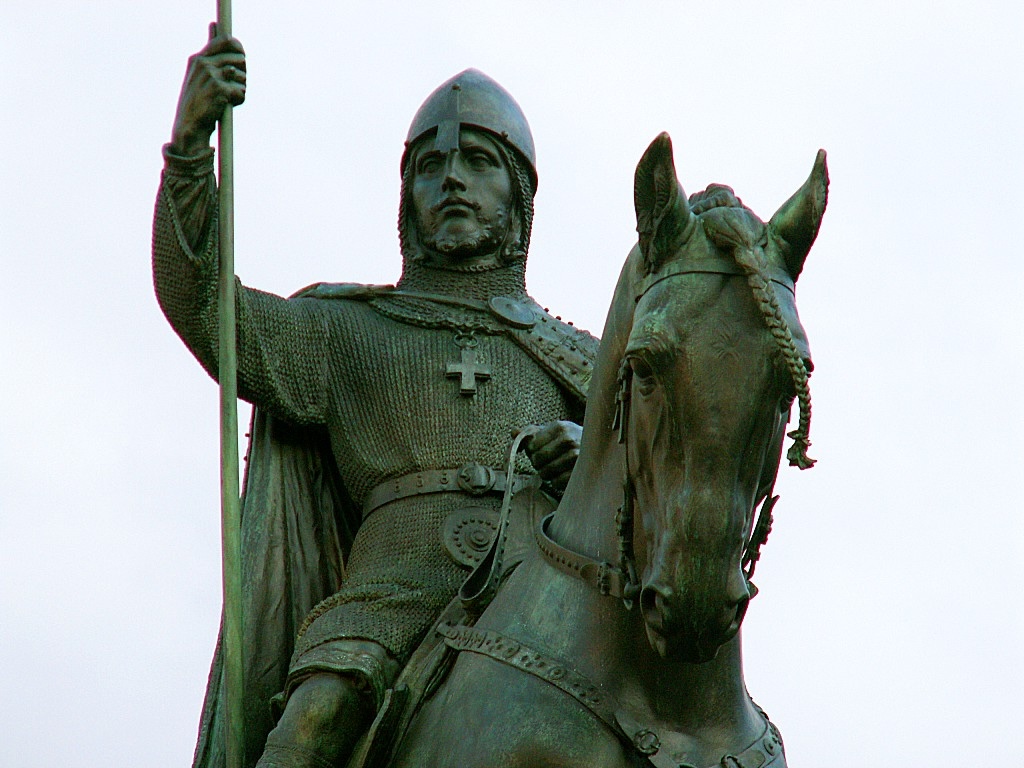

A sovereign who evangelized his people
Saint Wenceslaus is one of the most significant figures in the history of the Christianization of Central Europe. The son of Duke Vratislaus I of Bohemia and his firstborn, he grew up in a period of profound cultural and religious transition: in the early 10th century, Bohemia at the time was a land where Christianity was slowly spreading amidst still deeply rooted pagan traditions.
A key influence in his upbringing was his paternal grandmother, Saint Ludmila, who had converted to Christianity thanks to the work of Saints Cyril and Methodius, missionaries sent from the Byzantine Empire to neighboring Great Moravia. Ludmila instilled in the young Wenceslaus the values of the Christian faith, but his education was not approved by his mother, Drahomíra, who remained attached to the pagan cults.
When Duke Vratislaus died in 921, Wenceslaus was still a minor. Drahomíra assumed the regency and pursued a policy hostile to Christianity, even ordering the murder of Ludmila. She also tried to favor her younger son, Boleslaus, who was also opposed to the Christian faith.
Yet, when he came of age, Wenceslaus took power and reversed the direction of the government. He dedicated himself zealously to the evangelization of his people, supporting the work of Christian missionaries, especially Germans, and encouraging Bohemia’s ecclesiastical and cultural ties with the West.
While remaining respectful of the Slavic liturgy previously introduced, he laid the foundations for Bohemia’s integration into the religious and political sphere of Western Christian Europe, recognizing in 929 the sovereignty of the German king Henry I.
He founded the Rotunda of St. Vitus in Prague, the first monumental Bohemian building inspired by Western architecture. He redeemed many pagan slaves, baptizing them and welcoming them into the Christian community. He was admired for his ascetic life, marked by fasting, prayer, humility, and a spirit of service.
His rule, deeply inspired by the Gospel and the Church, was not well regarded by the pagan aristocracy. His brother Boleslaus I, in agreement with some nobles, organized a plot against him. On the morning of September 28, 935, as Wenceslaus was on his way to the church of Stará Boleslav for Matins, he was treacherously attacked and killed. According to tradition, Wenceslaus could have defended himself but refused to kill his brother, saying: “I could kill you, but the hand of a servant of God cannot be stained with fratricide.”
After his death, Wenceslaus was immediately venerated as a martyr of the Christian faith. His cult quickly spread both among the Slavic peoples and in the Latin world.
Wenceslaus was proclaimed Patron of Bohemia and, in time, also of the Czech Republic and Slovakia.