


November 1: All Saints’ Day

In the Sign of Hope
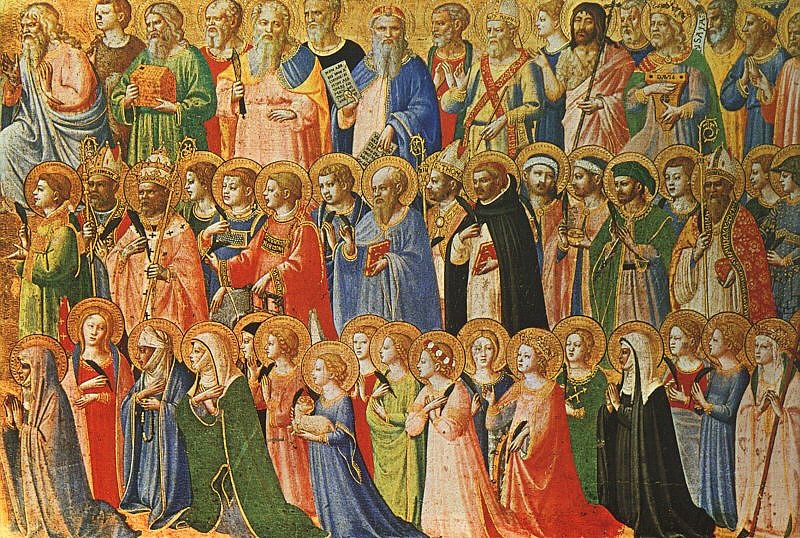
The Solemnity of All Saints, celebrated on November 1, is an occasion for Christian communities to lift their gaze toward Heaven, where men, women, young people and children of every age live in the grace and light of God. On this day, we remember not only the officially recognized Saints of the calendar but also all those who now share in eternal life.
The month of November begins with a very ancient civil and religious observance, rooted in pre-Christian traditions, particularly Celtic and Roman ones. The Celts, for example, divided the year into two great seasons: Beltane, which began in May and celebrated life and the blossoming of nature, and Samhain, which occurred in mid-October and marked the beginning of darkness, cold, the death of nature and the time of rest.
Similarly, the Romans celebrated Pomona during this period—a goddess associated with the end of the harvest. When the Romans conquered Gaul, their traditions merged with those of the Celts, giving rise to the custom of celebrating the passage between life and death between October 31 and November 1.
With the advent of Christianity, this time of year was transformed and reinterpreted. November 1, in the Catholic liturgical calendar, became the Solemnity of All Saints (Sollemnitas Omnium Sanctorum in Latin), a celebration not of death but of the victory of eternal life and the triumph of holiness.
The origins of the feast go back at least to the 7th century, when Pope Boniface IV, in 609 or 610, transformed the Pantheon in Rome—a pagan temple—into a church dedicated to the Virgin Mary and all martyrs. This act marked the transition from a pagan festival to a Christian celebration.
In the following century, Pope Gregory III chose November 1 as the official day to celebrate all the Saints, dedicating a chapel to them in St. Peter’s Basilica. Later, under Emperor Charlemagne, this observance spread throughout his empire. In 1480, Pope Sixtus IV also introduced the octave—eight consecutive days of celebration. Through this feast, the Church invites us to look beyond the present, toward the heavenly Jerusalem, where the Saints praise God forever.
On this day, the key word is hope: hope for salvation, for peace, for a full life that does not end with death. The Feast of All Saints reminds us that holiness is a possible goal for everyone, and that Heaven is not far away—it begins here and now, every time we choose what is good.