


13 November: Artemide Zatti, Salesian Lay Brother
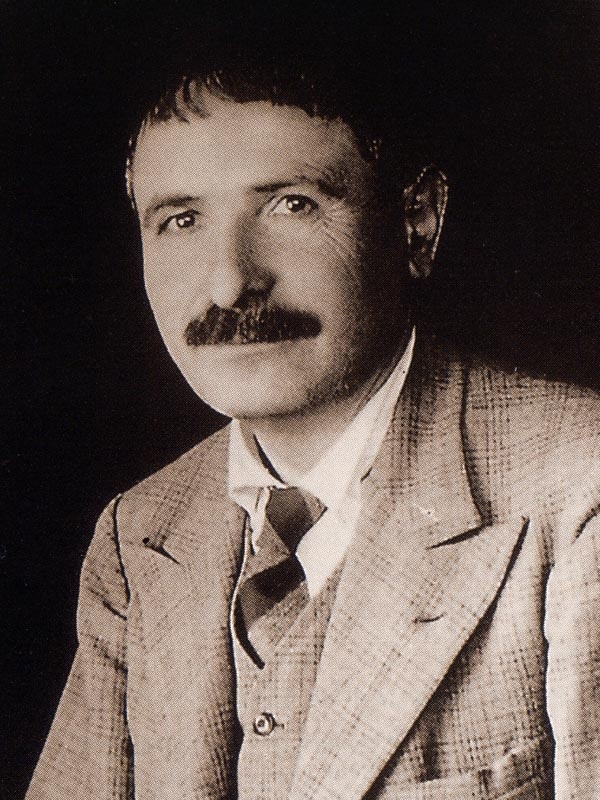

The Holy Nurse
Artemide Zatti was born in Boretto, Italy, in the province of Reggio Emilia, on 12 October 1880. From an early age he had to face the hardships of life; at just nine years old he was already working as a farm laborer to earn a living. Because of poverty, his family emigrated in 1897 to Argentina, settling in Bahía Blanca.
There, Artemide began attending the parish run by the Salesians, where he found in Father Carlo Cavalli—a priest of great faith and kindness—his spiritual guide. It was he who directed him toward the Salesian vocation, which Artemide embraced at the age of 20 by entering the aspirants of Bernal.
While assisting a young priest suffering from tuberculosis, he contracted the disease himself. Thanks to the caring intervention of Father Cavalli, who continued to accompany him from afar, it was decided that he should be transferred to the Salesian House in Viedma, where the more favorable climate and the presence of a mission hospital helped him recover. There he met Father Evasio Garrone, an experienced Salesian nurse who encouraged him to turn to Mary Help of Christians with a promise: if he recovered, he would dedicate his life to caring for the sick. Artemide accepted with trust, and he miraculously recovered, later stating: “I believed, I promised, I was healed.”
From that moment, his path was set. He humbly accepted giving up the priesthood, becoming a lay brother and making his first religious profession in 1908, followed by the perpetual profession in 1911. Faithful to his promise to Our Lady, he devoted himself completely to the hospital—initially working in the pharmacy and, after Father Garrone’s death in 1913, taking over the direction of the entire facility. Artemide became deputy director, administrator, and a highly respected nurse, earning the trust of patients and colleagues, who entrusted him with increasing responsibilities.
His service was not limited to the hospital: he was present and active throughout the city and in nearby towns, Viedma and Patagones, located along the Río Negro. Available at any hour of day or night, he braved all kinds of weather to reach anyone in need, often without asking anything in return. His reputation as a “holy nurse” spread across Patagonia, to the point that many preferred his help to that of doctors.
Artemide’s love for the sick was deep and sincere. He regarded them as if they were Christ himself; thus, when he asked the Sisters for a garment for a needy boy, he requested it as though it were for Jesus. His care for the sick was so attentive that it became exemplary: some remembered him carrying a lifeless body on his shoulders to the mortuary, accompanying it with a prayer. Following the Salesian spirit and Don Bosco’s motto “work and temperance,” he carried out his service with energy, sacrifice, and total detachment from personal recognition, never allowing himself rest—except for the five days he spent in prison due to a misunderstanding regarding the escape of a detainee hospitalized there. He was later acquitted and welcomed back triumphantly.
Artemide was also a very human person, naturally cheerful and easy to approach, especially for humble people. But what truly set him apart was his profound faith, which seemed to enlighten those around him. A doctor, initially skeptical, admitted that his unbelief wavered each time he met Artemide, and another stated that he found faith in God precisely thanks to him.
In 1950, a fall from a ladder triggered the first symptoms of a tumor, which Artemide himself clearly recognized. Despite this, he continued his service until the following year, when, after courageously enduring the suffering, he died on 15 March 1951, fully conscious and surrounded by the affection and gratitude of the community he had served with such dedication.
On 14 April 2002, Saint John Paul II beatified him, marking a historic moment, as Artemide Zatti was the first non-martyr Salesian coadjutor to be raised to the altars. Later, on 9 October 2022, Pope Francis canonized him.