


21 November: Presentation of the Blessed Virgin Mary
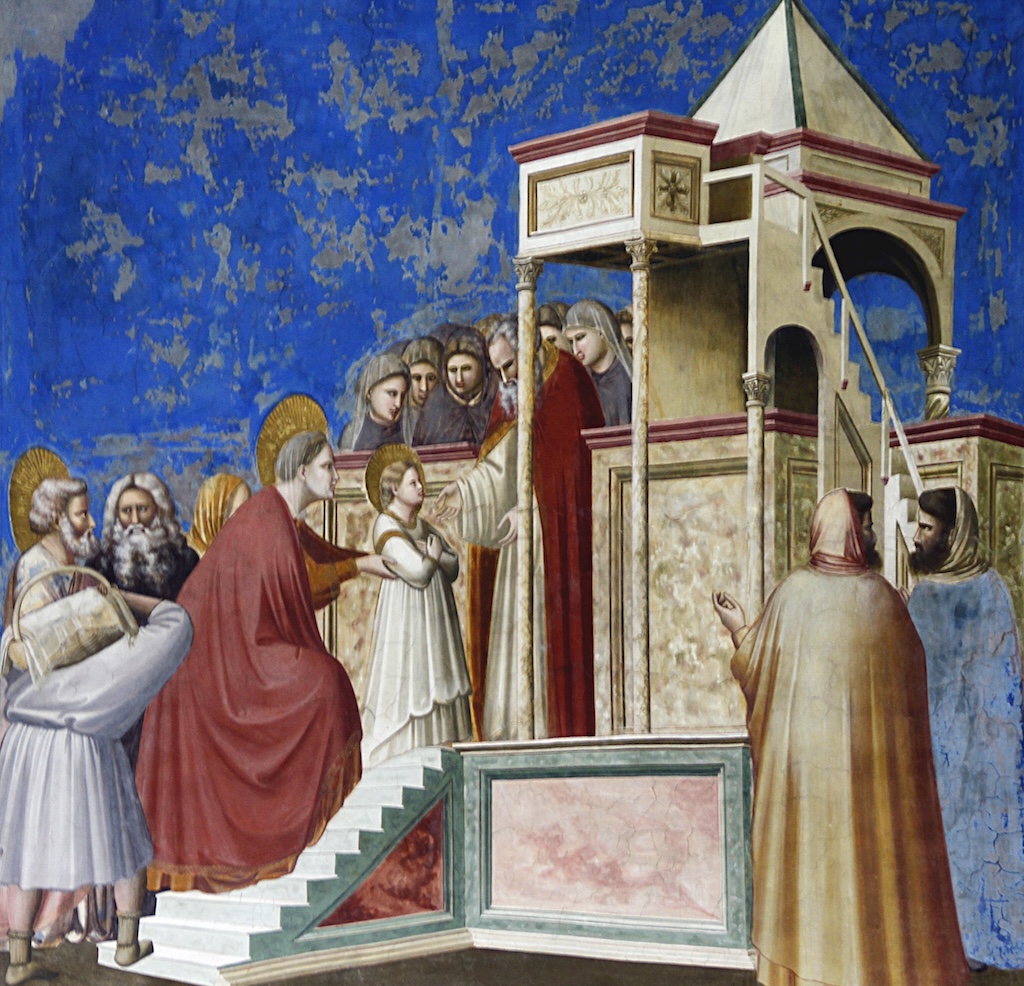

The new Temple, more glorious than the one of stone
The liturgical memorial of 21 November, dedicated to the Presentation of the Blessed Virgin Mary, has its roots not in the canonical texts but in ancient Christian traditions preserved in the apocryphal Gospels. In those pages, the early communities looked to Mary, contemplating her as she grew in familiarity with God, so that the Church too might learn from her how to prepare for the coming of the Lord.
The ancient accounts describe a young girl who allowed herself to be shaped by the Word, who consecrated herself day after day, and who became, in the purity of her heart, a living temple, capable of receiving within her womb the Son of God.
According to these traditions, Mary spent her childhood in the Temple of Jerusalem, in an atmosphere of innocence and recollection. Some texts depict her as nourished by angels, a symbol of her unique intimacy with Heaven. The Protoevangelium attributed to James, one of the earliest apocryphal narratives, speaks of her presentation at the age of three: the little girl, accompanied by a procession of maidens, is said to have climbed the steps of the sanctuary with a free and determined heart, without hesitation or fear. The priests, astonished, recognized in her a sign of divine favor, foreseeing that through her God would accomplish the redemption of His people. Later tradition even recounts her entrance into the most sacred area of the Temple, as a sign of the singular grace that accompanied her.
These texts also present Mary as part of the group of virgins who prepared the sacred vestments. The symbolism is transparent: she who wove threads for the veil of the Holy of Holies would later give flesh to the Messiah, the true living Sanctuary. Through this symbolic language, the early Christian communities emphasized that Mary, enlightened by the Spirit, actively prepared herself for the mission she would one day receive.
The Fathers of the Church read these accounts as a spiritual parable: Mary’s years in the Temple represent the time in which the Spirit was leading her to become the dwelling place of the Word. Day by day, she learned to let herself be shaped, becoming the “house,” “tent,” and “garment” of the Son of God. It is no surprise that the feast falls at the threshold of Advent: Mary is contemplated as the new Temple, more glorious than the one of stone, because in her God took on His mortal dwelling.
In the Christian East this feast holds a place of particular importance, being one of the twelve principal celebrations of the Byzantine liturgical year. In it, the Eastern Churches saw what the West would later contemplate in the Immaculate Conception: Mary’s total openness to the action of the Spirit. The date also recalls the ancient dedication, in the sixth century, of the church of Santa Maria Nova beside the Temple of Jerusalem. In a spirit of communion among diverse traditions, this celebration invites us to look to the Virgin as the very root of the Church: in her is fulfilled the consecration that prepares the birth of the Son of God and the coming of His Kingdom.