


1 December: Saint Charles de Foucauld
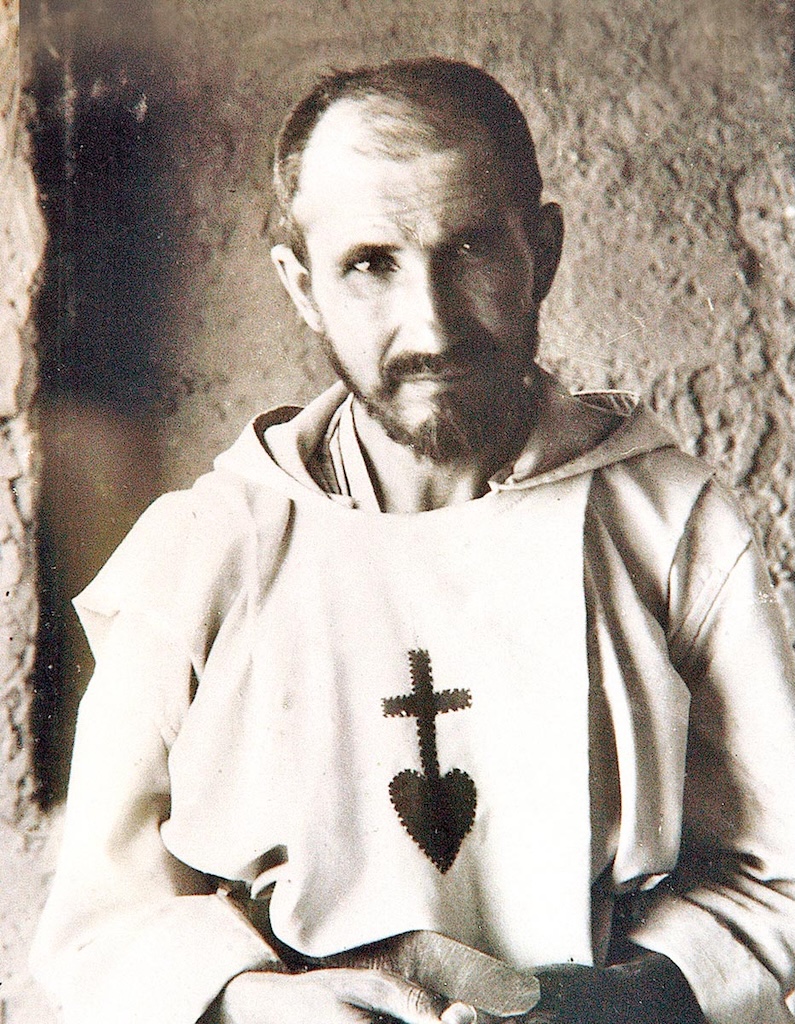

Universal Brother
A universal brother, in search of God’s plan for him, he fell in love with Christ and with humanity, living the Gospel among the little ones and the least of the earth. This is Saint Charles de Foucauld, born in Strasbourg on 15 September 1858. Left an orphan while still a child, he was welcomed and raised by his grandfather. The outbreak of the 1870 war forced the family to move to Nancy, where Charles continued his secondary studies.
In 1876 he decided to embrace military life, entering the Saint-Cyr Academy. During those years, however, the faith he had received in childhood began to fade: he lived through a period of restlessness, disorder, and isolation. He completed his training at the Cavalry School of Saumur, beginning a brief experience in the army.
In 1882 he left the uniform to explore Morocco. This journey changed his heart: he was struck by the hospitality of the local people, the grandeur of the desert, and above all their faith in the one God. Back in Paris, he could no longer find peace. Questions about God tormented him.
His cousin Marie directed him to Father Henry Huvelin, to whom Charles turned seeking clarity about the Christian faith. Huvelin, sensing the depth of his search, invited him to go to confession and then to receive Communion. It was the beginning of his conversion, dated around 30 October 1886. He later set out as a pilgrim to the Holy Land, where in Nazareth he contemplated the simple and hidden life of Jesus the worker.
In January 1890 he entered the Trappist monastery of Notre-Dame des Neiges in France. Shortly afterward he was sent to the Trappist monastery of Akbès in Syria, but there he felt he was not fully living out the evangelical model he sought. At the beginning of 1897 he was granted permission to follow other paths.
He returned to the Holy Land, living for three years near the Poor Clares of Nazareth, becoming their servant. He lived in a very poor hut and spent his days in silence, adoration, and study of Scripture. During this time he matured the project of founding a new way of living religious life inspired by the everyday simplicity of Nazareth. He had already drafted a first Rule in 1896; between 1899 and 1902 he expanded its contents, preparing Constitutions and a Directory for future fraternities of Little Brothers and Little Sisters. However, no one would follow him during his lifetime.
Love for Jesus moved him to draw near to all, especially to those who did not know Him. For this reason, he accepted ordination to the priesthood at the age of forty-three, determined to bring the Gospel “to the most wounded and abandoned people.” He moved to Béni-Abbès, on the border between Algeria and Morocco, to live in prayer and adoration, desiring to become a “universal brother.”
Since he could not return to Morocco for political reasons, he traveled into southern Algeria, into the lands of the Tuareg, settling in Tamanrasset. There he learned the language, shared the life of the people, and collected their traditions and culture in writing, convinced that the Gospel must take root in the concrete history of persons.
He died on 1 December 1916, in front of the small fort he had built as a refuge for the inhabitants during the war. A rifle shot fired during a skirmish with rebel groups ended his life.
The seed sown by Charles would sprout after his death: men and women, lay and consecrated, would give life to various spiritual families, all animated by the same desire that had guided him—to shape their lives according to the one model, Jesus of Nazareth.