


Easter 2026
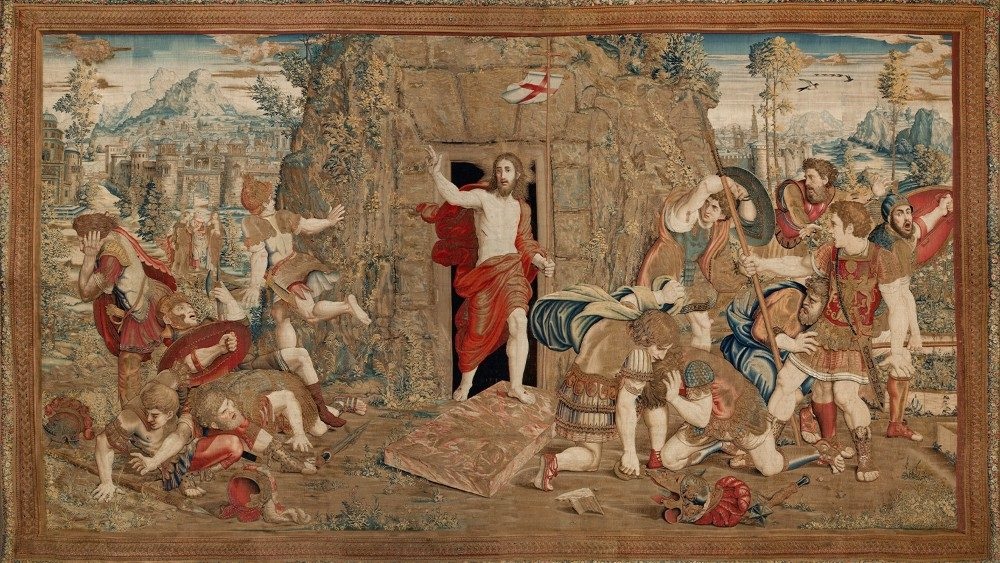

From Darkness to Light
During Easter Vigil, the night in which we celebrate the Resurrection of Jesus from the dead, the Church speaks to us in a powerful language—its language of symbols. Three of these, in particular, help us to understand what takes place on this night of the Resurrection: light, water, and the intoning of a new song—the Easter Alleluia.
As we wait in darkness for the Paschal Candle to be lit, we are consoled by the knowledge that God knows how dark the night is—indeed, how dark our nights are, the shadowy effects of sin in our lives, and how blind we can be to them. In the midst of this dark night, He kindles a light from the fire of His love. It is the Light of Christ. In the darkness and silence, this glimmer begins to spread as it passes from one to another throughout the Church. This is how grace works in the people of God: it spreads to others, bringing light, warmth, and hope, illuminating the entire reality that surrounds us. As beautiful as this light is, it is only a faint glimmer of the brightness that will one day be ours at the heavenly banquet of His Kingdom.
The second evocative symbol of the Vigil is water, with which the light will be united through the symbol of the triple immersion of the lit Paschal Candle into the water used for baptism. Water symbolizes all that is truly precious on earth; light symbolizes all that gives life from heaven. United with the Candle, the newly blessed water is raised to a higher level. Thus, the Easter Vigil tells us that a far more precious stream than anything that could come from the earth flowed from the side of Christ, when water and blood poured out from His side pierced on the Cross. The waters of baptism flow from His side. Those who are immersed in this stream are reborn. When the Paschal Candle is immersed in the water, heaven and earth are united in a symbolic wedding that bears new fruit in the children of the Resurrection, the new creation of God.
The third Easter symbol is the solemn intoning of the Easter song: Alleluia! Of course, we will not sing this song in its fullness or with such perfection as we shall when we are in the heavenly Jerusalem—the place where all has been made new and the Saints of God are gathered for the eternal feast. Nevertheless, our song is a true expression of the joy that fills us, for singing symbolizes a departure from the ordinary, expressing something that comes not only from our throat but from the very depths of our being. Song transcends words, bringing us into contact with deep realities within us and drawing us closer to those who share this profound experience of joy in praising God.
All these symbols speak of life—indeed, they speak of eternal life. They guide us through the three stages of our life of faith.
The symbol of light in the darkness describes the search in which we all embark, in order to find that glimmer of truth, the sure path on which to walk. What is this light? It is Christ, the hope of the world, who leads us in faith.
The symbol of water speaks to us of the fruitfulness of God’s grace, of the powerful union, the indissoluble bond of baptism that transforms us into the Body of Christ on earth, the Church.
Finally, the symbol of the new song: the fullness of joy that will be ours—the pure ecstasy of eternal happiness that has been promised to us. This was promised to the thief on the cross. When we too pass through the final moment of death, it will give rise to a surprising radiance and an endless, fruitful abundance to which, without any merit on our part, we are invited as guests to the wedding banquet of the Lamb, in the Kingdom of Heaven, in the company of all the Saints who have gone before us, marked with the sign of faith. And indeed, we pray together with those who tonight will become our brothers and sisters in Christ, through these powerful waters of Baptism and the Sacred Chrism of salvation.
Cardinal Arthur Roche
Prefect of the Dicastery for Divine Worship and the Discipline of the Sacraments
Member of the Pontifical Commission for Vatican City State