


July 5: Saint Anthony Maria Zaccaria
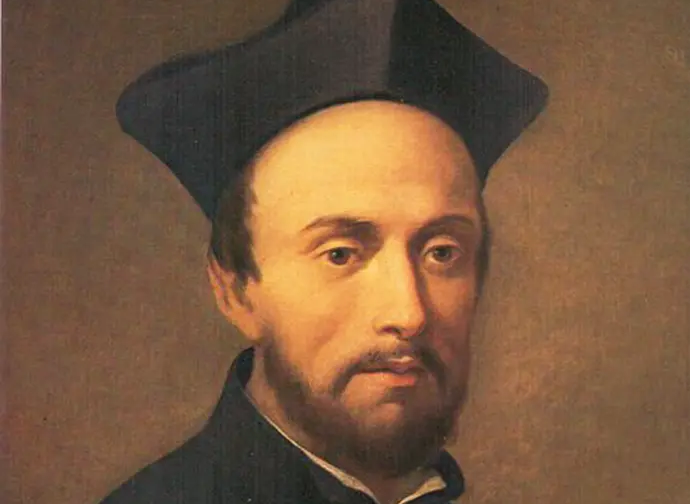

Founder of the Barnabites
“It is truly the mark of great hearts to serve others without expecting anything in return” so often said Saint Anthony Zaccaria.
He was born into a noble family in Cremona, Italy in 1502. Left fatherless at an early age, he was lovingly raised by his mother, who was herself still very young.
Few details are known about his childhood, except for one telling episode: one day, returning home in the cold from school, he gave his cloak to a poor man.
In 1520, he moved to Padua to study philosophy and medicine. After graduating in medicine in 1524, he returned to Cremona but chose not to practice medicine, devoting himself instead to the spiritual life. As a layman, he began gathering children during feast days to teach them catechism, eventually involving adults as well. On February 20, 1529, he was ordained a priest.
He was committed to tirelessly helping the poor and sick, especially during the plague outbreak of 1528.
In 1530, he moved to Milan and founded the Company of the Sons and Daughters of Saint Paul (also known as the Congregation of Saint Paul), which received official recognition on February 18, 1533—before its members even lived in community or followed shared rules. Starting in 1545, when they settled near the Church of Saint Barnabas, members of the Congregation became known as Barnabites or Clerics Regular of Saint Paul.
He also founded the Angelic Sisters of Saint Paul and the Married of Saint Paul.
Among his most notable contributions—deeply rooted in Milanese tradition—were the custom of ringing church bells every Friday at 3:00 p.m. in remembrance of Christ’s death and the institution of the Forty Hours Devotion, a solemn Eucharistic adoration held in turns across the churches of the city.
In 1539, already in poor health, his condition worsened. In June, sensing his end was near, he asked to be brought back to Cremona, to his mother’s house. Shortly before his death, he was granted a vision of Saint Paul the Apostle. After offering his final words of advice and receiving the sacraments, he passed away in the early afternoon of July 5, 1539, as he had foretold, during the octave of Saints Peter and Paul.
Anthony Zaccaria’s body was later transferred to Milan and buried in the monastery of San Paolo Converso. On May 8, 1891, his relics were rediscovered and subsequently moved to the Church of Saint Barnabas. On May 27, 1897, Pope Leo XIII declared him a Saint.