

July 24: Saint Charbel Makhlouf
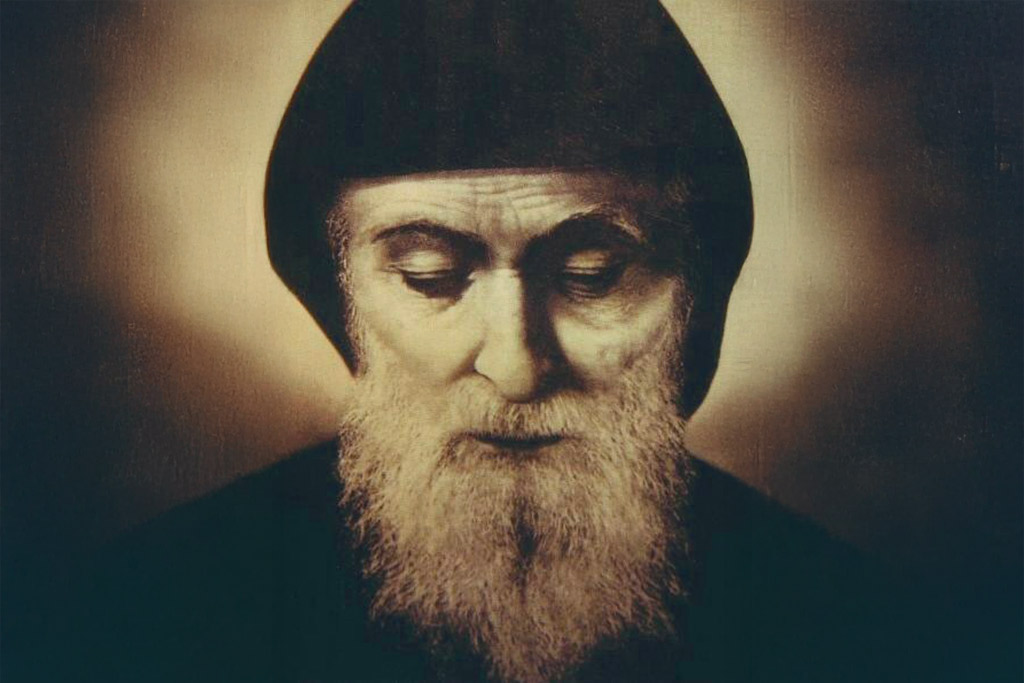

The Wonder-Worker and Singer of Mary
He was deeply devoted to the Queen of the Rosary, whom he invoked incessantly, day and night. Saint Charbel Makhlouf had placed an image of the Virgin Mary on the altar where he celebrated Mass daily, and another image in his cell beside his bed, as a sign of Mary’s maternal presence watching over his rest.
Joseph (Youssef) Makhlouf was born in 1828 in a small village in Lebanon, into a deeply Christian farming family. Orphaned by his father at the age of three, he was raised by his mother and her new husband, who later became a priest. This man became both a father figure and a spiritual guide to Joseph, who often assisted him in his pastoral ministry.
From the age of fourteen, Joseph showed a strong inclination toward prayer. While tending the family’s flock, he discovered a secluded cave where he would retreat for long periods of meditation. That spot later became known as the “Saint’s Cave.”
Although he longed to enter the monastery, he was only able to do so at age 23, when he joined the Lebanese Maronite Order and took the name Charbel. He was ordained a priest in 1859 and lived for fifteen years in the Monastery of ’Annaya, leading a life of intense prayer, humility, and care for the weak—especially the sick.
In 1875, he finally received permission to withdraw to a hermitage located 1,400 meters above sea level, where he dedicated himself fully to prayer, penance, and asceticism. On December 16, 1898, during the celebration of Mass, he was struck by a sudden illness. He died eight days later, on the night of December 24, ending his life as he had lived it: united with Christ in the Eucharist.
After his death, his tomb became a site of pilgrimage due to the many miracles and healings reported there. Extraordinary phenomena began to occur around the monk’s grave. A mysterious light emanated from the tomb, and those who came to pray there reported numerous unexplained healings. It was said that a liquid resembling blood mixed with water seeped from the grave, drawing increasing numbers of people from the entire valley—including members of different religions.
The growing crowds and the miraculous signs led the monks to exhume his body. To their astonishment, they found it incorrupt—still soft and warm, as if he were alive. This extraordinary condition persisted until his beatification on December 5, 1965, at the close of the Second Vatican Council. It was Pope Paul VI who declared him Blessed. Later, on October 9, 1977, during the World Synod of Bishops, he was canonized—becoming the first officially recognized Lebanese saint of modern times.