


October 19: Saint Paul of the Cross

A Life Marked by the Passion of Christ
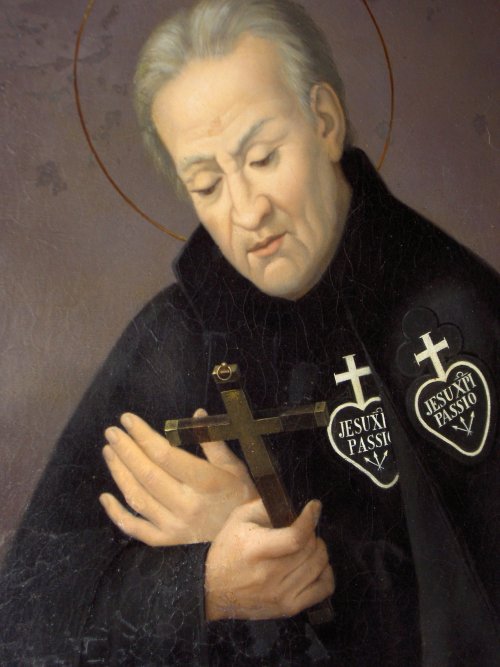
The figure of the suffering Christ was the silent yet powerful center of his spiritual life, the inner strength behind his apostolic zeal and the spark that gave birth to the mission of the religious community he founded. There is no doubt that Paul of the Cross is the Saint of the Passion of Jesus Christ.
In the heart of the 18th century—a time dominated by rationalism and religious skepticism—he was born in Ovada (Alessandria) into the Danei family, the eldest of sixteen children. From his youth, he experienced profound spiritual insights that led him to dedicate his life to meditating on the Passion of Christ.
At just twenty-six, with the support of his bishop, he was able to give concrete form to what he felt was his life’s mission: to found a religious community centered on the mystery of the Cross. Thus was born the first nucleus of the “Barefoot Clerics of the Cross and Passion,” who would later become known as the Passionists.
The original rule of the Institute, extremely austere, had to be moderated by the Pope, though its three fundamental pillars remained intact: deep prayer, a withdrawn life, and radical poverty. Later, a contemplative female community would join the Passionist charism, contributing to the apostolate through silent prayer.
Paul was animated by extraordinary charity, especially toward the Crucified Christ, whom he recognized in the faces of the poor and the sick. His apostolate among young people began at the age of twenty-two. Initially mocked, he soon touched hearts so deeply that many changed their lives—some even embracing the religious path.
He firmly refused both marriage and any earthly inheritance, choosing instead a life of asceticism. After shaving his head, he received his parents’ blessing and, clothed in a rough black tunic, withdrew into solitude to write the rule for his new order.
The Bishop of Alessandria first entrusted him with preaching, but during a journey to Rome, a storm drove him to Monte Argentario in the region of Tuscany. That remote and rugged place seemed to him the perfect setting for the foundation of his future community.
Ordained a priest by Pope Benedict XIII, he was finally able to begin community life with a few companions. The work advanced amid great difficulties, yet divine confirmation never failed. In 1737, the first convent and church on Monte Argentario were inaugurated. Only three years later, Pope Benedict XIV officially approved the Rule, which—besides the traditional three vows—included a fourth: the commitment to fervently preach the Passion of Jesus.
Under Paul’s guidance, the Passionist missionaries became powerful instruments of conversion. The founder, in particular, moved his listeners profoundly—he spoke of Christ’s sufferings with such intensity that his words brought tears to entire assemblies, even to the hardest of hearts.
In 1771, in Tarquinia (Viterbo), he opened the first monastery of Passionist nuns, whom he affectionately called “the doves of the Crucified.”
It is said that the spiritual fervor that consumed him often manifested physically: the inner fire would sometimes burn his garments at chest level. During Mass, he was seen in ecstasy, lifted from the ground, his face transfigured by a light not of this world.
In the final days of his life, Pope Pius VI visited him personally, aware of the holiness of this man. In his last writings, found in the Mystical Diary, Paul urged total abandonment to the will of God, free from all earthly consolation:
“Be stripped of everything created. Remain with God alone, without any attachment.”
He died in Rome on October 18, 1775, in the residence at the Basilica of Saints John and Paul. He was canonized on June 29, 1867, by Pope Pius IX.