


October 26: Saint Folco Scotti, Bishop
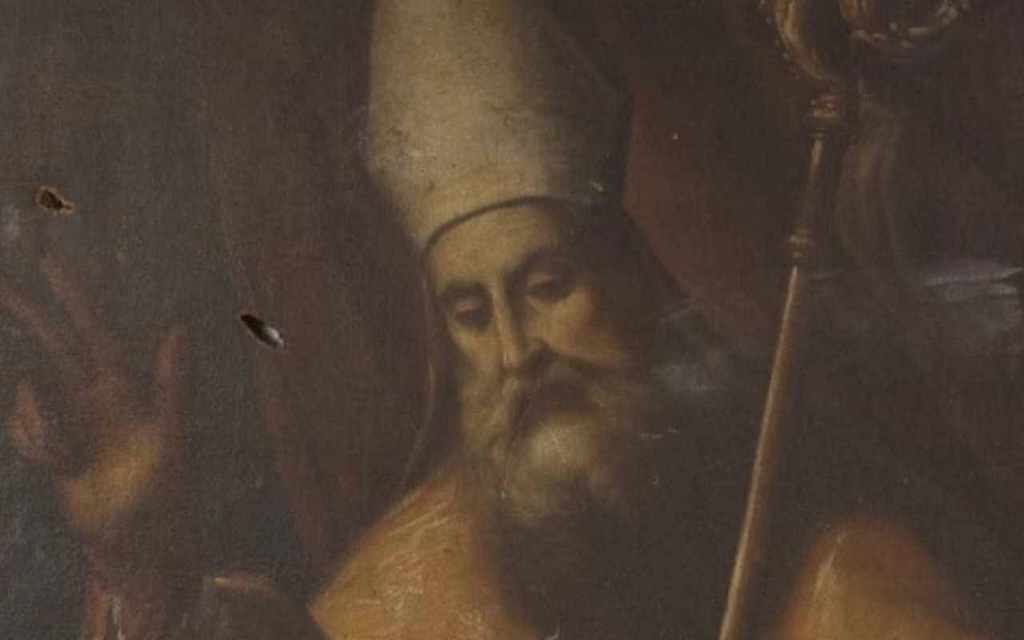

A Man of Peace and Mediation
He is remembered as “the great peacemaker”, a symbol of an age marked by civil strife but also by churchmen capable of acting as bridges between opposing sides. This was Folco Scotti, probably from a modest branch of the noble Scotti family, which at the time was emerging as a dominant force on the political scene of the northern city of Piacenza, Italy.
Born in 1164, he entered the community of the Canons Regular of Saint Euphemia while still very young—a group that followed a contemplative lifestyle similar to that of monks. After an initial period of formation in Piacenza, Folco was sent to Paris, one of the most prestigious centers of medieval theological culture. His stay in Paris, probably around 1185, helped to shape his strong intellectual foundation. Upon returning home, he gradually took on increasingly important roles - first as provost of Saint Euphemia, then as a teacher of theology at the Cathedral school and later as archpriest—a position second only to that of bishop.
From his earliest assignments, he showed a reforming spirit. He promoted communal life among the canons, reorganized church property and distinguished himself as a gifted preacher, earning fame throughout the diocese. His pastoral work was accompanied by fervent efforts against heresy, a phenomenon widespread at the time in the cities of the Emilia region.
In 1210, following the death of Bishop Grimerio, Folco was appointed his successor as head of the diocese of Piacenza. However, the turbulent political climate and the conflicts among local ecclesiastical factions—combined with the city’s allegiance to Emperor Otto IV in opposition to the papacy—hindered his episcopal consecration, leaving him “bishop-elect” but never officially installed.
The Fourth Lateran Council of 1215 marked a turning point: while in Rome, Folco was elected Bishop of Pavia, a see that had been vacant. Pope Honorius III confirmed his appointment and conferred episcopal ordination upon him. Thus, in 1216, Folco took possession of his new diocese.
In Pavia, amid ongoing political tensions, Folco distinguished himself as a capable mediator and a man of balance. In 1217, he even succeeded in promoting an attempt at reconciliation between the two traditional rival cities—Piacenza and Pavia. Emperor Frederick II also recognized his abilities and, in 1220, appointed him rector of the city of Pavia, granting him temporal powers to ensure civil peace between nobles and commoners.
Nevertheless, friction with the municipal authorities persisted. As had happened in Piacenza, conflict broke out between the bishop and the city council over fiscal matters: the civic authorities sought to impose taxes on the clergy, in defiance of ecclesiastical privileges. These tensions led to difficult years, culminating in the plundering of church property, the excommunication of the city government, and the exile of the bishop and many of his collaborators.
Despite all this, Folco remained a central figure for both imperial and papal powers, who at different times entrusted him with delicate missions. After his return, he devoted himself mainly to governing the diocese, renewing monasteries, and defending ecclesiastical property, in close cooperation with the Roman Curia.
He died in Pavia on December 16, 1229, bringing to a close a life devoted to both spiritual and civic service. Although Pope Gregory IX canonized him shortly after his death, his memory remained obscure for several centuries. Only in the sixteenth century—thanks to the work of historian Giovanni Gualla, the translation of his body to the new Cathedral of Pavia, and his inclusion in the Roman Martyrology (1578)—did veneration of him regain its vigor.