


November 5: Saint Guido Maria Conforti, Bishop
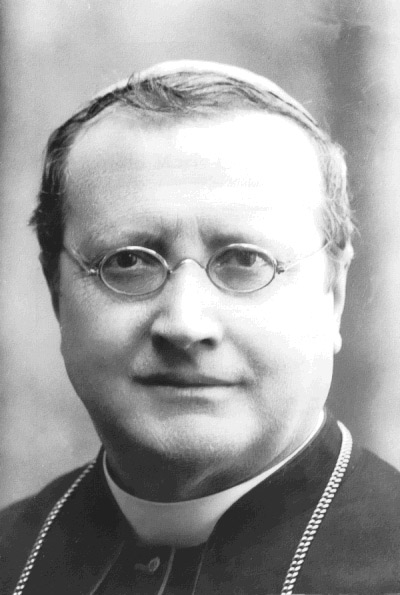

A Zealous Missionary Shepherd
His two most well-known mottos — In Omnibus Christus (Christ in all things) and Caritas Christi urget nos (The love of Christ compels us) — perfectly sum up the heart of Monsignor Guido Maria Conforti’s work and spirituality. He was a leading figure in the revival of the Church’s missionary commitment between the late 19th and early 20th centuries.
Born near Parma on March 30, 1865, he was deeply moved as a young boy by the sight of a large crucifix he passed every day on his way to school. From that moment, he felt a powerful desire to dedicate his life to making Christ’s love known to all.
He entered the seminary at just eleven years old, but a serious illness nearly halted his path to the priesthood and prevented him from pursuing missionary life. However, thanks to the encouragement of the rector, Don Andrea Ferrari (later Cardinal and Beatified), he was ordained a priest in 1888. Still very young—under thirty—he was appointed Vicar General of the diocese.
In 1895, with the support of his bishop and the Prefect of Propaganda Fide, he founded the Congregation of St. Francis Xavier for Foreign Missions, today known as the Xaverian Missionaries. Four years later, in 1899, he sent the first missionaries to China. In 1902 he was appointed Archbishop of Ravenna, but he had to resign two years later due to poor health.
In 1907, Pope Pius X appointed him Bishop of Parma. During his 24 years of episcopal ministry, Conforti devoted himself with great zeal to the formation of the clergy, to promoting religious education—especially among the youth—and to organizing pastoral visits, diocesan synods, congresses, and spiritual initiatives. He supported Catholic Action, the Catholic press, and was deeply involved in the social issues of his time.
Conforti’s life unfolded amid great historical events: the conflict between Church and State, the First World War, the rise of Fascism, and the signing of the Lateran Pacts. From the very start of his ministry, he faced complex circumstances. As Vicar General under Monsignor Magani, he maintained balance in a divided diocese and helped to strengthen unity among priests.
In 1907, when Pope Pius X condemned Modernism, Conforti closely monitored his diocese, asking his priests to reaffirm their fidelity to the Church. Yet, while remaining firm in doctrine, he also defended his clergy from excessive accusations, as shown in several letters he sent to the Holy See. He was at once a rigorous teacher and a compassionate pastor.
At the beginning of the 20th century, Parma became the stage for harsh social conflicts. In 1908, a major dispute broke out between agricultural laborers and landowners. Although Conforti came from a well-to-do family, he did not take sides but instead sought to mediate between the parties, remaining in the city despite many commitments. In a pastoral letter dated April 16, 1908, he denounced the moral responsibility of landowners who had neglected the Christian formation of their workers. However, the strike led to a surge in anticlericalism: in some areas, baptisms and sacramental participation declined.
During World War I, Conforti supported Pope Benedict XV’s stance against the war. While accepting the State’s decision to enter the conflict in 1915, he reaffirmed the principle of civil obedience and encouraged Christians to keep a strong faith even amid tragedy. He continued visiting the diocese, comforting the sick, blessing soldiers, and promoting acts of charity and solidarity. After the war, he reinvigorated religious education, Catholic Action, and youth initiatives.
One of the causes closest to his heart was missionary work: in 1916 he helped establish the Missionary Union of the Clergy, becoming its first president. In 1928 he personally traveled to China to visit his missionaries. He died in Parma on November 5, 1931.
He was beatified in Rome by Saint John Paul II on March 17, 1996, and canonized by Pope Benedict XVI on October 23, 2011.