


April 20: Saint Agnes of Montepulciano
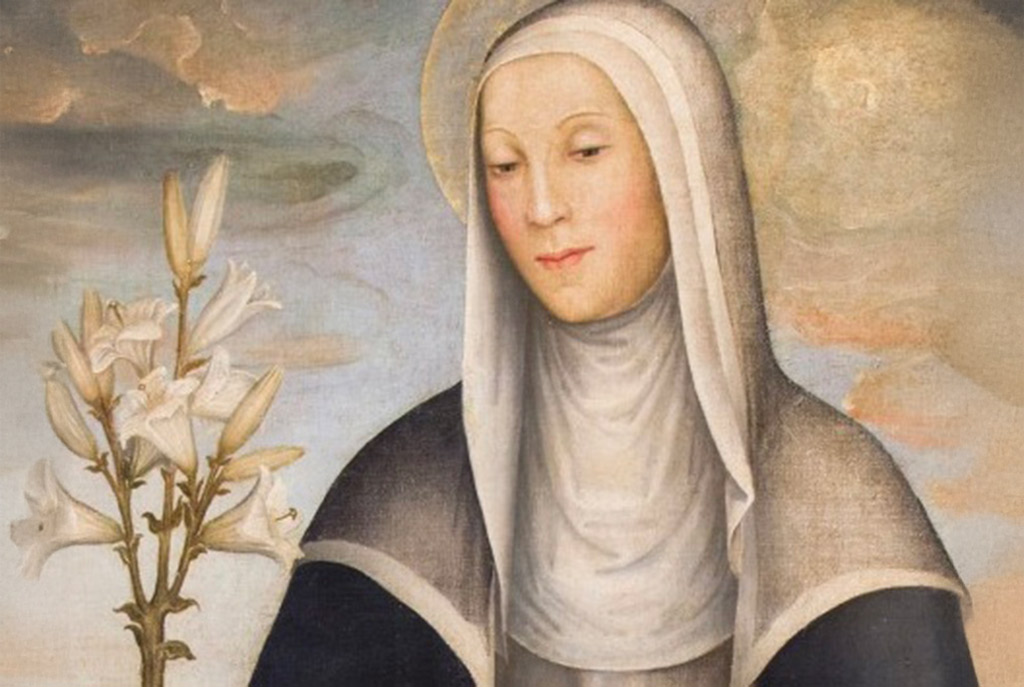

In the service of peace in the name of Christ
The most reliable biographical source on Saint Agnes Segni is the Legenda, written in 1366 by the Dominican Blessed Raymond of Capua, who lived for four years in Montepulciano as rector of the monastery founded by the Saint. He was able to gather testimonies from several sisters and many people who had known her, and he also consulted documents from the monastery’s archive.
Agnes Segni was born on January 28, 1268, in Gracciano Vecchio, in the province of Siena, into a noble family of Montepulciano. At the age of nine, she entered a religious community of virgins known as the “Sisters of the Sacco.”
In 1283, the administrators of the castle of Proceno—a small village now in the province of Viterbo, then part of the territory of Orvieto—went to Montepulciano to request the sending of some nuns. Agnes was chosen for this mission and, at only fifteen years old, became the superior of the monastery. Everyone was struck by her example of life: profound humility, intense prayer, great penance, and love for the Eucharist. Many witnesses reported miracles worked through her: liberation of the possessed, multiplication of bread and oil, and sudden healings.
However, the people of Montepulciano demanded her return. Thus, in 1306, she went back to the city. Years earlier, Agnes had received from the Virgin Mary three small stones to build a church and a monastery. Understanding that this was to take place in Montepulciano, she founded the monastery of Santa Maria Novella. The community adopted the Rule of Saint Augustine and chose the Dominican Order for spiritual guidance, after Agnes had a vision in which Saint Dominic invited her to enter his Order.
She acted as a peacemaker among noble families who were fighting each other, intervening to calm tensions and extinguish conflicts. When she fell ill, doctors advised her to seek the thermal baths of Chianciano, where she went in 1316, though without finding a cure for her illness. Instead, she performed many healings. Before her death on April 20, 1317, she said: “I have been useful to you in life; I will be even more so after my death.”
Given her great reputation for holiness, the nuns and Dominican friars chose not to bury her body but to embalm it. Fifty years after her death, Blessed Raymond of Capua observed that Agnes’s body was still intact, as if she had died only recently.
Just a few months after her death, miracles began to be recorded in a book, where public notaries often confirmed the testimonies of those who had been healed. From this book, Blessed Raymond selected many healings and graces received through the intercession of Saint Agnes to compose his own work. He wrote: “To this Virgin, God granted such immense power that there was no kind of illness, however contagious, that did not vanish at her invocation alone.” She was canonized by Pope Benedict XIII in 1726.