


MEMORANDUM OF UNDERSTANDING SIGNED BETWEEN THE GOVERNORATE OF VATICAN CITY STATE, THE ADMINISTRATION OF THE PATRIMONY OF THE APOSTOLIC SEE (A.P.S.A.), THE FRATELLO SOLE FOUNDATION AND A.C.E.A. FOR THE CONSTRUCTION OF AN AGRIVOLTAIC PLANT IN THE EXTRATERRI
,%20THE%20FRATELLO%20SOLE%20FOUNDATION%20AND%20A.C.E.A.%20FOR%20THE%20CONSTRUCTION%20OF%20AN%20AGRIVOLTAIC%20PLANT%20IN%20THE%20EXTRATERRI "Pin It")
Vatican City, 15 June 2026
Environmental sustainability, the responsible use of resources, and the protection of our common home. These are the principles behind the Memorandum of Understanding signed on Wednesday, 10 June, between the Governorate of Vatican City State, the Administration of the Patrimony of the Apostolic See (APSA), the Fratello Sole Foundation, and ACEA.
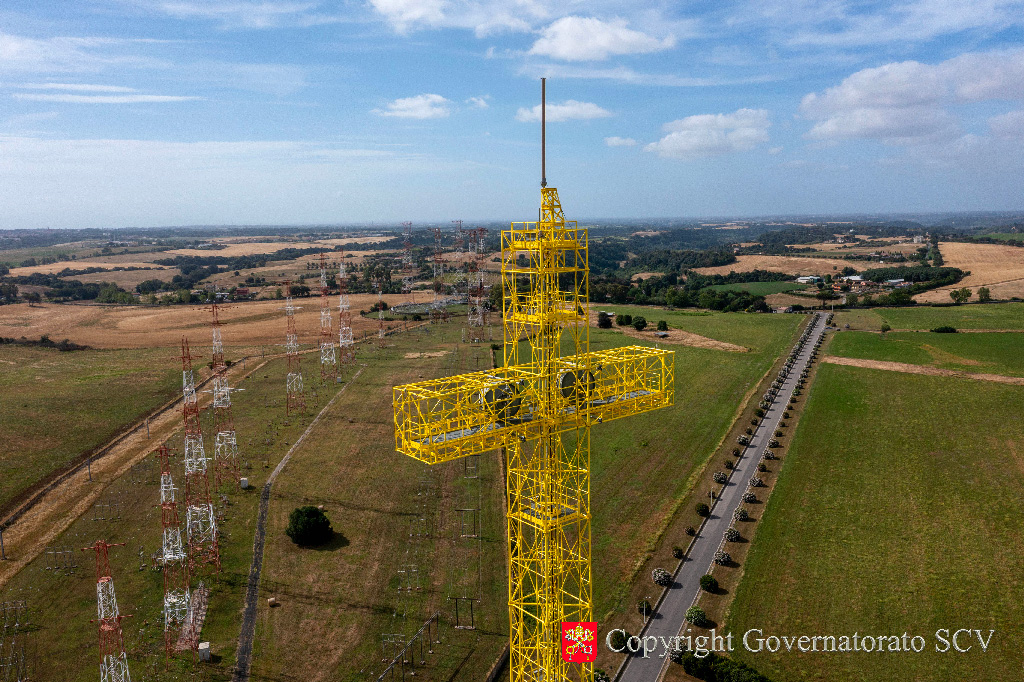
The aim of the agreement is to develop a joint pathway for the definition, structuring, and progressive implementation of the agrivoltaic plant that the Holy See — through the Governorate of Vatican City State, the Administration of the Patrimony of the Apostolic See (APSA), and the Fratello Sole Foundation — will build within the Vatican’s extraterritorial area of Santa Maria di Galeria.
To this end, Pope Leo XIV, through the Chirograph issued on 1 June, established the Fratello Sole Foundation and approved its Statutes, entrusting it with the completion of the aforementioned agrivoltaic plant in order to ensure “not only the electricity supply for the radio station located there, but also the complete energy self-sufficiency of Vatican City State.”
The agrivoltaic project places particular emphasis on the use of innovative and integrated solutions capable of combining energy production, the efficient use of resources, and the enhancement of the local area.
For this reason, the Protocol is aligned with the teachings of the Church’s Magisterium and, in particular, with the principles set out in the Encyclical Laudato si’, the Apostolic Exhortation Laudate Deum, and Pope Francis’ Motu Proprio Fratello Sole of 21 June 2024.
In accordance with these principles, the development of the project will take into account environmental sustainability criteria throughout the entire life cycle of the infrastructure, including the minimization of emissions, the efficient use of water and energy resources, the protection of soil and ecosystems, and integration with agricultural activities.
The agreement with ACEA therefore responds to the high degree of technical and managerial complexity of the plant, which requires an integrated approach. Indeed, the various energy, water, environmental, and agricultural components will be taken into consideration, along with the interconnections between production, consumption, resource management, and the enhancement of those resources.
The legal framework governing the agrivoltaic plant, as well as the methods for implementing the initiative and connecting it to the electric grid, were established by the “Agreement between the Italian Republic and the Holy See for an agrivoltaic plant in Santa Maria di Galeria, signed in Rome on 31 July 2025,” ratified by Law No. 52 of 1 April 2026 and published in the Official Gazette of the Italian Republic No. 94 of 23 April 2026.