

The Greenhouse Pavilion: an Ancient Art of Making the Vatican Gardens Bloom

Heritage Under Glass: From the Papal “Stoves” to the Contemporary Greenhouses
At the heart of the Vatican Gardens, the art of protecting nature has deep roots in a centuries-old tradition. Since the eighteenth century, with the first “stufe” or stoves— early heated greenhouse like structures designed for keeping exotic plant collections — and the orangeries for citrus trees, these spaces have never been merely technical shelters. For many Pontiffs, from Clement XI to Leo XIII and Pius XI, they were genuine oases where one could stroll, even in winter, among the natural scents of what was known as the Garden of Simplicity. Over time, these buildings evolved alongside construction techniques, progressing from the earliest masonry structures to the iron-and-glass buildings of the early twentieth century, and finally to today’s ecological conversions. Today, the greenhouses continue to be the botanical heart of the Vatican State, bringing together tradition and sustainability.
In Preparation of Papal Ceremonies
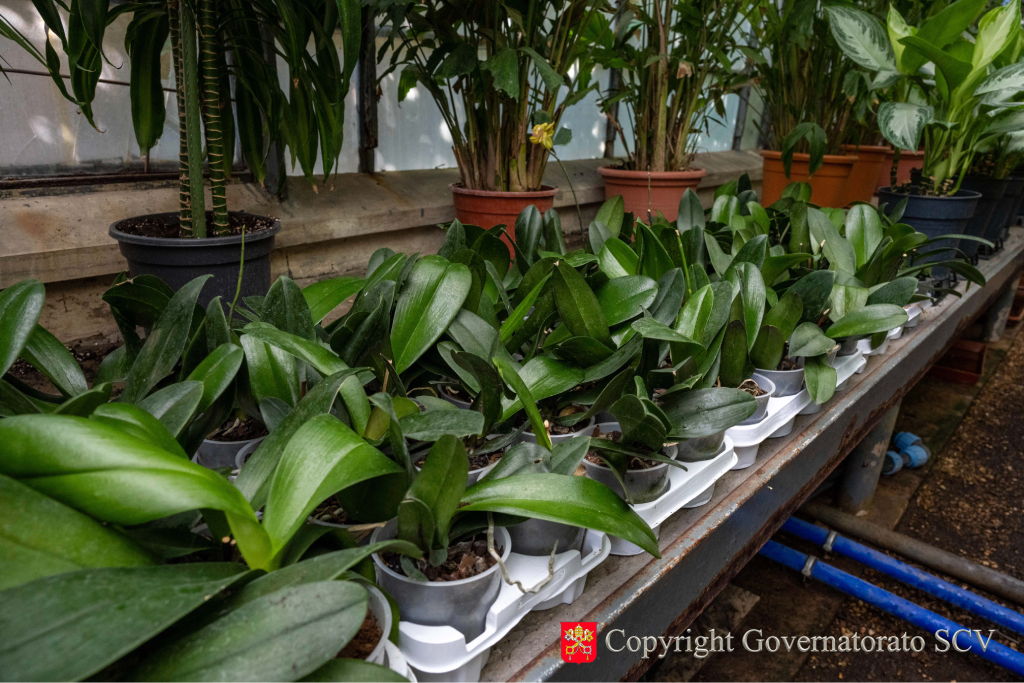
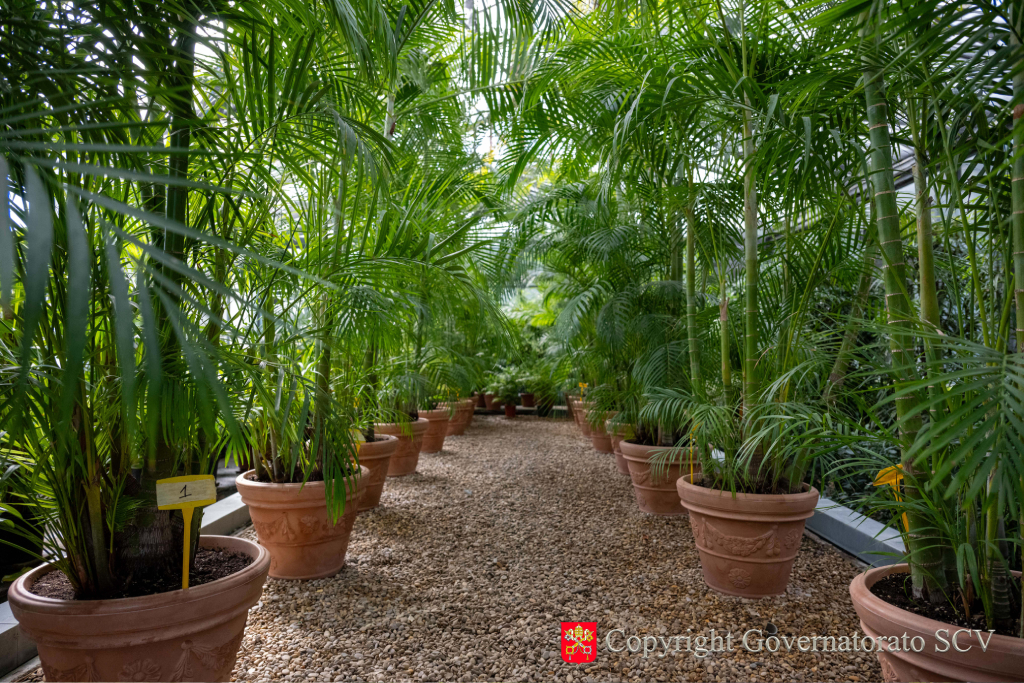
Behind every floral display and arrangement for the papal audiences in the Apostolic Palace lies the Greenhouse Pavilion. This is where the Gardens and Environment Service, headed by botanical expert Stefano Giampaolo within the Directorate of Infrastructure and Services, directed by engineer Salvatore Farina, cultivates and produces the plants destined for the liturgical and institutional life of the State. From ceremonies in St. Peter’s Square to private chapels, as well as the recovery of weakened specimens, the pavilion combines its ornamental function with an essential technical role of preservation. It is no coincidence that it is officially titled the “Greenhouse Pavilion,” a designation recalling the European tradition of the pavillon and defining it as a sort of museum because the Vatican greenhouse remains a unique botanical and artisanal facility of its kind.
A Place that Predates today’s Garden: History, Structure and Restoration
The history of the pavilion complex predates the garden commissioned by Pius XI. The Gallinaro Tower, dating back to the seventeenth century, bears witness to the area’s ancient agricultural use, once occupied by stables, traces of which are still visible today such as the marks left by carts carved into the jamb of an opening. From this original nucleus came the storeroom where specific soil mixtures were kept for each plant species, from ferns to kentia palms. Under Pius XI, the Tower itself was subsequently equipped as a botanical laboratory, confirming the deep-rooted scientific attention devoted to the site.
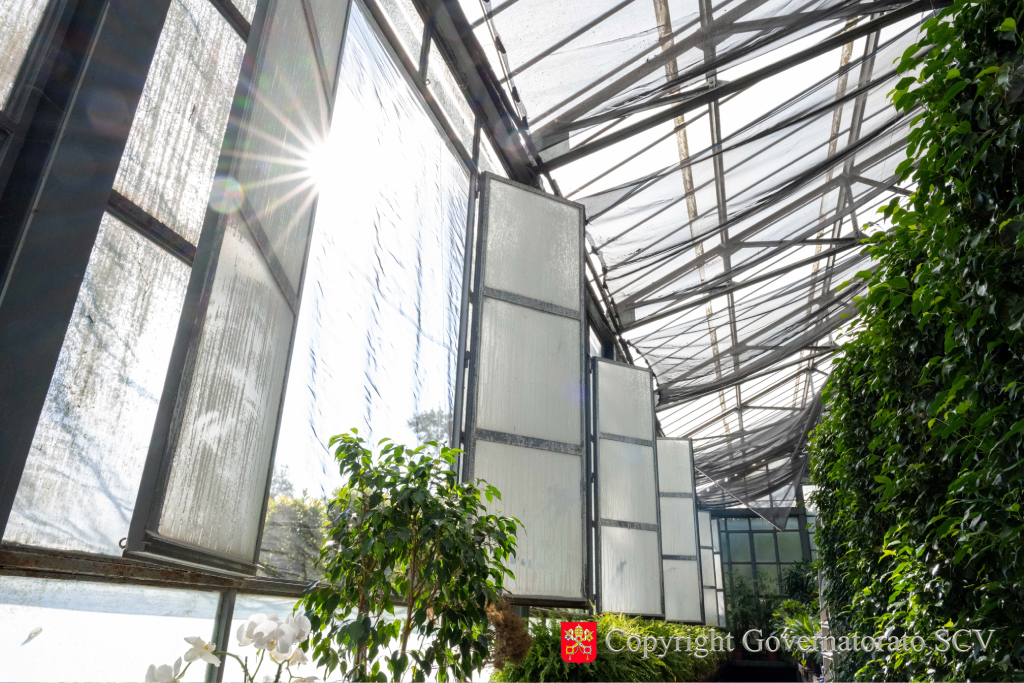
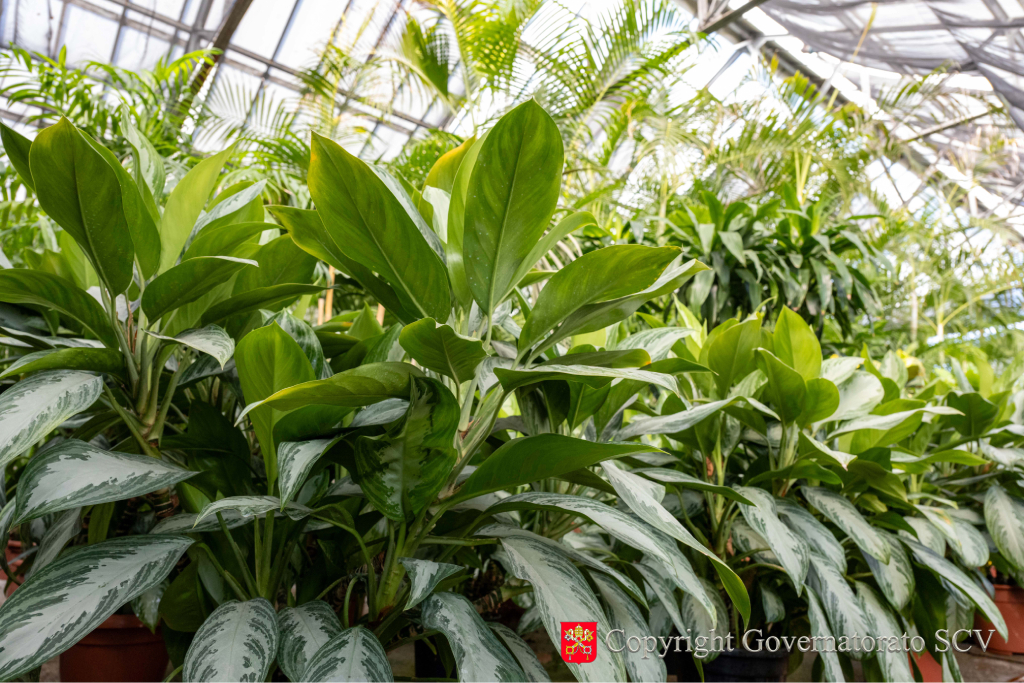
From a technical standpoint, the iron structure dates from between 1932 and 1934 and bears the coat of arms of Pius XI on its façade. It is a gem of structural ironwork with no welded joints, having been built entirely using hot riveting, the same technique employed for the workers’ canteen, still in use today. The absence of welds facilitates maintenance operations. As further evidence of the Governorate’s commitment to preserving this heritage, a comprehensive project for the rehabilitation, upgrading and conservation of the structure is now being launched. The restoration project will strengthen its preservation without altering its original design.
Craftsmanship and Precision Technology
The historic Orangery and the now-vanished fern greenhouse have given way to new requirements. Today, the Directorate has embarked on a clear change of course, moving toward a model of greater botanical self-sufficiency and continuous production, with the strategic objective of ensuring a constant supply of plants for liturgical needs, reducing dependence on market fluctuations and promoting the direct acclimatization of species to the local microclimate.
“We have to imagine the greenhouse as if it were an aquarium. Essentially, it is an artificial forcing: it depends on very delicate balances,” explains the Service. In botanical terminology, forcing refers to the artificial recreation of a tailor-made microclimate, now maintained by an advanced technical control system that monitors humidity and temperature, keeping them within the optimal range of 58–60 percent. This precision is complemented by the trained eye of greenhouse specialist Massimiliano Noce, whose first task each morning is a visual inspection: “I look at the plant and can already tell from its color. This one is thirsty, this one isn’t.” It is a form of knowledge rooted in experienced sensitivity, but also in respect for the natural cycle, including the ability to recognize that a plant’s life will eventually come to an end: “Plants are like human beings; we too leave after a certain amount of time.”
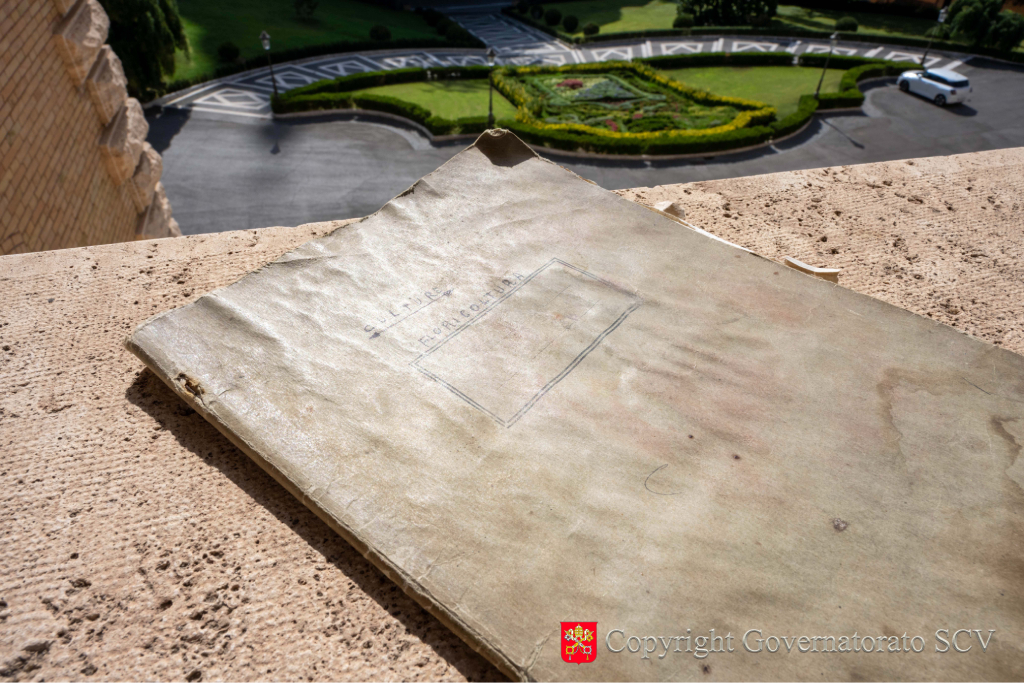
A symbol of this living heritage is the “big book of wonders,” an old working ledger begun in the 1930s, its pages yellowed and slightly rippled from the moisture they have absorbed over the years. Kept by the greenhouse specialist like a treasure and put away every evening for safekeeping, the notebook contains handwritten formulas, soil-mixture proportions and dosages. It is now being digitized for the Gardens’ archives, ensuring that this knowledge can be passed on. The pavilion also serves as a clinic, where specimens exhausted by floral arrangements are cared for before beginning a new productive life cycle.
Sustainability, Genetic Reserve and Human Capital
In implementation of the principles of Pope Francis’ encyclical Laudato si’, the Service’s cultivation and plant-care practices follow an almost entirely organic approach, based on integrated pest management using beneficial insects such as Cryptolaemus and Anagyrus, endotherapy for trees, and the softening of mains water. A quarantine area is also planned to screen plants donated to the Holy Father by visiting delegations.
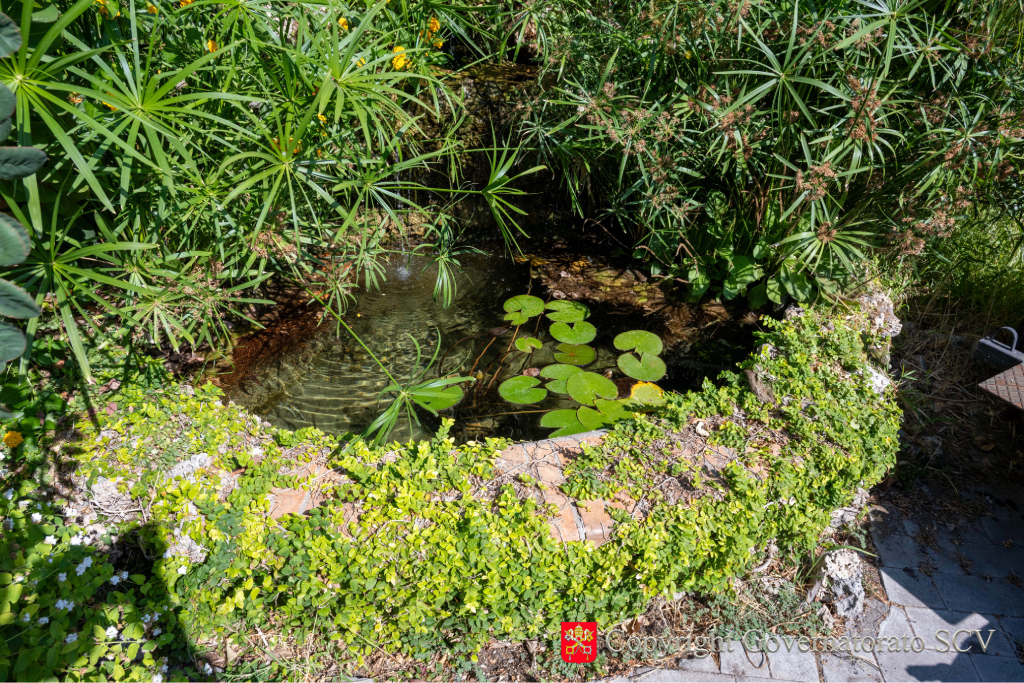
The complex also houses what could be considered the Vatican Gardens’ one-hundred-and-first fountain, not formally recorded in the official mapping - a travertine basin that preserves historic species such as aquatic ferns and water lilies. These surviving native plants constitute a genuine genetic reserve - a single, invaluable parent specimen from which propagation can begin for the State’s ornamental pools.
Yet the cornerstone of the entire system remains its human capital: a staff of approximately 35 people, including florists, greenhouse specialists, pruners and zonisti or designated area workers for whom specific internal training and professional development programs are being established. It is this daily presence — often invisible to most visitors, yet indispensable — that enables the Greenhouse Pavilion to keep the complex botanical machinery functional and sustainable.