


August 25: Saint Louis IX, King of France
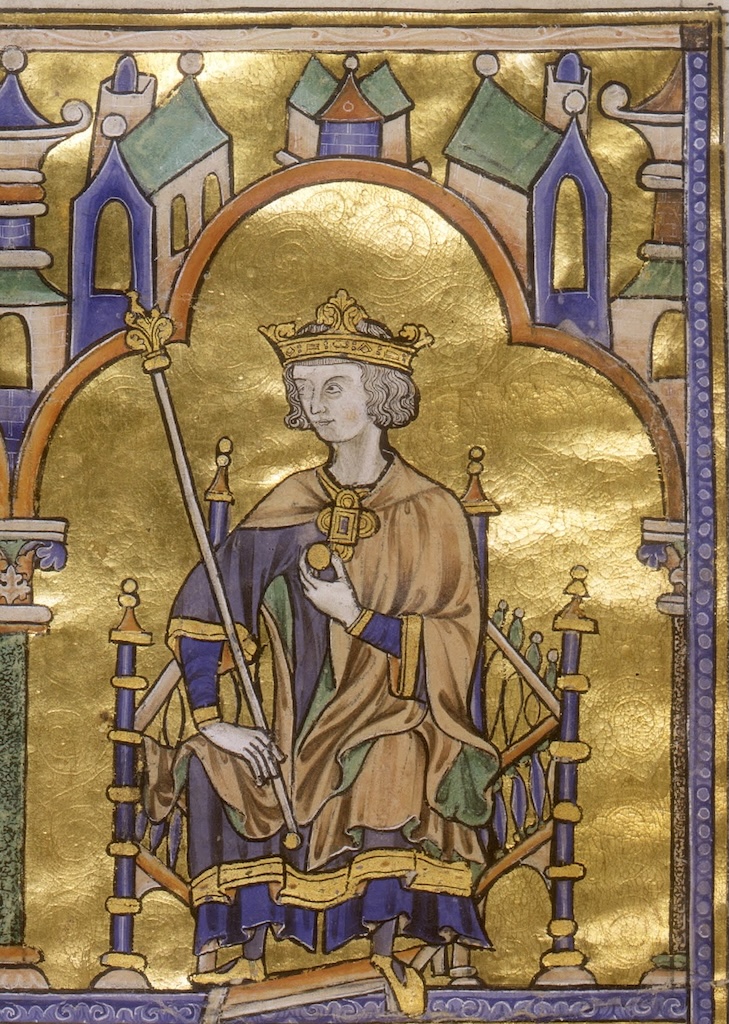

Power and wealth to serve the Kingdom of God
He is known as a just and prudent king, so much so that he earned the nickname prud’homme (“wise man”). He was also a reformer of institutions and often acted as a mediator in international conflicts. This is Louis IX, King of France. He was born on April 25, 1214, and became king at only twelve years old.
His mother, Blanche of Castile, assumed the regency and immediately oversaw his coronation, which took place on November 29, 1226, in the Cathedral of Notre-Dame in Reims. Blanche, a woman of firm character, instilled in the young king a deeply religious upbringing and strict moral rules, which Louis followed throughout his life.
During his reign, royal envoys such as bailiffs and provosts traveled across France to enforce the laws. With the 1245 ordinance known as the quarantaine-le-roi, Louis imposed a 40-day truce to limit wars between nobles. At court, the affairs of the kingdom were divided into different departments: one managed politics, another evolved into the Parliament, and a third laid the groundwork for what would later become the Court of Auditors.
He joined the Third Order of Saint Francis and was exemplary in prayer, mortification, and charity toward the poor. He protected and defended the mendicant religious Orders.
In 1254, after being taken prisoner in Egypt during the Seventh Crusade, Louis returned to France and resolved to reform both his life and his kingdom, guided by principles of penance and morality. He issued the “Great Ordinance,” which required officials to be just and impartial, to refuse personal gifts, to impose no penalties without trial, and to presume the innocence of the accused.
Blasphemy, prostitution, gambling, and usury were forbidden, and it was decreed that wives should no longer be punished for their husbands’ crimes. Moreover, summary trials were replaced by more rational or testimonial forms of evidence.
Louis IX was also an important builder. In the military sphere, he fortified cities such as Angers and Aigues-Mortes, from where he departed in 1248 for the Seventh Crusade.
In 1239, Baldwin II, Emperor of Constantinople, offered Louis the Holy Crown of Thorns of Christ. To house it, he commissioned a fitting sanctuary: the magnificent Sainte-Chapelle, regarded as a monumental reliquary.
In 1270, Louis embarked on the Eighth Crusade. The crusaders set sail from Aigues-Mortes, stopped in Sardinia, arrived in Tunis, where they laid siege to the city. During this campaign, the king died at the age of 56, likely from a disease resembling plague or dysentery.
His successor, Philip III, had his remains returned to France. On May 21, 1271, the body was laid to rest in Notre-Dame of Paris, and the funeral was held the next day in the Basilica of Saint-Denis.
Already regarded as a saint during his lifetime, Louis was immediately venerated by both the common people and the nobility after his death. In 1297, twenty-seven years after his passing, Pope Boniface VIII canonized him—the only King of France to receive this honor. He is the patron saint of the Secular Franciscan Order. It is remarkable that the Order of Saint Francis, founded in the spirit of poverty and humility, counts among the patrons of the Third Order two sovereigns: Saint Louis IX and Saint Elizabeth of Hungary. This is no coincidence; it shows that sanctity is not so much hindered by the possession of wealth and power as by the way they are used.