


October 14: Saint Callistus I, Pope and Martyr
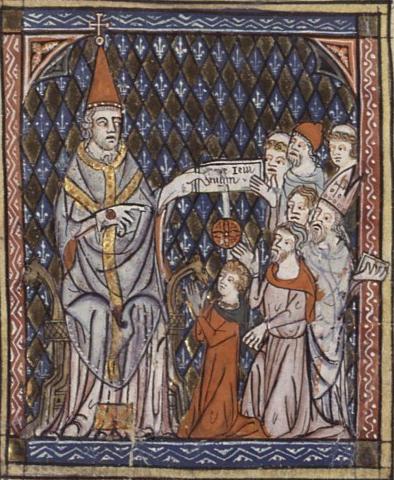

A Merciful Shepherd
Callistus, a complex and much-debated figure of the early Church, was born in Rome in the second half of the 2nd century into a Christian family of servile condition. While still young, he became a slave in the household of a wealthy Christian named Carpophorus, who was connected to the imperial court. Thanks to his enterprising spirit and a certain talent for business, Callistus was entrusted with managing a financial enterprise that served as a kind of deposit and exchange bank, frequented mostly by fellow Christians.
However, his career collapsed due to ill-fated speculative operations that led him to financial ruin. He attempted to flee from Rome but was arrested and sentenced to forced labor in a mill and later condemned to exile in the mines of Sardinia under circumstances that remain unclear.
He was released around the year 186, probably through the intercession of Pope Victor and forced to live in Anzio, away from the Eternal City. His situation changed radically when Pope Zephyrinus was elected in 198 and recalled him to Rome. Zephyrinus not only reinstated him but also ordained him deacon and made him one of his principal collaborators. Callistus was entrusted with the creation of the first communal Christian cemetery along the Appian Way—today known as the Catacombs of Saint Callistus.
Upon Zephyrinus’s death in 217, Callistus was elected Pope, despite reservations from certain ecclesiastical circles. In particular, the priest Hippolytus—a learned but uncompromising man—refused to recognize the legitimacy of his election and proclaimed himself bishop in opposition, thus giving rise to the first documented schism in the history of the Church of Rome.
During his pontificate, Callistus was distinguished by a pastoral vision centered on mercy and balance. He opposed the rigorist factions, affirming the possibility of forgiveness for grave sins provided there was sincere repentance. This stance drew fierce criticism from supporters of a stricter approach, such as Hippolytus in Rome and Tertullian in Africa, who accused him of excessive leniency.
Callistus died in 222, on October 14, most likely during a popular uprising near Trastevere. Because it was unsafe to bury him in the official cemetery he himself had established, Christians laid him to rest in the Cemetery of Calepodius, located along the Via Aurelia. He is venerated as a martyr.