


October 17: Saint Ignatius of Antioch, Doctor of the Church

The Church as the Body of Christ
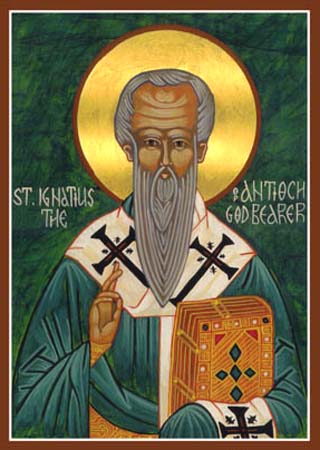
One of the most significant figures of the early Christian era is Saint Ignatius of Antioch, a bishop who lived during the first decades of the second century and is venerated as a martyr for his unshakable faith. Tradition holds that he was chosen to lead the Christian community of Antioch by Saint Peter himself. His forced transfer from Antioch to Rome is famous; during this journey, while a prisoner, he wrote seven letters that today stand as an invaluable testimony to the faith of the first Christians.
This journey, culminating in his martyrdom in the capital of the Empire—probably in the Coliseum—is remembered for his attitude of total surrender to Christ. Ignatius viewed death at the claws of wild beasts as a glorious union with his Savior.
Ignatius was born around the year 35. Information about his early life is scarce, but it is certain that he lived in Antioch, one of the key cities for the spread of Christianity. He was among the first to receive baptism, likely instructed directly by some of the Apostles, including John and possibly Peter.
As the third Bishop of Antioch, after Evodius and Peter, he played a crucial role in consolidating the Church in a strategically important area. Arrested during the reign of Emperor Trajan for his faith, he was entrusted to a particularly brutal military guard—whom he nicknamed “the ten leopards”—that escorted him across Asia Minor to Rome. During the journey, Ignatius wrote seven letters to various Christian communities and to Saint Polycarp. In them, he addressed key themes such as the authority of bishops, the importance of the Eucharist, and the meaning of martyrdom. His violent death, which likely took place in the Roman amphitheater, was experienced as a total offering to God.
Ignatius’s contribution to Christian thought was decisive. His letters, written with spiritual depth and doctrinal clarity, are considered among the earliest patristic writings in the history of the Church. He was one of the first to highlight the central role of the bishop in the Christian community, insisting on obedience and unity as the cornerstones of ecclesial life.
He defined the Church as the true Body of the Lord, opposing the heretical movements of his time, such as Docetism, which denied the reality of Christ’s flesh. He regarded the cohesion of the Christian community around its shepherds as essential for preserving the authenticity of the faith.
Ignatius viewed martyrdom not as a defeat but as a definitive union with Christ, the supreme model of love’s testimony. He wrote letters to the Christian communities of the Ephesians, Magnesians, Trallians, Romans, Philadelphians, Smyrnaeans, and to Polycarp. In them, he addressed both pastoral matters and profound theological reflections.
For Ignatius, offering one’s life for Christ was the privileged way to participate fully in His Passion and Resurrection. He is counted among the Apostolic Fathers—that first generation of Christian witnesses who, though not Apostles themselves, received their teaching directly.
His figure profoundly shaped the development of Christian thought. He helped define the Church’s identity as the Mystical Body of Christ, united in faith and charity. He laid the groundwork for reflection on episcopal authority and on the centrality of the Eucharistic liturgy in Christian life. He is recognized by all major Christian traditions—Catholic, Orthodox and Protestant—for his profound spirituality and constant call to unity. Ignatius described the Church of Rome as the one “that presides in love,” a phrase later invoked in discussions about the primacy of the Pope.