


17 November: Saint Elizabeth of Hungary, Franciscan Tertiary
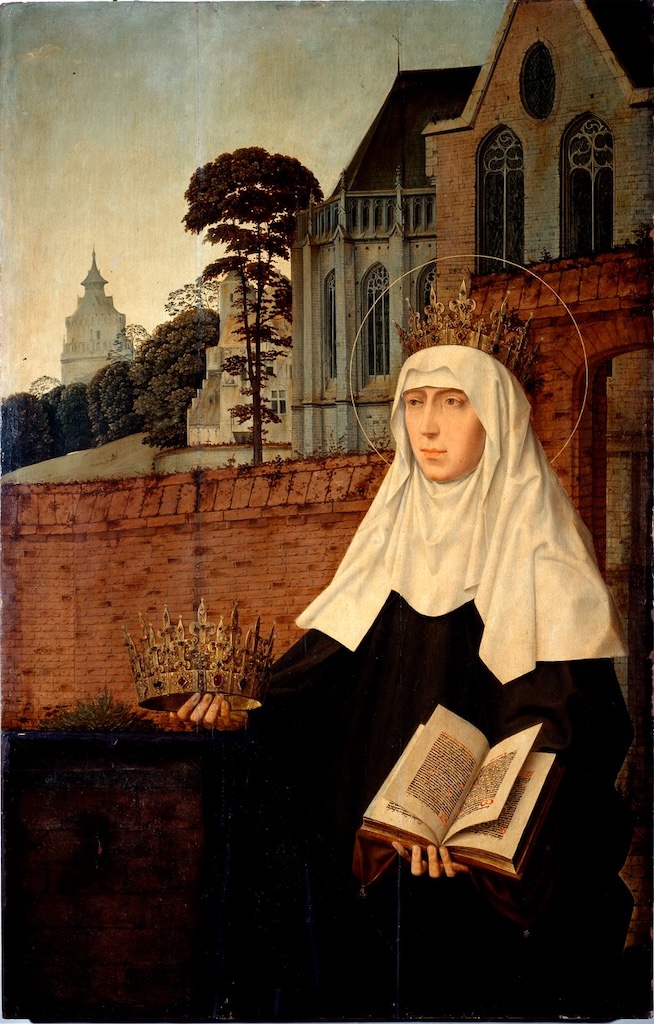

Following in the footsteps of Saint Francis of Assisi
Elizabeth, born in 1207 in Hungary into a royal family and destined for marriage to the ruler of Thuringia, lived in the same years as Francis of Assisi. From a young age, she showed a natural inclination toward those who suffered and were in need—an inclination further strengthened through her contact with the Friars Minor, especially Brother Rüdiger, her first spiritual advisor, and later Brother Conrad. They merely helped direct, in an evangelical sense, a heart already inclined toward the most vulnerable.
At the age of four she left her father’s home to be raised at the Thuringian court, in anticipation of her union with Ludwig, the legitimate heir to the throne. Sources recount that even as a child, she was inclined to prayer and compassion toward the lowly. At fourteen, becoming the wife of the new ruler, she lived with him in a surprisingly serene and affectionate marriage, despite it having been arranged for dynastic reasons. With her husband’s support, she was able to use her wealth to aid the poor and needy—a choice that irritated many nobles, who were also bothered by the couple’s simple lifestyle, far removed from the ostentation that the court considered indispensable. But neither criticism nor pressure dissuaded her from continuing her works of charity, lovingly supported by Ludwig.
For her, power was a service aimed at justice and the common good. She visited the hungry, welcomed those who sought help, provided clothing and paid debts, cared for the sick, and accompanied the dead to burial.
Her encounter with the Franciscan friars in 1222 deepened her adherence to the Gospel and her dedication to the poor. However, her life was not without trials: in 1227, as she was preparing to live out her vocation as a member of the Secular Franciscan Order, Ludwig died while joining Emperor Frederick II’s crusade. Shortly afterward, her brother-in-law seized power and forced Elizabeth and her three children to leave the royal residence of Wartburg.
Only in 1228 did she find a safe place in Marburg. There, with what remained to her, she built a hospital and devoted herself to serving the least: the sick, the poor, the disabled, wanderers. She welcomed them at her table and assisted them like a humble servant, deliberately choosing the hardest and most unpleasant tasks.
Her experience closely recalls that of Francis: what had once seemed repugnant became for her a source of deep peace. She lived for three years in the hospital she had founded, practically as a consecrated laywoman, gathering around her several companions with whom she formed a small fraternity dressed in gray. For this reason, she is venerated as the patron saint of the Third Order Regular and of the Secular Franciscan Order.
In November 1231 she fell gravely ill and died during the night of the 17th. The numerous testimonies to her holiness led Pope Gregory IX to canonize her just four years later.