


December 2: Saint Bibiana, Martyr
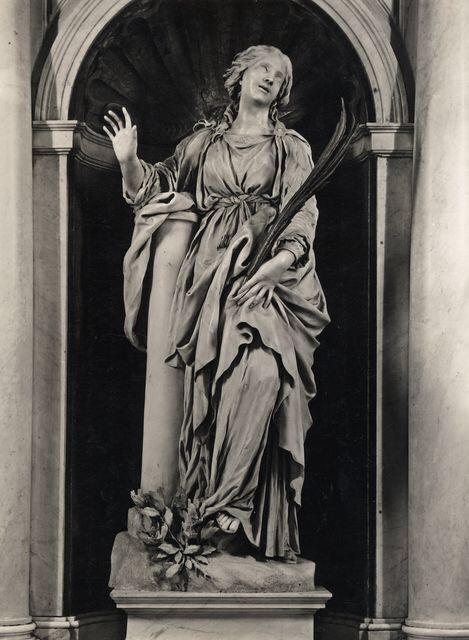

Steadfast in the Face of Persecution
One of the earliest documentary traces of the story of Saint Bibiana appears in the Liber Pontificalis, where it is recalled that Pope Simplicius had a basilica erected in honor of the young martyr, located near the Palatium Lucianum and intended to house her relics. This church still stands in Rome today, not far from Termini Station.
The available information derives from a very ancient and fragmentary source: the Passio Bibianae, an anonymous text from the 6th century. According to this account, Bibiana was born in 347 into a family of high rank: her father was the knight Junius Flavianus, and her mother, Dafrosa, belonged to an illustrious consular lineage. The young girl also had a sister, Demetria.
The family was swept up in the anti-Christian persecutions ordered by Emperor Julian the Apostate. Flavianus was first removed from his office as prefect, then forced into exile in Acquapendente, where he died as a martyr. When Bibiana, Dafrosa, and Demetria learned of his fate, they withdrew into their home and devoted themselves to prayer, aware that they too were in danger. Indeed, shortly afterward, the emperor’s soldiers burst in to arrest them.
The mother was beheaded within a few days; Demetria, instead, was left to languish in prison until she died of hunger. Bibiana was the only one who survived. She was entrusted to a woman named Rufina, who had been charged with corrupting her and persuading her to live a life of vice. The young girl, however, resisted: she closed her heart to every proposal and surrendered herself to silent prayer, utterly rejecting that unworthy instruction.
The prefect Apronianus, who had succeeded the young girl’s father in governing the city, then decided to punish her unshakable steadfastness. He ordered that Bibiana be tied up and beaten with lead-weighted rods, the piombate, until death. The execution took place on December 2, 362, when she was not yet sixteen years old.
Tradition tells that the martyr’s body remained miraculously intact. The priest John carefully gathered her remains and entrusted them to the noblewoman Olympias, who became the custodian of the young girl’s memory and of her sacrifice.