

Agreement signed for the restoration of Raphael’s second Loggia in the Apostolic Palace

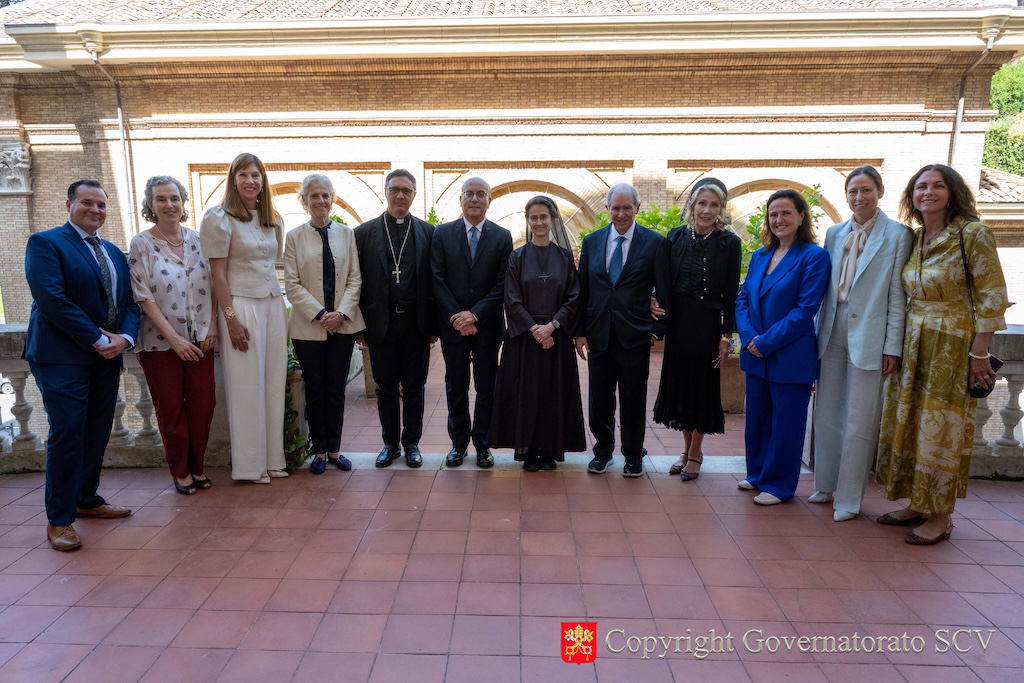
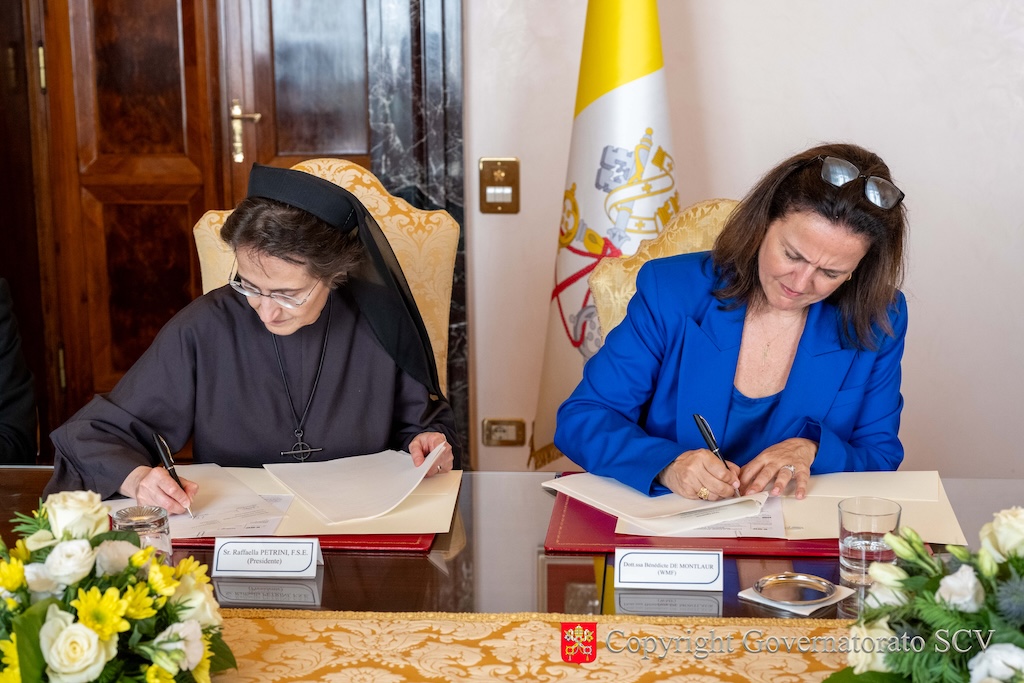
On the morning of Wednesday, June 24, an agreement was signed at the Governorate Palace for the restoration project of the west wing of the Second Loggia of the Apostolic Palace, the so-called Loggia of Raphael. The agreement was signed by Sr. Raffaella Petrini, President of the Governorate of the Vatican City State, and Bénédicte de Montlaur, President and CEO of the World Monuments Fund. Present at the signing were, among others, Archbishop Emilio Nappa and Giuseppe Puglisi-Alibrandi, Secretaries General of the Governorate, Stephen and Christine Schwarzman, and Barbara Jatta, Director of Vatican Museums and Cultural Heritage.
Over the next five years, the Second Loggia will undergo a comprehensive conservation project under the terms of the agreement with the World Monuments Fund, made possible through the generous support of the Stephen A. Schwarzman Foundation.
The restoration will involve approximately 1,300 square meters of decorated surfaces and will engage the Directorate of the Vatican Museums, the Department of 15th-16th Century Art, the Scientific Research Laboratory, and the Office of the Conservator of the Vatican Museums.
Upon completion of the restoration, and thanks to the generous support of the Patrons of the Arts in the Vatican Museums, a new lighting system will be installed as well, together with new glazing designed to ensure the proper conservation of the Loggia painted surfaces by filtering ultraviolet rays and reducing heat gain, while at the same time providing outstanding optical clarity and aesthetic quality.
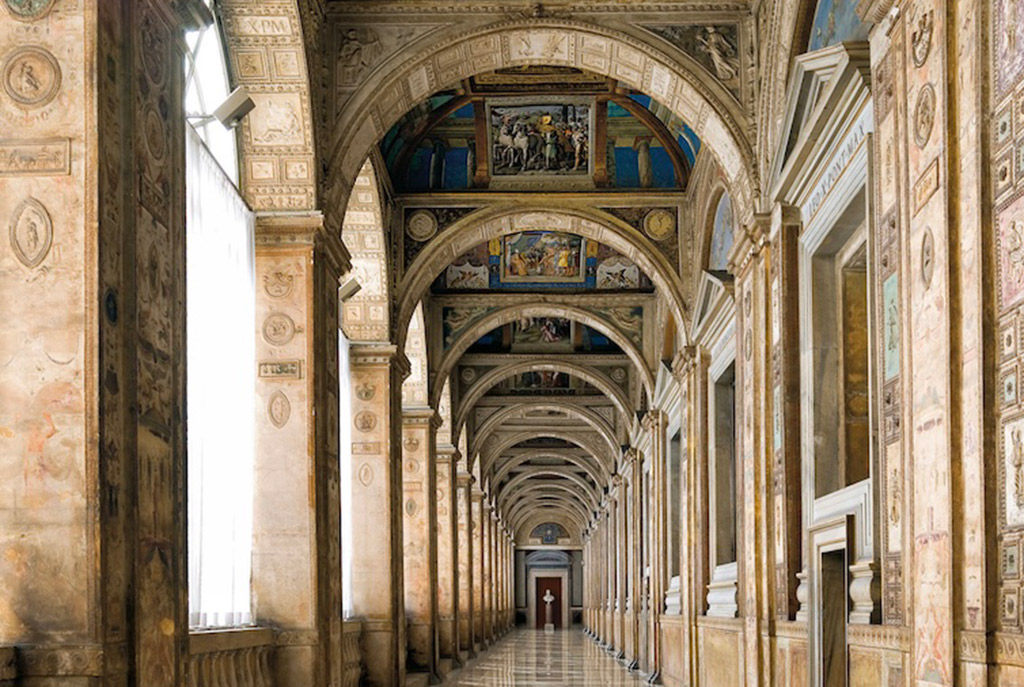
The Second Loggia was designed by Raphael and decorated between 1517 and 1519 by his pupils for Pope Leo X. Since its completion, it has been regarded as one of the finest expressions of Renaissance art applied to architecture. Measuring 65 meters in length and 4 meters in width, the Loggia is divided into thirteen bays. Each bay features a vaulted ceiling decorated with four biblical scenes. The first twelve bays depict episodes from the Old Testament, while the final bay is devoted to the New Testament.