Select your language

Saint of the day

Saint of the day

8 February: Saint Josephine Bakhita

From slave to “Black Mother”

She was a happy girl from a fairly well-off animist family that lived in Olgossa, in Sudan’s Darfur region. In 1878, when she was nine years old, she was abducted by slave traders and her life soon turned into a nightmare. The resulting trauma was so profound that she could no longer remember her name, and her captors mockingly called her “Bakhita”, which means “lucky”.

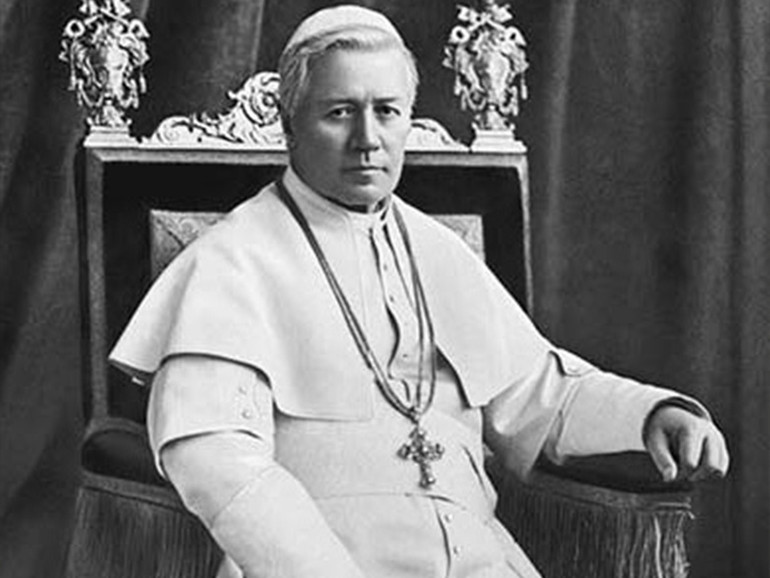
7 February: Blessed Pius IX

The Pope of the Dogma of the Immaculate Conception

Elected at the age of 54, Pius IX holds the record for the longest pontificate in history: 32 years, even longer than the one tradition attributes to Saint Peter.

He served the Church with great zeal, imitating the Good Shepherd, promoted missions and fostered the formation of the clergy and religious life. He is responsible for furthering devotion to the worship of the Eucharist, the Sacred Heart of Jesus and the Virgin Mary. With the help of numerous social institutions, he was charitable towards the poor. He accepted the misunderstandings, the loneliness and the adversities brought on by the enemies of Christ and the Church, with Christian patience.

5 February: Saint Agatha, Martyr

The Saint who saved her city several times

Young Agatha is one of the most well-known and venerated martyrs of early Christianity. She was killed during the persecution of Christians, ordered by Emperor Decius (249-251) in Catania.

Information about her can be found in Jacobus de Voragine’s The Golden Legend (1261-1268) and in the Acta Sanctorum (1643-1648), as well as in writings by Methodius I, Patriarch of Constantinople, from the ninth century, and by Symeon Metaphrastes from the 10th century.

3 February: Saint Blaise, Bishop and Martyr

There is not much reliable information on Saint Blaise of Sebaste. What is known comes from the Acts of Saint Blaise, which were written in Greek. Blaise studied philosophy as a young man and was a respected physician in Sebaste, Armenia, his hometown. Following the death of the city’s Bishop, he was elected as his successor by popular acclaim.

2 February: The Presentation of Jesus at the Temple

Christ, the Light of the World

The Church celebrates the Feast of the Presentation of Jesus at the Temple, 40 days after Christmas. The feast is better known as the Feast of the Candelora (Candlemas) or the Festival of Lights, because it is inspired by a verse from the Gospel of Luke (2:22-40), in which Simeon prophesies that Jesus is “a light for revelation to the Gentiles, and for glory to thy people Israel”.

8 September: Nativity of the Blessed Virgin Mary

The Birthday of the Mother of Jesus

The Catholic Church and the Orthodox Church are united in their celebration of the Nativity of Mary. This feast was born in the East and was introduced to Rome by Sergius 1, in the seventh century. On that day, a procession would leave from the Church of Sant’Andrea al Foro, and head to the Basilica of Saint Mary Major. According to the liturgical Calendar, the Feast Day was celebrated on 8 September. In the East, the Nativity of Mary had been celebrated since the 4th century and was linked to the construction of the Basilica of Saint Anne in Jerusalem, which was built on the site of Anne and Joachim’s house, where Mary was believed to be born. From Jerusalem the recollection of the nativity of Mary spread to Constantinople, where the Eastern Church linked it to the Conception. It should be noted that the Church celebrates the birth on earth and in heaven only of Jesus, Mary and John the Baptist.

Select your language