Select your language

Saint of the day

Saint of the day

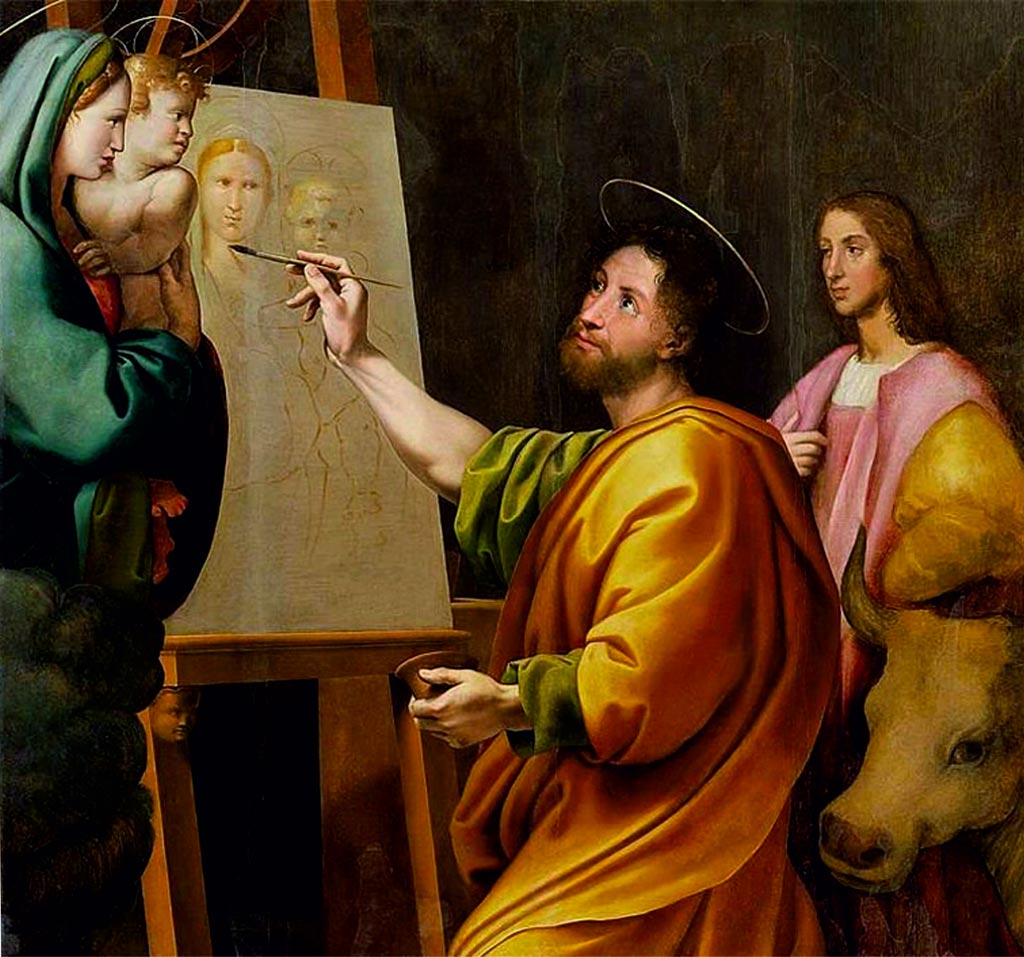
April 25: Saint Mark the Evangelist

St. Peter's “interpreter” 

What we know about Saint Mark comes to us through the Acts of the Apostles in some letters of Saints Peter and Paul. He was not part of the first group of the Apostles but was a disciple first of Paul and then of Peter. Some authors identify him as the young man, son of the widow Mary, who followed Jesus after his arrest in Gethsemane. On that occasion, he narrowly escaped capture when grabbed, running away by leaving behind the linen robe he was wearing. In his writings, he sometimes also appears with the name of John-Mark.

8 September: Nativity of the Blessed Virgin Mary

The Birthday of the Mother of Jesus

The Catholic Church and the Orthodox Church are united in their celebration of the Nativity of Mary. This feast was born in the East and was introduced to Rome by Sergius 1, in the seventh century. On that day, a procession would leave from the Church of Sant’Andrea al Foro, and head to the Basilica of Saint Mary Major. According to the liturgical Calendar, the Feast Day was celebrated on 8 September. In the East, the Nativity of Mary had been celebrated since the 4th century and was linked to the construction of the Basilica of Saint Anne in Jerusalem, which was built on the site of Anne and Joachim’s house, where Mary was believed to be born. From Jerusalem the recollection of the nativity of Mary spread to Constantinople, where the Eastern Church linked it to the Conception. It should be noted that the Church celebrates the birth on earth and in heaven only of Jesus, Mary and John the Baptist.

26 August: Liturgical memorial of Blessed John Paul I

The space of a smile

“Our new Blessed lived that way: in the joy of the Gospel, without compromises, loving to the very end.  He embodied the poverty of the disciple, which is not only detachment from material goods, but also victory over the temptation to put oneself at the centre, to seek one’s own glory”, Pope Francis said in his homily for the Beatification of John Paul I, in the world, Albino Luciani, held in Saint Peter’s Square on 4 September 2022.

Michelangelo Buonarroti, San Bartolomeo (particolare del Giudizio Universale) 1536-1541, Cappella Sistina, Musei Vaticani.

24 August: Saint Bartholomew the Apostle

An Israelite without guile

Bartholomew was one of the twelve disciples who followed Jesus after the Baptism in the Jordan River. His name is included in the Synoptic Gospels as one of the Apostles linked to his contemporary Philip. We know little about this Apostle, whose Feast Day is celebrated on 24 August, the day Catholic tradition dates as his martyrdom. He was originally from Cana in Galilee, near Nazareth. Jesus said of him: “Behold, an Israelite indeed, in whom is no guile” (Jn 1:47). In his Gospel, John speaks of Nathanael, who is Bartholomew, at least according to the exegetes.

Raffaello Sanzio, (Urbino 1483 - Rome 1520), Coronation of the Virgin (called Oddi Altarpiece), 1502 - 1504, Vatican Museums.

22 August: Liturgical memorial of the Queenship of the Blessed Virgin Mary

Not a distant sovereign, but a tender Mother who is close to us

“From the earliest ages of the catholic church a Christian people, whether in time of triumph or more especially in time of crisis, has addressed prayers of petition and hymns of praise and veneration to the Queen of Heaven. And never has that hope wavered which they placed in the Mother of the Divine King, Jesus Christ; nor has that faith ever failed by which we are taught that Mary, the Virgin Mother of God, reigns with a mother's solicitude over the entire world, just as she is crowned in heavenly blessedness with the glory of a Queen”. With these words in the Encyclical Letter Ad Caeli Reginam, of 11 October 1954, Pius XII instituted the liturgical feast day of the “Queenship of the Blessed Virgin”.

21 August: Liturgical memorial of Saint Pius X

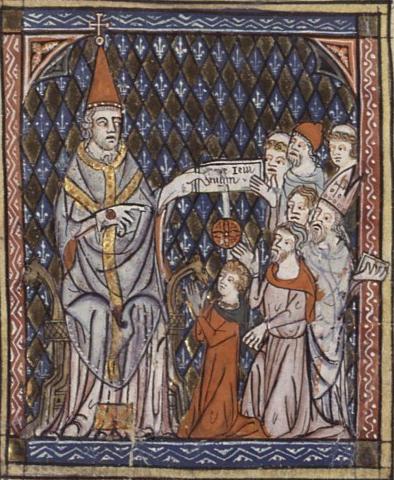
The Pope of Catechism and of the First Holy Communion of children

Saint Pius X, in the world Giuseppe Melchiorre Sarto, wrote the following words in his will and testament: “I was born poor, I have lived in poverty, and I wish to die poor”. He was a Pope from a humble social background, who was elected to the See of Peter, after going through all the steps of the ecclesiastical career: Chaplain, Parish Priest, Bishop, Cardinal and Patriarch.

Select your language