Select your language

Saint of the day

Saint of the day

October 3: Saint Gerard of Brogne

A missionary monk

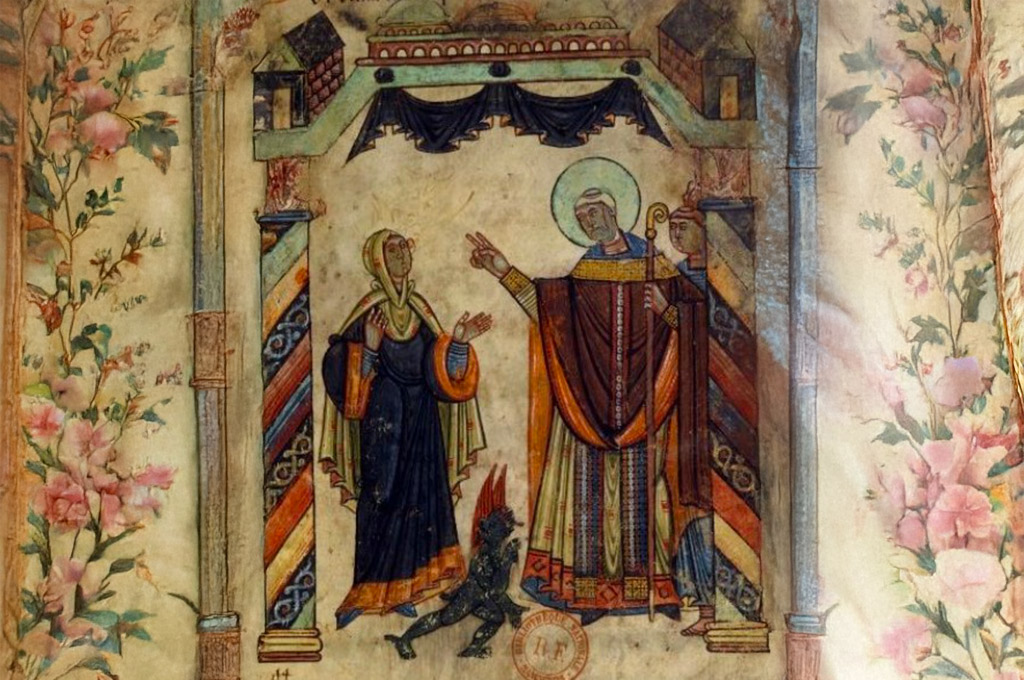
Gerard of Brogne emerged as a charismatic figure, highly esteemed by the important families of Lotharingia and Flanders. For twenty-five years he tirelessly traveled these lands, renewing more than a dozen religious communities. In some cases, he temporarily assumed the role of abbot, but only until monastic life had been restored, after which he returned autonomy to the community.

Melozzo degli Ambrosi, detto Melozzo da Forlì, (Forlì 1438 - 1494), Un angelo che suona il liuto, 1480 circa, frammento di affresco staccato, Musei Vaticani.

2 October: Holy Guardian Angels

Messengers at the Service of God

The Bible is filled with the constant presence of angels, passing through the history of salvation. It contains many episodes that refer to their action and to their role as instruments and messengers of God. Suffice it to remember the Old Testament’s account of Jacob wrestling with the angel from whom he receives the name, Israel; (Gen. 32:25-29) the ladder from earth to heaven, from which a multitude of angels ascend and descend (Gen. 28:12); the angel who meets the slave, Hagar, and announces that she will give birth to Ishmael (Gen. 16:7); the angel that goes before the people of Israel as they wandered  in the desert (Ex 14:19); the two angels that lead Lot and his family out of Sodom (Gen 19:1); the intervention of the angel who stops Abraham from sacrificing his son Isaac (Gen 22:11-13); Daniel who was saved from the fiery furnace by an angel (Dan. 3:17); and the angel that brings food to the prophet Elijah in the desert (1Kings 19:5-10).

1 October: Saint Therese of the Child Jesus, Doctor of the Church

The “Little way” within anyone’s reach

Pope Pius XI described Saint Therese of the Child Jesus and the Face as “the star of my pontificate”. He beatified her on 29 April 1923 and canonized her on Sunday, 17 May 1925, in the Basilica of Saint Peter, before a crowd of some 50,000 faithful, most of whom could not find room inside the Vatican Basilica. On that occasion, the Pontiff underlined that, “aware of her own frailty, she confidently entrusted herself to divine Providence so that, leaning solely on its help, she could attain perfect holiness of life, even through bitter difficulties, having decided to strive for it with the total and joyful abdication of her own will”.

Domenico Zampieri, detto il Domenichino, (Bologna 1581 - Napoli 1641), Comunione di S. Girolamo, 1614, olio su tela, Musei Vaticani.

30 SEPTEMBER: SAINT JEROME, DOCTOR OF THE CHURCH

The Bible at the Centre of Life

In his Apostolic Letter Scripturae Sacrae affectus, on 30 September 2020 on the 16th centenary of the death of Saint Jerome, Pope Francis wrote: “The distinctive feature of Saint Jerome’s spirituality was undoubtedly his passionate love for the word of God entrusted to the Church in sacred Scripture. All the Doctors of the Church – particularly those of the early Christian era – drew the content of their teaching explicitly from the Bible. Yet Jerome did so in a more systematic and distinctive way”.

29 SEPTEMBER: ARCHANGELS MICHAEL, GABRIEL AND RAPHAEL

Proclaimers of God’s mysteries

The three Archangels, whom we celebrate on 29 September, were contemplatives of the Glory of God and messengers of the Good News. Their names express their mission, not their nature. They are messengers of the Lord who proclaim his will and “along with the Saints, constitute the immense multitude of worshippers of the living God”.

September 28: Saint Wenceslaus, Martyr

A sovereign who evangelized his people

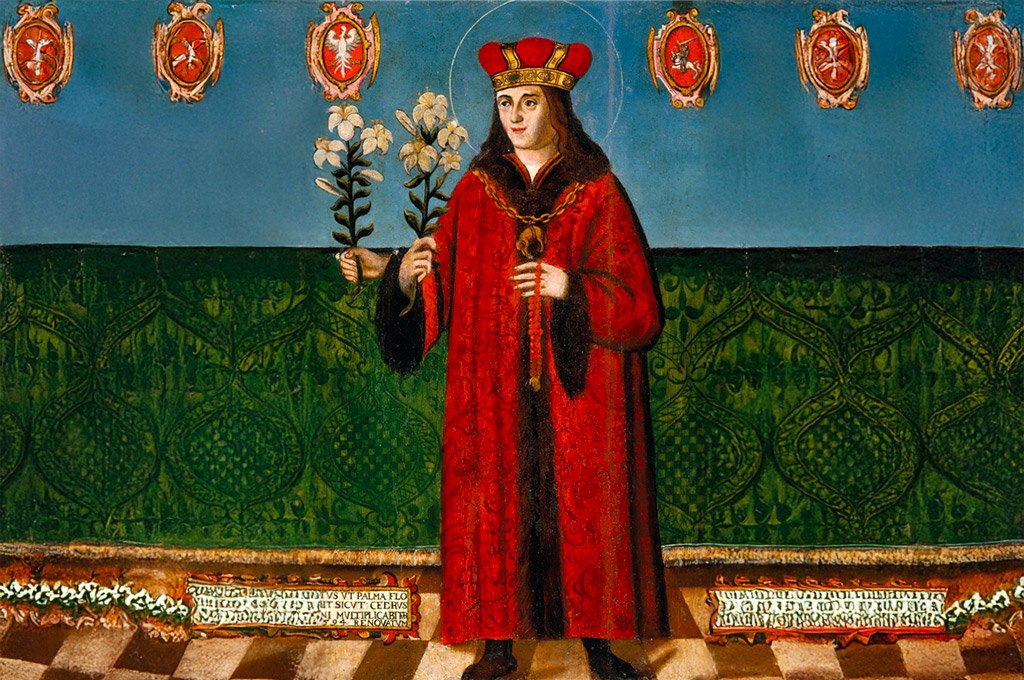
Saint Wenceslaus is one of the most significant figures in the history of the Christianization of Central Europe. The son of Duke Vratislaus I of Bohemia and his firstborn, he grew up in a period of profound cultural and religious transition: in the early 10th century, Bohemia at the time  was a land where Christianity was slowly spreading amidst still deeply rooted pagan traditions.

Select your language