


July 25: Saint James the Apostle
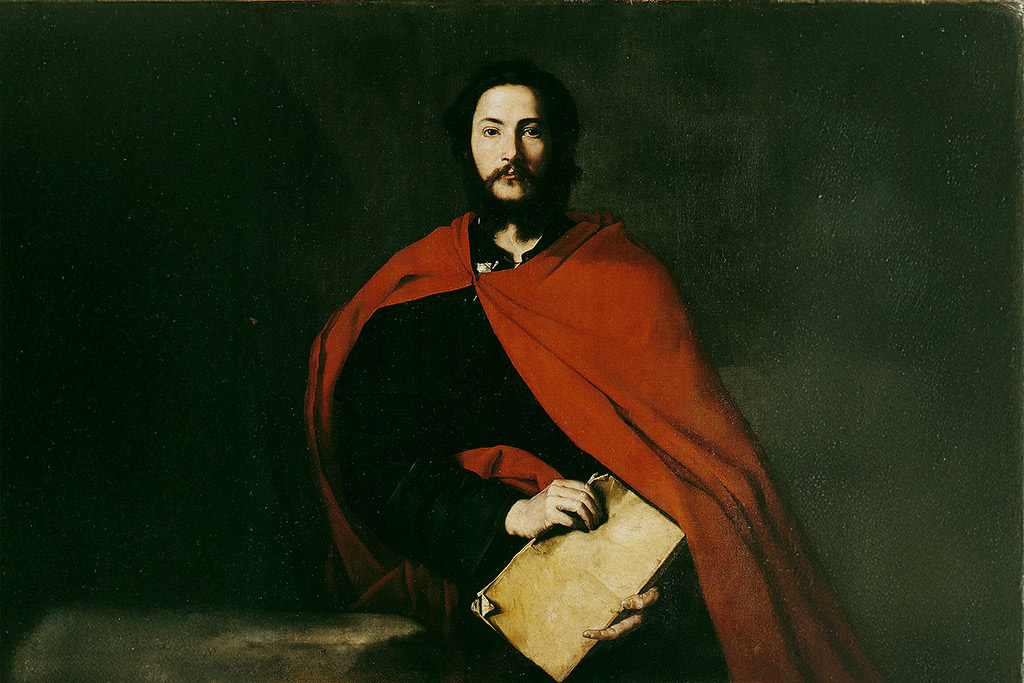

“The Son of Thunder”
Brother of Saint John the Evangelist, he was called James the Greater to distinguish him from the other Apostle with the same name, known as James the Lesser, who was also younge.
This is James, who lived in Bethsaida, near the Sea of Galilee, with his parents Zebedee and Salome. The family owned a small fishing business with several workers in their service. Evidently, the family's economic situation was good, since his brother John was able to leave work and spend a period by the Jordan following John the Baptist.
He accepted Jesus’ invitation to follow him: “Follow me, and I will make you fishers of men,” as Matthew recounts in his Gospel: “He walked along from there and saw two other brothers, James, the son of Zebedee, and his brother John. They were in a boat, with their father Zebedee, mending their nets. He called them, and immediately they left their boat and their father and followed him. (4:21–22). Both brothers were given the nickname “sons of thunder” by Jesus because of their impulsive and passionate character. James witnessed many of Jesus’ miracles and was also a witness to his appearances after the Resurrection.
Together with Peter and John, James was present at the Transfiguration of the Lord and in the Garden of Gethsemane on the night before Jesus’ was arrested. The Evangelist Luke recounts that, as the time approached for Jesus’ Ascension to heaven, he set out toward Jerusalem: “…and he sent messengers ahead of him. On the way they entered a Samaritan village to prepare for his reception there, but the villagers would not welcome him because the destination of his journey was Jerusalem. When the disciples James and John saw this they asked, “Lord, do you want us to call down fire from heaven to consume them?” Jesus turned and rebuked them, and they journeyed to another village. (9:52–56).
After Jesus’ Ascension, King Herod Agrippa decided to kill Christ’s disciples and had James beheaded. Thus, the son of Zebedee had the honor of becoming the first of the Apostles to shed his blood as a martyr for Christ.
Ancient traditions dating to the sixth century state that the Apostle traveled to Spain, crossing the Strait of Gibraltar in order to evangelize. He then journeyed through Spain and Portugal—territories known at the time as Hispania—reaching Galicia, which in Roman times was called Gallaecia.
Since the ninth century, his mortal remains have been preserved in the Cathedral of Compostela, Spain. He is the Patron Saint of Spain and its historic Cavalry.