


June 28: Saint Irenaeus, Bishop and Doctor of the Church
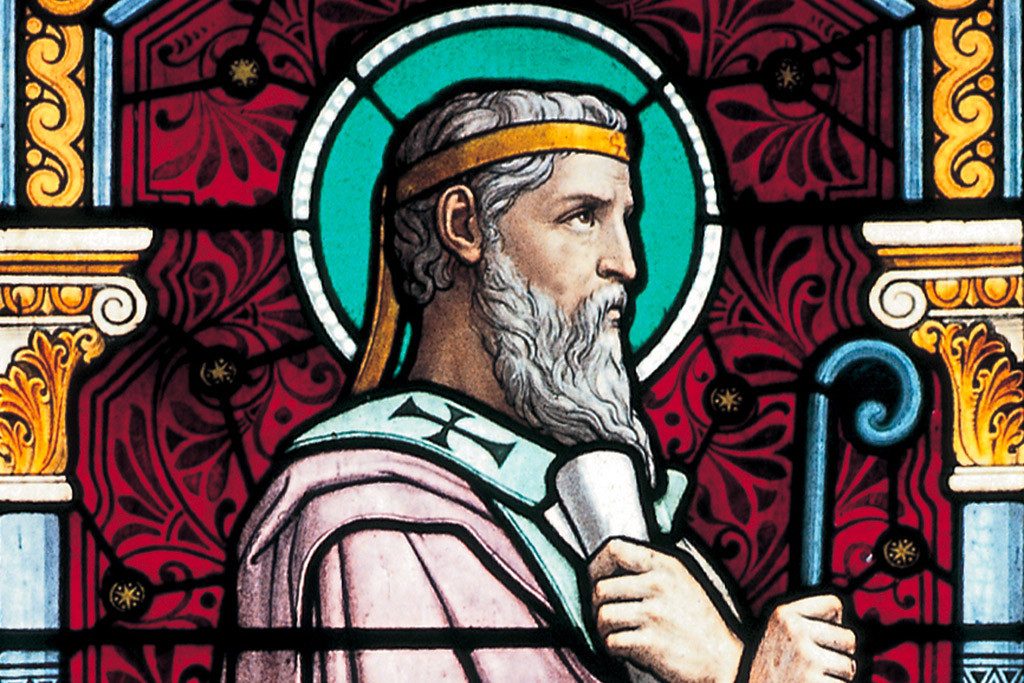

Doctor unitatis
“Saint Irenaeus of Lyon, who came from the East, exercised his episcopal ministry in the West: he was a spiritual and theological bridge between Eastern and Western Christians. His name, Irenaeus, expresses that peace which comes from the Lord and which reconciles, restoring unity.” Thus spoke Pope Francis in the decree conferring the title of Doctor of the Church upon Saint Irenaeus of Lyon.
Irenaeus was probably born in Smyrna around 135–140 AD. As a young man, he was formed in the school of Saint Polycarp, Bishop of Smyrna and disciple of the Apostle John.
We do not know when he moved from Asia Minor to Gaul, but it coincided with the growth of the Christian community in Lyon. In 177, he is listed among the presbyters of the diocese. That same year, he was sent to Rome by Saint Pothinus, Bishop of Lyon, to deliver letters concerning the situation of the community to Pope Eleutherius. Thanks to this journey, he escaped the persecution of Marcus Aurelius, during which Bishop Pothinus died from mistreatment. Upon his return, Irenaeus was elected Bishop of the city. Through his preaching, he soon converted many of his fellow citizens.
Around the year 190, he intervened in the controversy concerning the date of Easter, which was celebrated in some Eastern communities on the 14th of Nisan, while in all the other Churches it was celebrated on the following Sunday. He was not only a pastor, but also a writer, defending the unity of the Church, safeguarding true doctrine against heresies, and clearly explaining the truths of the faith. Two of his works have come down to us: Exposure and Refutation of False Gnosis, better known as Adversus Haereses, and Demonstration of the Apostolic Preaching, a text rediscovered between 570 and 590. He died around 202, perhaps as a martyr.
On January 21, 2022, Pope Francis declared him a Doctor of the Church with the title Doctor unitatis.